1. Home
  2. Space
  3. Cars
  4. Emerging Tech
  5. News

Tesla’s referral program lets owners send laser-etched photos into space

Add as a preferred source on Google

Being a Tesla owner certainly has its perks. There’s the fact that your car isn’t reliant on fossil fuels to get around, the fact that you get to drive an incredibly cool car that can go 0 to 60 mph in a matter of seconds, and then there’s the latest one: The option to fire a laser-etched photograph deep into outer space.

The ability to send any image into orbit is an honor being bestowed on Tesla owners who refer one other person to the company’s cars before December 10 through the company’s referral program. Tesla owners just have to provide a referral code to their friends and family, which can earn them a variety of rewards when those folks go on to purchase a Model S, Model X, Model 3 or solar products.

Recommended Videos

The reward in question, titled “Launch Your Photo into Deep Space Orbit,” is, well, exactly as it sounds. Tesla owners with one qualifying referral can claim the perk, which allows them to select a photo of their choice to be laser-etched and fired off into deep space orbit. Photos can be uploaded via the Tesla mobile app, and the company will take care of the rest, including launching it into the great unknown — a task that presumably will be handled by Tesla CEO Elon Musk’s other company, SpaceX. They just have to pick a photo before the December deadline.

Also included in the latest round of referral rewards for Tesla owners is a $100 Supercharging Credit (a replacement for the Free Unlimited Supercharging perk, which has been retired and was only available for the Model 3 with the Performance trim package, per Teslarati). The more limited charging credit now applies to all Model S, X, and 3 vehicles.

Tesla loyalists with four qualifying referrals can also score a perk that gives them priority for software updates. Once they have reached that perk level, their car will automatically be first in line to get over-the-air updates as they become available. If they own more than one Tesla, all of their vehicles will be given the priority position when it comes to software upgrades.

AJ Dellinger
AJ Dellinger is a freelance reporter from Madison, Wisconsin with an affinity for all things tech. He has been published by…
Space is becoming Bezos and Musk’s next data center site, and we have every reason to worry
The AI boom is coming for the night sky
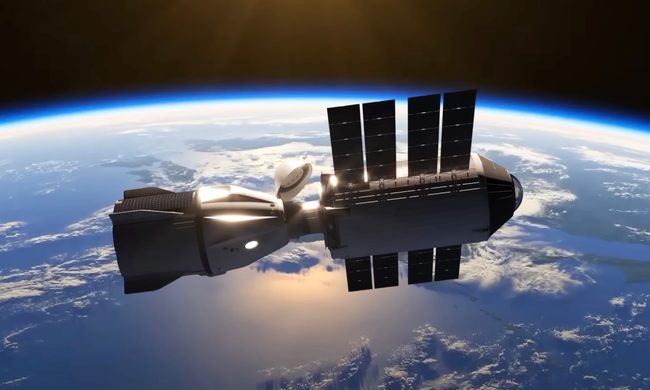
How Vast's space station will look in orbit.

AI data centers already consume vast amounts of electricity and water on Earth, so Silicon Valley has begun looking somewhere considerably more spacious... literally.

Elon Musk's SpaceX and Jeff Bezos' Blue Origin, along with several other companies, have proposed enormous constellations of satellites designed to operate as orbital data centers. However, environmental groups and former space officials are now warning that putting them into orbit at the proposed scale could have severe consequences for Earth's atmosphere and the night sky.

Read more
The first possible exomoon is here, and it makes our Moon look hilariously tiny
Scientists may have found the first exomoon, except this one is the size of Jupiter
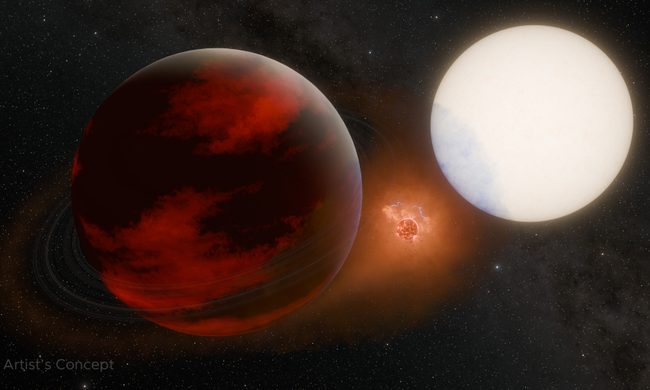
This artist’s concept depicts a potential volcanic moon between the exoplanet WASP-49 b, left, and its parent star. New evidence indicating that a massive sodium cloud observed near WASP-49 b is produced by neither the planet nor the star has prompted researchers to ask if its origin could be an exomoon.

We have already discovered more than 6,000 planets outside of our immediate neighborhood. Yet, finding a moon orbiting one of those distant worlds has proved considerably harder. Astronomers may finally have something close to the real deal, but this particular object stretches the word “moon” almost beyond recognition.

Using the European Southern Observatory’s Very Large Telescope in Chile, researchers detected strong evidence for a moon-like object in the CD-35 2722 system. Further observations are still necessary to confirm the discovery, but it could become the first confidently detected natural satellite outside our solar system. There is still one tiny complication though. This moon is apparently massive.

Read more
China’s answer to SpaceX’s reusable rockets literally catches boosters in a net
SpaceX catches boosters on legs. China just used a net.
Ammunition, Missile, Weapon

SpaceX's playbook for recovering a rocket booster generally involves legs, a precisely controlled vertical landing, and either a concrete pad or a drone ship. 

China just managed to pull off something similar, but in a slightly different way, and on July 10, it tested the method as well.

Read more