  1. Home
  2. Space
  3. Emerging Tech
  4. News

Europe’s space agency plans to build its own “low-gravity” moon base — on Earth

Add as a preferred source on Google

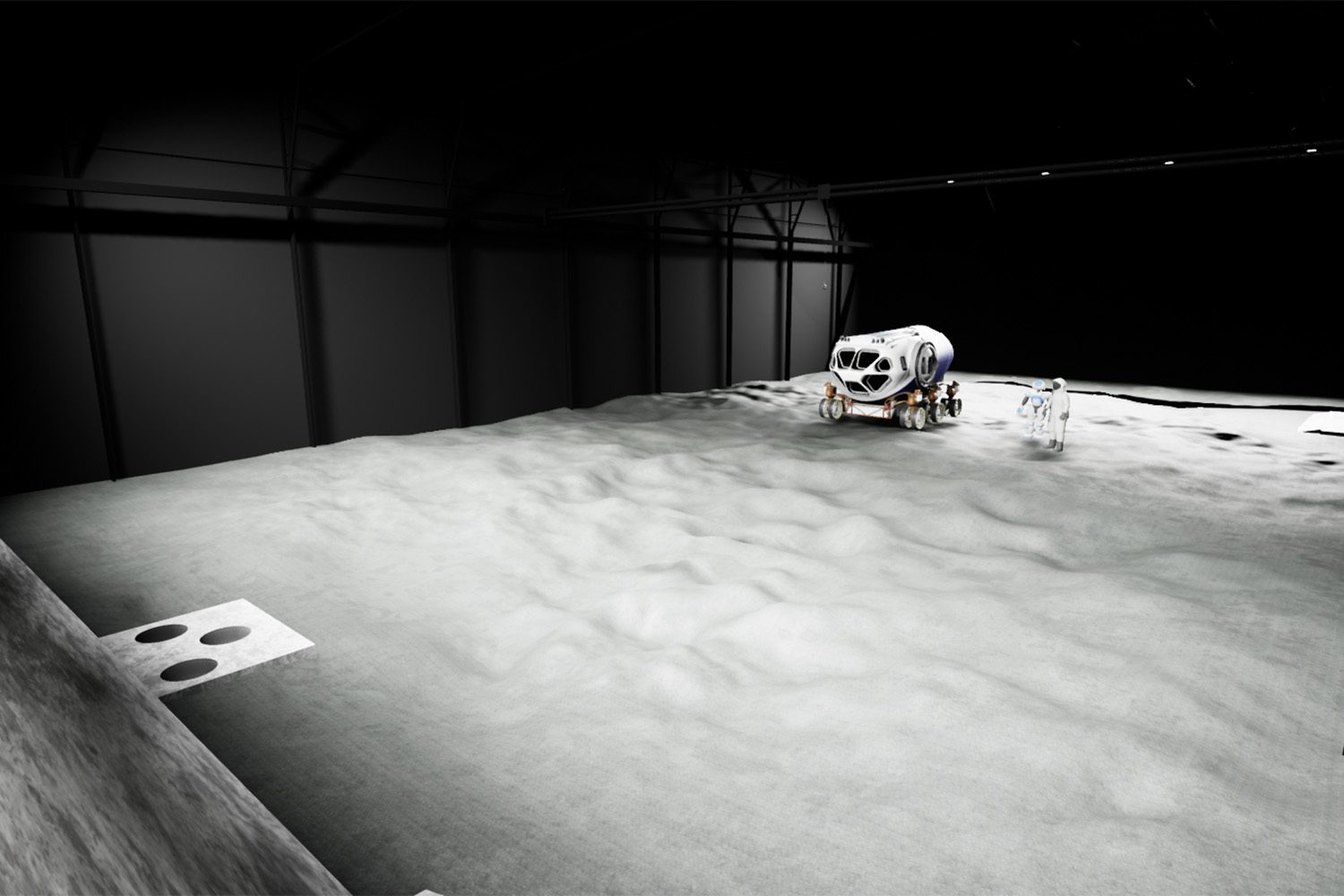
Artist’s rendering of the Luna facility. Image used with permission by copyright holder

Before astronauts step foot in a rocket ship, they undergo grueling training in simulated environments meant to prepare them for the unforgiving space beyond Earth’s atmosphere. Everything is tested and accounted for, from the crew down to their tiniest tools.

Recommended Videos

Now, the European Space Agency (ESA) is developing an astronaut center in Cologne, Germany, where it will build a small replica of the surface of the moon. Dubbed Luna, the facility will be used to test new technologies and tools that future crews may find handy while exploring and establishing a base on our nearest cosmic neighbor.

“ESA wants to create a testbed for demonstrating and validating technologies and operational tools that will be needed for the human exploration of the moon,” Andreas Diekmann, an ESA project manager working on Luna, told Digital Trends. “ESA’s European Astronaut Centre in Cologne, where Luna will be established … already [has] experience with analog facilities and astronaut crew operations. This experience is currently focused on the [International Space Station] program, but we want to expand our expertise towards human exploration of the moon and, later, Mars.”

The Luna facility will combine a 1,000-square-meter (around 10,750-square-foot) artificial lunar habitat, powered by a solar energy system similar to what ESA thinks could be used in the future to power a moon base. Solar has been deemed the most sustainable energy option on the moon. As for the moon dust, ESA will source volcanic powder from 45 million-year-old eruptions of a nearby volcano.

Still in its concept stage, ESA is finalizing the design and blueprints of the facility. But once it’s complete, Luna will be used to help train astronauts and test the tech they will use. ESA plans to develop the Future Lunar Exploration Habitat — a moon base where astronauts will live and work — by the end of the year.

“The utilization of Luna will have a focus on testing technologies and operational tools required for the human exploration of the moon,” Diekmann said. “Examples are the collaboration of astronauts and robots, or the testing of tools for in-situ utilization of lunar resources.”

Diekmann added that they plan on installing a gravity offloading system, which would simulate the feeling of reduced gravity, so that astronauts can train in the conditions similar to the moon, which has just one-sixth Earth’s gravity.

Dyllan Furness
Former Contributor
Dyllan Furness is a freelance writer from Florida. He covers strange science and emerging tech for Digital Trends, focusing…
You can now walk through space and gaze into a black hole at this VR exhibit
Smithsonian Starstruck lets you drift past dying stars and see the origin point of the universe for as little as $18 a person.
Smithsonian Starstruck featured

Most planetarium shows ask you to sit still and look up. The Smithsonian's new VR exhibit takes a different approach, letting visitors walk through the vast expanse of the universe, drifting past stars, planets, and a black hole to get a physical sense of its true scale.

A $29 ticket to the edge of the galaxy

Read more
Scientists warn Elon Musk’s orbital data centers could blind Earth’s biggest telescopes
A new ESO study suggests millions of satellites could make parts of the night sky effectively unusable for astronomy.
One hour of satellites over the northern Atacama Desert in Chile (October 2025)

The race to blanket Earth with satellite internet has unlocked faster connectivity for millions. But according to the European Southern Observatory (ESO), it could also make one of humanity's oldest hobbies, and one of its most important sciences, a whole lot harder. The organization warns that the rapid growth of satellite mega-constellations could severely disrupt observations made by some of the world's most powerful telescopes.

Astronomers say the night sky is reaching its limit

Read more
Amazon’s Starlink rival just crossed a major milestone, but don’t expect perfect internet just yet
Amazon finally showed up to the space internet party
Amazon Leo satellite layout across all launch vehicles

Amazon has taken a significant step toward launching its long-awaited satellite internet service. Following its latest rocket launch, the company now has 396 Project Kuiper satellites in low-Earth orbit, enough to begin offering continuous service across select regions. The milestone keeps Amazon on track for its previously announced goal of launching commercial service by mid-2026.

https://twitter.com/Weber44Chris/status/2072575499461963938?ref_src=twsrc%5Etfw%7Ctwcamp%5Etweetembed%7Ctwterm%5E2072575499461963938%7Ctwgr%5Ed727a1b853cbf519585e7bf2655943afb2f91bb8%7Ctwcon%5Es1_&ref_url=https%3A%2F%2Fwww.theverge.com%2Fscience%2F960563%2Famazon-leo-service-tipping-point

Read more