  1. Home
  2. Cars
  3. News

Passengers can set their own fares with international rideshare company

Add as a preferred source on Google
Image used with permission by copyright holder

Most rideshare companies start in the U.S. and add other countries later. International rideshare company inDriver isn’t like most companies. It launched in New York City on Tuesday, December 4, the app already has 14 existing million members in 160 cities across 11 nations, and lets passengers determine fares.

With inDriver’s Real-Time Deals (RTD), passengers set their destination and route and state what they are willing to pay. The inDriver app sends the passenger’s destination and fare to drivers in the area. Drivers are never required to take offered fares just because they are logged into the inDriver system as active.

Recommended Videos

Drivers who receive notice of passenger offers have three choices: Accept the offered fare, ignore the offer, or bargain for a higher fare. Counteroffers must align with rates pre-approved by the area inDriver base of operations.

Passengers who receive one or more acceptances or counteroffers from drivers in the area can choose which offer to accept. Passengers can choose based on fare amount, driver ratings, estimated time of arrival, and the vehicle make and model.

In New York City, inDriver intends to enhance ridesharing access in the outer boroughs, where residents often face high rideshare charges due to surge fares from other companies. At the company’s launch, inDriver offers service to passengers in Brooklyn, Queens, the Bronx, and Staten Island, which inDriver refers to as “underserved transportation deserts.” Passengers in Manhattan will be able to send inDriver trip request offers for longer rides.

New drivers for inDriver pay zero commission for six months, after which the company commission rate will range from five to eight percent, which inDriver says is significantly less than other New York City rideshare companies. According to the company, more than 5,000 drivers in the NYC area have signed up with inDriver.

“inDriver has thrived across the globe by advocating for the rights of both drivers and passengers in cities that are often overlooked by giant ride-hailing corporations,” inDriver CEO Arsen Tomsky said in a statement. “This is exactly why NYC is the perfect location for our U.S. debut. New Yorkers continue to be squeezed every day, whether it is outer borough passengers being priced out of rides, or drivers being forced to work long hours without being able to make ends meet.”

Bruce Brown
Bruce Brown Contributing Editor   As a Contributing Editor to the Auto teams at Digital Trends and TheManual.com, Bruce…
Volvo is rolling out Apple Music to over 2 million cars with a simple OTA update
Your Volvo may soon get Apple Music without needing CarPlay
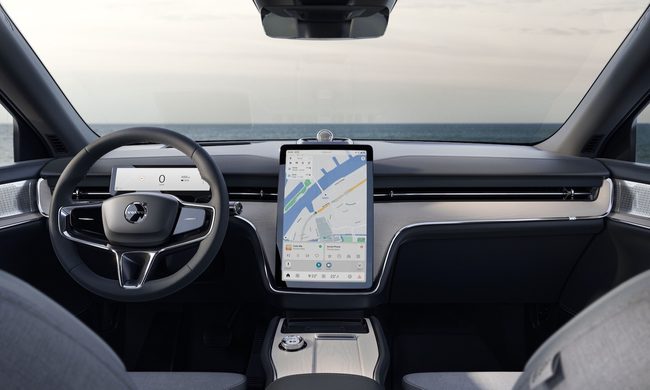
Interior view of the 2024 Volvo EX90.

The line between your smartphone and your car continues to blur. Volvo has announced that it is rolling out an over-the-air software update that brings Apple Music directly to the infotainment systems of more than 2 million vehicles worldwide. Instead of relying on Apple CarPlay or plugging in an iPhone, eligible drivers will be able to stream music natively from their car's built-in system, making Apple Music another integrated feature of Volvo's software experience.

The update is arriving for a wide range of Volvo models, including the EX90, ES90, XC90, S90, V90, XC60, S60, V60, XC40, EX40 and EC40, covering model year 2020 onwards. Availability, however, may vary depending on the vehicle.

Read more
Chery’s latest EV packs flagship tech for the price of a base Tesla, but you can’t buy it
Here's everything packed into Exeed's 2027 Exlantix ES, from its 27-sensor autonomous driving suite to its 860 km range, all starting under $31,000.
Car, Transportation, Vehicle

Chery's premium arm just dropped a sedan that makes you wonder why American EVs cost twice as much for half the tech.

Exeed's 2027 Exlantix ES ships with a driver-assist system called Falcon 700. It is built around an Nvidia Orin-Y chip and a genuinely stacked sensor suite.

Read more
A new AI model wants self-driving cars to think before they swerve
Forget guessing games, this self-driving AI actually shows its work.
Self driving car

Self-driving cars have gotten pretty good at driving. The harder problem is teaching them to drive safely in situations nobody planned for. We have heard horror stories of self-driving cars, behaving erratically in emergency situations, often times delaying first responders from reaching the scene.

A team at Seoul National University, led by professor Jun Won Choi from the Department of Electrical and Computer Engineering, thinks they have cracked part of that puzzle with a new AI model called SafeDrive. The research was recently selected as a highlight paper at CVPR 2026, a distinction that goes only to roughly 3% of all submissions.

Read more