1. Home
  2. Emerging Tech
  3. News

New adhesive tech could let you remove Band-Aids with a blast of UV light

Add as a preferred source on Google
Smart adhesive

It doesn’t matter if you do it slowly and carefully or rip it off in one go, pulling off Band-Aids still really, really sucks. But that could be about to change. Well, if a piece of research from Harvard University’s School of Engineering and Applied Sciences (SEAS) and China’s Xi’an Jiaotong University comes to pass, that is. Scientists at both institutions have developed a new type of adhesive that can be easily detached using a specific frequency of ultraviolet light.

Recommended Videos

“Strong adhesion and easy detachment are both very important in a wide range of applications such as wearable electronics, biomedical devices, wound dressing, drug delivery, and hydrogel ionotronics,” Yang Gao, one of the researchers on the project, told Digital Trends. “We use an aqueous solution of polymer chains as glue and spread it between two materials. For adhesion, the polymer chains are triggered to form a network, stitching the two materials by topological entanglement with their preexisting networks. This process is called topological adhesion. For detachment, the stitching network dissolves by an exposure to UV light.”

Zhigang Suo, professor of Mechanics and Materials at Harvard’s SEAS, told us that the researchers are now working on engineering other stimuli or light frequency ranges which could be used for removing strong adhesives. “We may consider commercialization if there is appropriate opportunity,” Suo said.

A paper describing the research, titled “Photodetachable Adhesion,” was recently published in the journal Advanced Materials. Alongside Gao and Suo, the other researcher on the project was Kangling Wu from Xi’an Jiaotong University.

As innovative as this research is, it’s not the first time that we’ve covered new smart adhesive technologies. At Michigan Technological University, researchers are working on a waterproof glue which could be used to create medical dressings that stay attached even when a person sweats or gets wet. This material is inspired by the natural adhesives mussels use to adhere themselves to rocks and the underside of boats. Most impressive of all, the team hopes that a smart molecule-blocking technique will allow the adhesive to be made sticky or non-sticky at will, essentially turning it on or off.

Whichever technology gets to market first, it seems that Band-Aids are about to get a whole lot smarter.

Luke Dormehl
I'm a UK-based tech writer covering Cool Tech at Digital Trends. I've also written for Fast Company, Wired, the Guardian…
Claude can now join your Slack channels and work alongside your team
Laptop running Claude Fable

For years, AI assistants have been siloed. You open ChatGPT, Claude, Gemini, or Copilot, type a prompt, get an answer, and move on. Anthropic's new Claude Tag feature takes a different approach. Instead of making employees jump into a separate AI chat every time they need help, it brings Claude directly to where many teams already spend their day: Slack.

Add Claude to a channel, grant it access to needed tools, and tag @Claude for help — whether analyzing data, writing reports, reviewing code, or investigating incidents. But Claude Tag isn't just another chatbot integration. Its key differentiator is that Anthropic positions it as a digital coworker for your team, enabling seamless collaboration where multiple users can jointly interact with the same AI within their work environment.

Read more
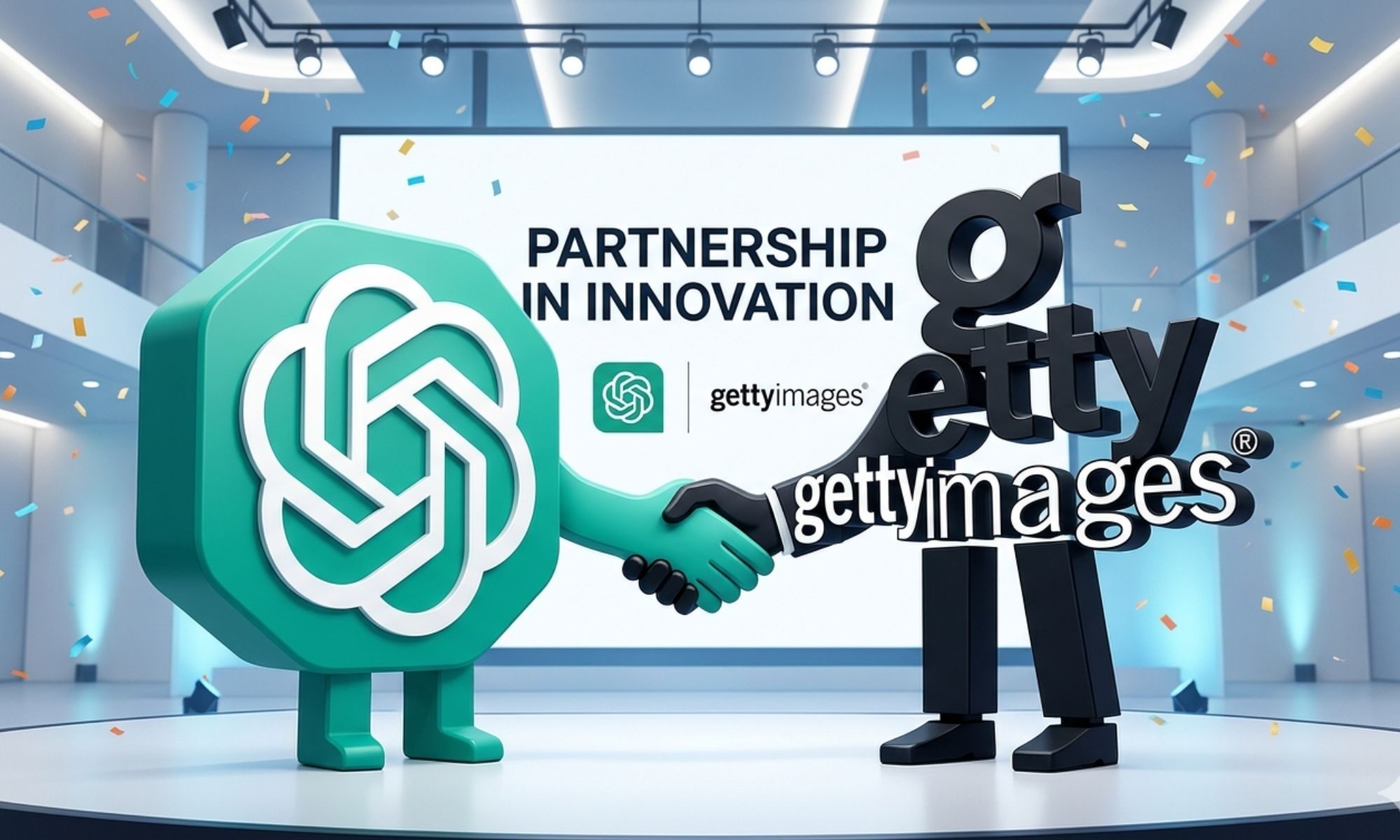
Getty Images accused AI of wholesale theft. It’s now an official ChatGPT image partner.
Advertisement, Shop, Clothing

The AI industry's most fascinating stories often come from unlikely alliances, and this is certainly one of them. Getty Images, a company that has spent years raising concerns about how AI models are trained and how creative work is used, is now officially partnering with OpenAI.

The new agreement will allow Getty Images' licensed content to appear across ChatGPT's search and discovery experiences. That means users may begin seeing Getty's professionally licensed photos and visual assets integrated into ChatGPT responses, adding more visual context to searches and AI-generated answers. Getty says the goal is to make AI-powered search more useful and trustworthy by relying on high-quality, licensed content rather than the murky sourcing practices that have sparked countless debates across the AI industry.

Read more
Timekettle’s new X1 Meeting Hub does real-time translation for 50 people and fits in your pocket
Fifty participants, five languages, one 199-gram hub, and no booth required.
Electronics, Screen, Computer Hardware

Professional conference interpretation setups are notoriously painful. Dedicated booths, trained interpreters, bulky hardware, and a bill at the end of every month that makes you rethink whether the meeting was even required in the first place. 

Timekettle wants to collapse all of that into a single hub that weighs 199 grams (less than modern flagship smartphones). The company just launched the X1 Meeting Interpreter Hub. 

Read more