  1. Home
  2. Computing
  3. Emerging Tech
  4. News

At $99, Nvidia’s Jetson Nano minicomputer seeks to bring robotics to the masses

Add as a preferred source on Google
Image used with permission by copyright holder

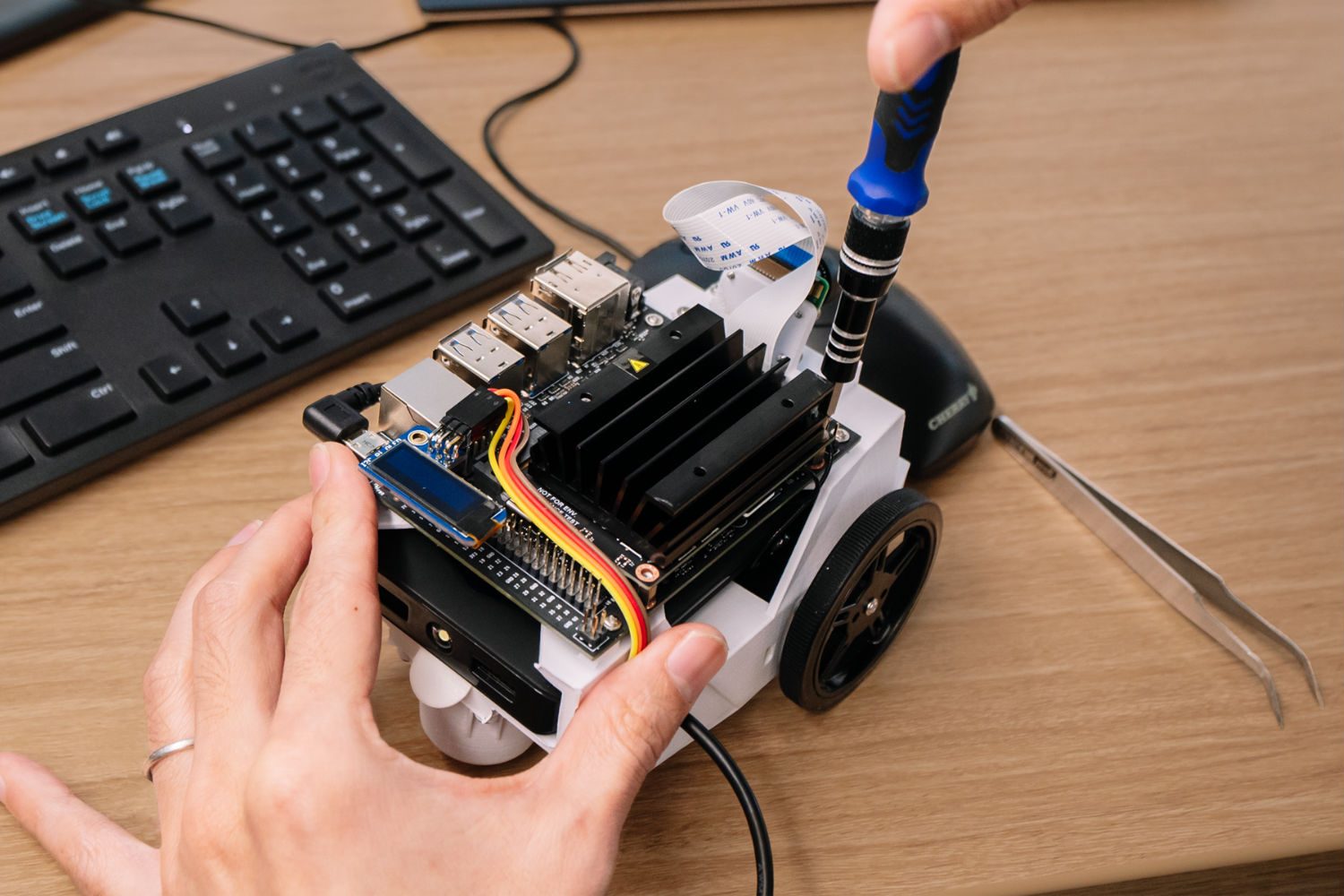
At Nvidia’s annual graphics technology conference, CEO Jensen Huang took to the stage to unveil the new Jetson Nano. Referred to as an “A.I. computer,” the Nano joins Nvidia’s family of other Jetson computers such as the AGX Xavier or Jetson TX2. These aren’t computers for gaming or productivity — they’re designed to accelerate A.I. processes and to power robotics.

The Jetson Nano can supposedly deliver 472 gigaflops of computing performance all while drawing as little as 5 watts of power. It’s powered by a powerful 128-core GPU and a quad-core A57 CPU from Arm. The GPU is based on the older Maxwell architecture, which was the predecessor to the more current Pascal and Turing.

Recommended Videos

The minicomputer can also support high-resolution sensors and, according to Nvidia, can “process many sensors in parallel” and run “multiple modern neural networks on each sensor stream.” Because it supports a lot of the most popular A.I. frameworks, it should be easier for developers to jump in and quickly integrate the ones they use on the Jetson Nano.
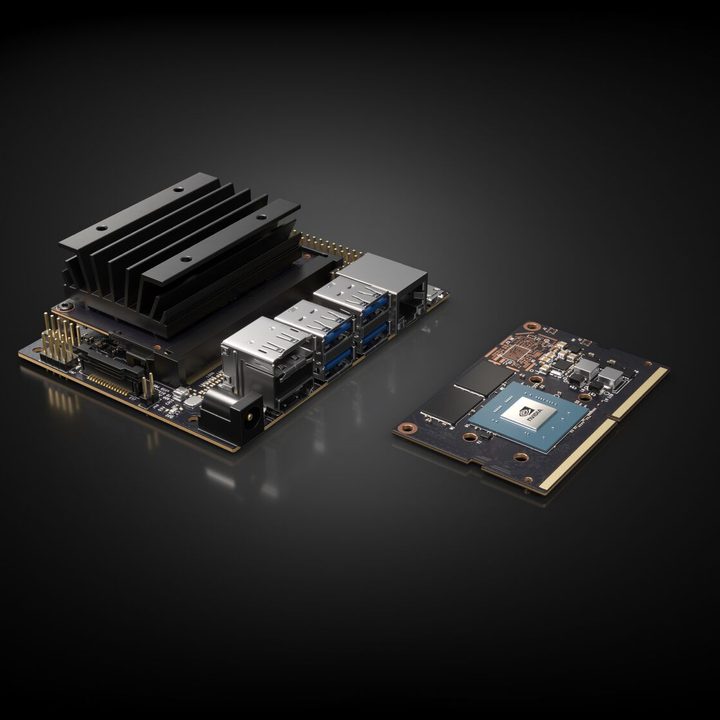
Image used with permission by copyright holder

The product was announced hand-in-hand with CUDA-X A.I. libraries, an end-to-end platform designed for the data sciences. All sorts of industries and sciences increasingly need access to data analytics, machine learning, and deep learning, but aren’t exactly equipped to handle them. Nvidia claims using CUDA-X A.I. libraries on a computer like the Jetson Nano could speed up A.I. workloads by up to 50 times.

Key Specs

  • GPU: 128-core Nvidia Maxwell architecture-based GPU
  • CPU: Quad-core Arm A57
  • Video: 4K at 30 FPS (H.264/H.265) / 4K at 60 FPS (H.264/H.265) encode and decode
  • Camera: MIPI CSI-2 DPHY lanes, 12x (Module) and 1x (Developer Kit)
  • Memory: 4GB 64-bit LPDDR4; 25.6 gigabytes/second
  • Connectivity: Gigabit Ethernet
  • OS Support: Linux for Tegra
  • Module Size: 70mm x 45mm
  • Developer Kit Size: 100mm x 80mm
The purpose of putting it in an affordable little package, of course, is to bring A.I. capabilities to a wider audience of enthusiasts, developers, and start-up companies.

“Jetson Nano makes A.I. more accessible to everyone — and is supported by the same underlying architecture and software that powers our nation’s supercomputers,” Deepu Talla, vice president and general manager of Autonomous Machines at Nvidia, said in a statement. “Bringing A.I. to the maker movement opens up a whole new world of innovation, inspiring people to create the next big thing.”

The Jetson Nano comes in two models. The more affordable $99 option is known as the “Jetson Nano Developer Kit.” Meanwhile, the full production module will start at $129.


Luke Larsen
Former Senior Editor, Computing
Luke Larsen is the Senior Editor of Computing, managing all content covering laptops, monitors, PC hardware, Macs, and more.
Shopping for back-to-school? These are the webcam lights I’d actually turn on before a Zoom call
From a budget clip light to a proper desk setup, there's a webcam light here for every price.
Head, Person, Face

Between online classes, group project calls, and the occasional job interview over Zoom, your webcam will be doing a lot more heavy lifting in school than it ever did at home. The problem is that most laptop cameras are bad in low light, and a single overhead bulb or a window behind you turns every call into a game of "wait, can you see me okay?"

A good webcam light fixes that faster than moving your whole desk around. I picked five, starting with the most affordable and working up to the one that's genuinely overkill for a Zoom call but still worth knowing about.

Read more
Google Chrome could soon let you translate pages right inside Reading Mode
However, not everyone's seeing it yet, even on Canary.
Google Chrome

Chrome's Reading Mode just got a new button tucked inside its settings menu. Google is quietly testing a translate option for the feature on Chrome Canary, the browser's experimental testing channel where new ideas show up long before they're ready for everyday use.

What does this new translate button actually do?

Read more
AI dramas need actors, so Chinese platforms are turning human faces into stock assets
People can now earn money by licensing their likenesses to AI creators, although keeping track of where those digital faces end up may prove considerably harder
Adult, Female, Person

People in China can now license their face to AI much like a photographer licenses a stock image. AI creators can then make that likeness speak, move, and appear as different characters in short dramas or ads.

Contributors have earned between $15 and $700 through platforms such as ActID and New Claw, according to Rest of World.

Read more