  1. Home
  2. Cars
  3. News

Japanese researchers are teaching tires how to generate electricity

Add as a preferred source on Google
Image used with permission by copyright holder
Promotional image for Tech For Change. Person standing on solar panel looking at sunset.
This story is part of Tech for Change: an ongoing series in which we shine a spotlight on positive uses of technology, and showcase how they're helping to make the world a better place.

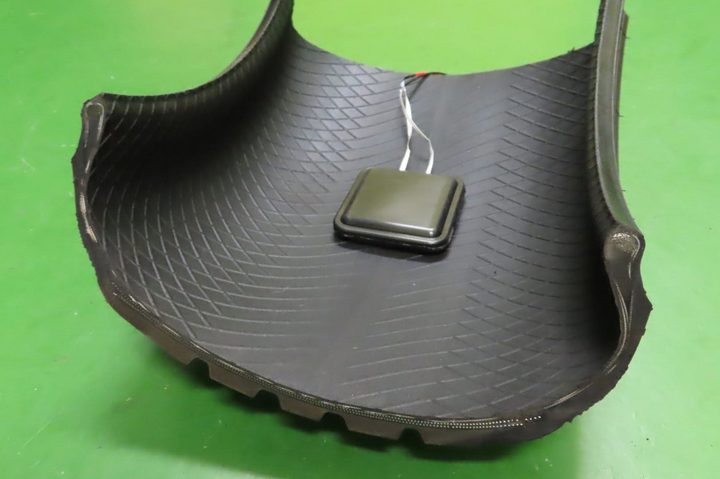
Automakers and their suppliers are on a quest to reinvent every part of the car in the coming years, and tires aren’t excluded from this overhaul program. Japanese tire company Sumitomo teamed up with researchers from the Kansai University to develop an experimental tire that generates electricity as it rolls.

The company explained it developed a small, square-shaped device called Energy Harvester that mounts to the insider of a tire and converts friction into electricity. There’s no need to create the friction, because it’s already there. Even normal tires don’t stay round. Their shape constantly changes as the car brakes, accelerates, turns, and goes over speed bumps. This elasticity generates the friction which the Energy Harvester converts into electricity.

Recommended Videos

The amount of electricity captured by the Energy Harvester is relatively small, so it can’t be used to power juice-slurping accessories like the touchscreen, and it can’t extend an electric car’s range. Besides, it needs to stay in the tire it comes from. That’s fine; it’s useful there. The technology can feed electricity to the tire pressure monitoring system, for example. Looking ahead, it could also allow tires to communicate more information to the car’s onboard computer. Imagine if your wheels could send you a message when they’re out of alignment, or when they detect a suspension problem.

Sumitomo’s Energy Harvester isn’t ready for mass production yet, but the company is confident that its technology will appear on a series-produced car sooner or later. It pledged to continue developing the technology with the help of Japan’s Science and Technology Agency. There’s no word yet on when it will appear in showrooms, or how much it will cost.

Other tire companies are working on different innovations. After years of research, Michelin and General Motors joined forces to begin testing airless tires on public roads by the end of 2019. These see-through tires never go flat, so they’ll make changing a wheel on the side of the road in a rainstorm a problem of the past. If everything goes according to plan, the first car fitted with Michelin’s airless tire technology will arrive in showrooms by 2024.

Ronan Glon
Ronan Glon is an American automotive and tech journalist based in southern France. As a long-time contributor to Digital…
Tesla launches the six-seat Model Y Long Wheelbase in the US
The stretched electric SUV brings more space, more comfort, and up to 325 miles of range.
Tesla Model Y Long Wheelbase Featured

Tesla is giving the Model Y a little more breathing room. The company has officially launched the Model Y Long Wheelbase in the United States and Puerto Rico, introducing a stretched version of its best-selling electric SUV with a three-row, six-seat layout that's designed to make family road trips a lot more comfortable.

A bigger Model Y with a focus on comfort

Read more
A stolen Kia reveals the hidden limits of connected car technology
Kia can see where your stolen car is. GDPR means it won't share that in real time. That is the entire problem.
Kia EV3 design

If you’re buying a car with connected car technology, thinking it would help you to recover it in the event of theft, you might want to recalibrate your expectations. 

A recent incident in the UK, in which a car owner had three tracking devices installed in his car and still couldn’t recover it, led the carmaker to state that connected-car technology isn’t a “certified security vehicle tracker” (via the BBC).

Read more
Cambrige experts find utterly simple fix for longer lasting EV batteries. Just put some pressure on it.
Scientists found a way to make EV batteries last longer without reinventing the battery
EV Charging

EV battery breakthroughs typically involve new chemistry, exotic materials, or faster charging/higher capacity. But a new study reveals that you can skip all the fancy stuff and go with a very simple solution, Researchers from the University of Cambridge found that putting the battery under the right amount of pressure actually helps.

The study was about how physical pressure affects lithium-ion battery life, which found that keeping cells under constant pressure could double their lifespan. The work was published in Nature Energy, and the team says the improvement came without changing the active materials, electrolyte, or basic battery chemistry.

Read more