  1. Home
  2. Emerging Tech
  3. News

Curiosity rover celebrates its 7th birthday by investigating a clay mystery

Add as a preferred source on Google
NASA's Curiosity Mars Rover Explores Teal Ridge (360 View)

The Mars rover Curiosity just celebrated its seventh birthday, having been exploring Mars for seven years since it landed on August 6, 2012. And it has been busy as ever, recently drilling its 22nd hole in the Martian rock.

Recommended Videos

Curiosity is halfway along its path through a region called the “clay-bearing unit” because the area has a high level of clay minerals. Clay minerals are of particular interest to scientists because they form in the presence of water, suggesting that there used to be water in this location thousands of years ago. The clay-bearing unit is located on one slope of Mount Sharp, a large mountain located inside the Gale Crater.
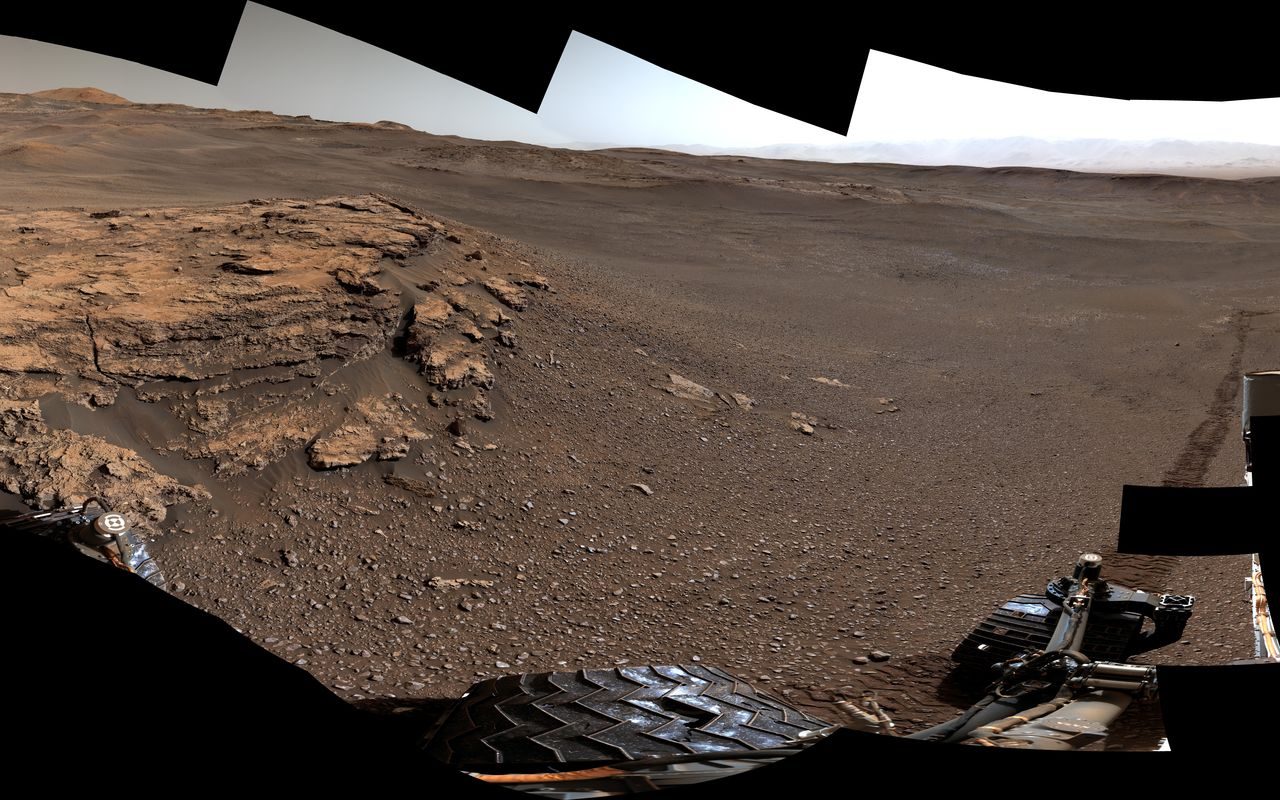
This panorama of a location called “Teal Ridge” was captured on Mars by the Mast Camera, or Mastcam, on NASA’s Curiosity rover on June 18, 2019, the 2,440th Martian day, or sol, of the mission. NASA/JPL-Caltech/MSSS

“This area is one of the reasons we came to Gale Crater,” Kristen Bennett of the U.S. Geological Survey, one of the co-leads for Curiosity’s clay-unit campaign, said in a statement. “We’ve been studying orbiter images of this area for 10 years, and we’re finally able to take a look up close.”

The orbiter images Bennett mentions are captured by the Mars Reconnaissance Orbiter, a craft in orbit around Mars that captures images of the planet’s surface. There’s something strange going on with the clay on Mars, however. When scientists looked at the orbiter data, they saw clay only in a relatively small area of the clay-bearing unit. But since Curiosity has been exploring, it has detected clay in many areas of Mount Sharp. At first, they weren’t sure why the orbiter and the rover would detect such different amounts of clay.

Now, scientists think that the issue may be the many small rocks and pebbles that Curiosity has encountered on the surface of Mars. According to the other co-lead of the project, Valerie Fox, the pebbles are too small for the orbiter to see. But if many of them are in one area, they may look like one large patch of clay to the orbiter. Another possible issue is the dust that blows across the planet. The dust can settle on flat rocks, obscuring the signals that the orbiter can detect from space.

The engineers estimate that the rover still has several years of power left in its nuclear power system, and will be able to continue operating beyond that with careful power budgeting. Here’s hoping for seven more years of Martian data.

Georgina Torbet
Georgina has been the space writer at Digital Trends space writer for six years, covering human space exploration, planetary…
Anti-surveillance clothing is getting cheaper, but don’t expect an invisibility cloak
Affordable shirts now claim to confuse facial recognition, although their protection depends heavily on the camera and software watching you
Chart, Plot, Adult

Anti-surveillance clothing is starting to look less like an art-school experiment and more like something you could actually wear outside. Shirts designed to confuse facial recognition systems now cost about as much as ordinary streetwear, although buying one won’t make you disappear.

The Guardian reports that designers are using face-like prints, unusual cuts and infrared lights to interfere with computer vision. These techniques target specific weaknesses, so their success depends on what happens to be watching you.

Read more
This spinning drone hides in plain sight using a visual illusion
This drone doesn't turn invisible. It tricks your brain into thinking it has.
Phantom Twist

For decades, engineers have chased the dream of an invisible drone. The usual approaches have involved transparent materials, camouflage coatings, or complex optical systems that bend light around an object. Researchers at Northwestern University decided to take a completely different route. Instead of hiding the drone itself, they chose to fool the human eye.

The result is Phantom Twist, an experimental drone that spins so rapidly it almost disappears into the background. It's not technically invisible, but to anyone watching, it looks more like a faint blur than a flying machine.

Read more
This smart knitted fabric can flip switches, count your steps, and even change shape
Grandma's knitting just entered its Iron Man era
Representative Image

For most of us, knitting brings to mind sweaters, scarves, and perhaps an ambitious grandmother determined to make winter more fashionable. Researchers at Harvard University, however, have a far more futuristic vision. They've transformed ordinary knitted fabric into a programmable material capable of changing shape, acting as an electrical switch, sensing movement, and potentially forming the foundation of tomorrow's wearable technology.

The research, published in Advanced Functional Materials by scientists at the Harvard John A. Paulson School of Engineering and Applied Sciences (SEAS), demonstrates how machine-knitted textiles can "snap" between multiple stable shapes without relying on motors or rigid mechanical parts.

Read more