  1. Home
  2. Cars
  3. News

Ford squashes the bug problem plaguing autonomous cars

Add as a preferred source on Google
Image used with permission by copyright holder

Self-driving cars are supposed to change the way we get around, but before they can do that, engineers have to solve a lot of problems related to them. Like what to do about bugs — the insect kind, not glitches. For human drivers, a bug-splattered vehicle is pretty inconsequential. But autonomous cars rely on an array of sensors to “see” their environment, and those sensors need to be kept clean of insects. So Ford came up with a way to bug-proof its cars’ sensors.

Figuring out how to keep self-driving cars’ sensors clean turned out to be messy work. Engineers built a “bug launcher” to shoot insects at the sensors, Venky Krishnan, Ford’s autonomous vehicle systems core supervisor, wrote in a blog post. They eventually settled on the “tiara” — the structure on the roof of Ford’s test cars that houses the collection of cameras, radar, and Lidar that make up the sensor suite — as the main line of defense.

Recommended Videos

One approach is to funnel air through slots in the tiara near camera lenses. This creates an “air curtain” that deflects bugs away from the cameras, Krishnan said. But that method isn’t 100-percent effective, so the tiara also has small nozzles near each camera lens. They can spray washer fluid onto the lenses to clean them off. The nozzles are controlled by a software algorithm, ensuring they’re only used when needed, so that no fluid is wasted, Krishnan said. When the lens is clean, air is channeled through a slot in the tiara to dry it off. A bug-cleaning system may sound like over-engineering, but details like this are vital to making autonomous cars work in the real world, Krishnan said.

“Just as we must equip self-driving vehicles with the brains to process what’s happening in their environment, we must also equip them with the tools to deal with that environment — no matter what kind of gunk it decides to throw at them,” he added.

The bug-cleaning system is already in use on Ford’s third-generation autonomous test vehicles. These modified Ford Fusion sedans are currently being tested on public roads in Detroit, Pittsburgh, Miami-Dade County, and Washington, D.C. Ford plans to launch an autonomous production car in 2021 for ridesharing and delivery services.

Stephen Edelstein
Stephen is a freelance automotive journalist covering all things cars. He likes anything with four wheels, from classic cars…
Mazda chief says the MX-5 Miata could go electric
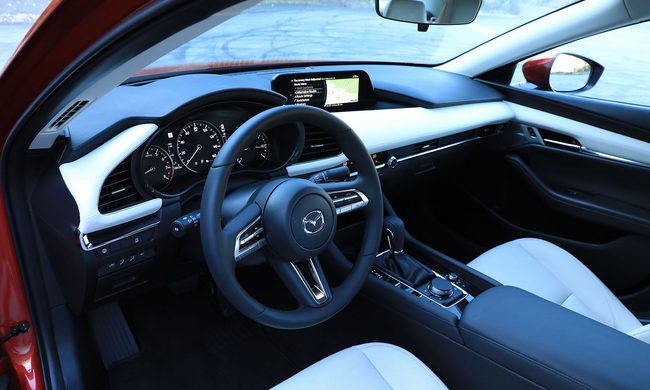
2019 Mazda Mazda3 AWD review

For years, the idea of an electric Mazda MX-5 Miata felt almost impossible. The little roadster has always been celebrated for one thing above everything else: keeping things light. Add a heavy battery pack into the equation, and many enthusiasts assumed the Miata's trademark driving character would disappear along with it.

Mazda, however, appears to have changed its mind. In an interview with German publication auto motor und sport, Mazda CEO Masahiro Moro confirmed that the next-generation MX-5 is being developed with the possibility of an all-electric version in mind. It doesn't mean the iconic roadster is abandoning gasoline anytime soon. Still, it does suggest Mazda wants the Miata to survive in a future where internal combustion engines may no longer be an option.

Read more
Mercedes-Benz reveals the 2028 GLA in two flavors and plenty of cool tech
The 2028 GLA debuts in electric and hybrid form, featuring Gemini, ChatGPT, and up to 408 miles range.
2028-Mercedes-Benz-GLA-SUV

Mercedes-Benz just gave its smallest SUV a serious glow-up. The automaker unveiled the redesigned 2028 GLA, its entry-level compact SUV, arriving in both fully electric and hybrid form. Like the recently redesigned CLA sedan, the GLA now rides on Mercedes' next-generation MMA platform.

What's new with the 2028 GLA's design and powertrain?

Read more
Hongqi says its new EV tech can charge a battery in just eight minutes, beating BYD
Hongqi EH7 car in green

It seems that every other month, a new company is coming out with battery-charging tech that’s defying our expectations. A few months back, BYD, the Chinese EV maker, impressed everyone with its “flash charging” system that could take its car from 10% to 97% in nine minutes. Now, Chinese automaker Hongqi has beaten that record. 

How fast is Hongqi's new battery?

Read more