  1. Home
  2. Emerging Tech
  3. News

This A.I.-powered app can spot skin cancer with 95 percent accuracy

Add as a preferred source on Google
Detect skin cancer with your phone using SkinVision

If you’re going to trust your smartphone to do something as important as detect the most common forms of skin cancer, you want to be pretty darn sure that it works as advertised. Fortunately, the claims of an app called SkinVision appear to be accurate.

Recommended Videos

SkinVision is an iOS and Android app that lets users assess and track skin spots for changes over time. It works by asking users to snap a photo of concerning spots on their skin using their smartphone camera. Within 30 seconds of submitting this photo for review, an artificial intelligence algorithm then delivers a risk assessment: Either low, low with symptoms, or high. It does this by looking for telltale signs of skin cancer in spots, such as irregular patterns, multiple colors, asymmetry, size, and uneven borders. In the event that the app raises concerns, users can then visit a medical professional to get advice on what to do next.
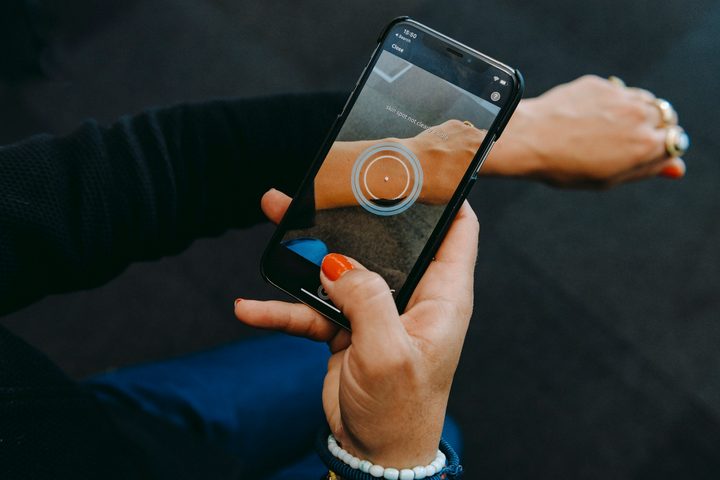
Image used with permission by copyright holder

“Our service does not formally provide a diagnosis, but instead a risk assessment and recommendation,” SkinVision spokesperson Abigail Blackburn told Digital Trends. “We aim to relieve pressure on the health care system by helping direct individuals to a health care professional at the appropriate time. Literature shows that suspicious skin spots are one of the most common reasons patients visit a general practitioner, and a high percentage of these visits can indicate a benign lesion. SkinVision hopes that the use of the app can reduce unnecessary visits, freeing up GPs to run their practice efficiently to see more patients. The cost for treatment of early-stage skin cancer is drastically different from late-stage skin cancer, which can require expensive treatment such as immunotherapy.”

In a recent study published in the Journal of the European Academy of Dermatology and Venereology, investigators tested the app’s claims that it can play a crucial role in early skin cancer detection. They concluded that it is around 95.1% sensitive in its ability to identify the most common forms of skin cancer. While there’s room for improvement when it comes to the specificity of the cancers, it’s still proven its value as an effective early warning system.

We’re still a long way from replacing doctors with machines (something that I don’t think will ever truly happen), but this is a great example of how A.I. can be used to improve health care, particularly when it comes to skin cancer, where early diagnosis is crucial. Tools like this can be game-changing.

Luke Dormehl
I'm a UK-based tech writer covering Cool Tech at Digital Trends. I've also written for Fast Company, Wired, the Guardian…
Anti-surveillance clothing is getting cheaper, but don’t expect an invisibility cloak
Affordable shirts now claim to confuse facial recognition, although their protection depends heavily on the camera and software watching you
Chart, Plot, Adult

Anti-surveillance clothing is starting to look less like an art-school experiment and more like something you could actually wear outside. Shirts designed to confuse facial recognition systems now cost about as much as ordinary streetwear, although buying one won’t make you disappear.

The Guardian reports that designers are using face-like prints, unusual cuts and infrared lights to interfere with computer vision. These techniques target specific weaknesses, so their success depends on what happens to be watching you.

Read more
This spinning drone hides in plain sight using a visual illusion
This drone doesn't turn invisible. It tricks your brain into thinking it has.
Phantom Twist

For decades, engineers have chased the dream of an invisible drone. The usual approaches have involved transparent materials, camouflage coatings, or complex optical systems that bend light around an object. Researchers at Northwestern University decided to take a completely different route. Instead of hiding the drone itself, they chose to fool the human eye.

The result is Phantom Twist, an experimental drone that spins so rapidly it almost disappears into the background. It's not technically invisible, but to anyone watching, it looks more like a faint blur than a flying machine.

Read more
This smart knitted fabric can flip switches, count your steps, and even change shape
Grandma's knitting just entered its Iron Man era
Representative Image

For most of us, knitting brings to mind sweaters, scarves, and perhaps an ambitious grandmother determined to make winter more fashionable. Researchers at Harvard University, however, have a far more futuristic vision. They've transformed ordinary knitted fabric into a programmable material capable of changing shape, acting as an electrical switch, sensing movement, and potentially forming the foundation of tomorrow's wearable technology.

The research, published in Advanced Functional Materials by scientists at the Harvard John A. Paulson School of Engineering and Applied Sciences (SEAS), demonstrates how machine-knitted textiles can "snap" between multiple stable shapes without relying on motors or rigid mechanical parts.

Read more