Almost two years ago, Philips showed off a kitchen-friendly 24-inch Android TV at CES 2018. Known as the 7703 Series Kitchen Android TV, it was originally intended to go on sale later that year. The 7703 never fully materialized, but a newer version has finally arrived, just in time for the holiday shopping season. That version is the $299 Philips 24-inch Android TV (which, confusingly, also goes by the name 6000 Series Android TV) mounts a 24-inch Android TV-powered HDTV panel on top of a Google Assistant-powered smart speaker to create an all-in-one device aimed at those who tend to have their hands busy when watching videos.
The 6000 Series won’t win any prizes for its display — at just 720p it’s a decidedly low-res panel. But that’s probably just fine for its intended audience. The main attraction here is the ability to control that display with your voice from across the room, a highly desirable quality for chefs of all skill levels.
Voice control of TVs has been around a while now, but the vast majority of these products still require that you pick up the remote and press a button before you start speaking. With a Google Assistant smart speaker and far-field microphones set into the base of the 6000 Series, virtually all of its functions can be controlled hands-free, such as YouTube videos, streaming music, or smart-home device actions like adjusting lighting or temperature.
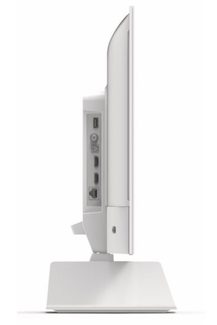 Though the specs of the TV itself aren’t especially impressive, there are enough ports and connections to make the 6000 Series a flexible gadget for various setups. It has two HDMI ports (one with HDMI-ARC), an optical output, a USB port that can be used for recording live TV, and an antenna port so you can acquire free over-the-air HD broadcasts. There’s also Bluetooth 4.2 and 802.11 AC MIMO Wi-Fi for fast wireless connections, and an Ethernet port in case you want to go with a wired data connection. Unfortunately, all of these connections are only accessible from a side panel, not the rear of the TV, which may create a few cabling headaches.
The speaker base contains two 8-watt drivers and can handle stereo and Dolby Audio, though there’s no word yet on whether the device can passthrough Dolby Digital 5.1 via either the optical out or HDMI-ARC connections.
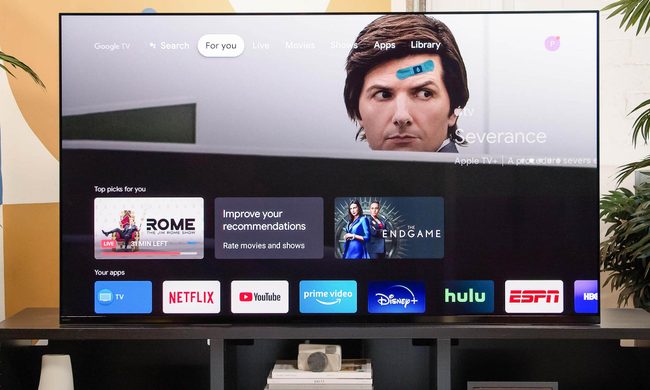
The Android TV ships with Android Oreo, which is one release behind the most recent Android TV version (Android Pie) and like all Android TV devices it has Chromecast built-in so you can use the TV to display content from compatible smartphones, tablets, and computers.
Funai Corporation, the licensee for Philips and Magnavox in North America, says the Philips 24-inch Android TV is on sale now at major retailers across the U.S. and Canada, currently none are listing the product online. We’ll update this article once we know where you can buy it.