1. Home
  2. Emerging Tech
  3. News

Adidas’ two robot-powered shoe factories run into trouble, face closure

Add as a preferred source on Google

Adidas announced on Monday, November 11 that it’s closing its high-tech Speedfactory facilities in Atlanta, U.S., and Ansbach, Germany, and shifting some of the technology to existing factories in Asia.

The robot-powered facilities launched with much fanfare when the first one began producing sports shoes in Germany in 2016, followed by the Atlanta location a year later. But now Adidas says both sites will close down by April 2020.
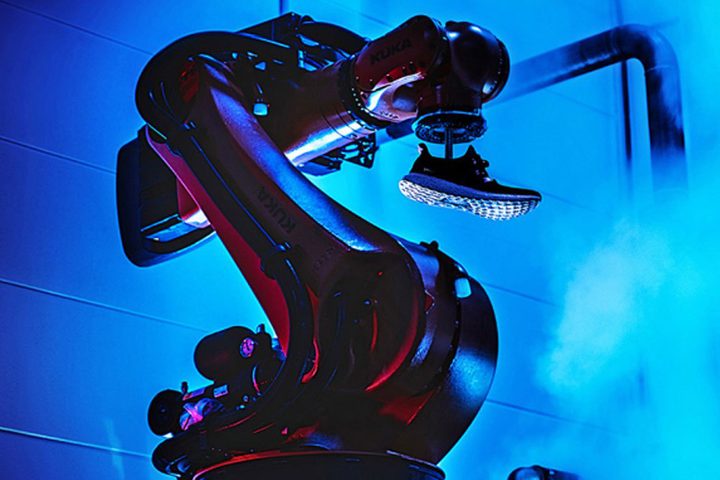
Image used with permission by copyright holder

The Speedfactories were designed to quicken the production of Adidas’s sports shoes, while at the same time helping to speed up distribution and cut down on shipping emissions (and costs) by making the goods closer to customers in its major markets.

Recommended Videos

Adidas declined to go into detail about the reasons for closing the Speedfactories, but it mentioned that shifting production to two of its suppliers in Asia (where it already makes most of its gear), and using what it has learned from its Speedfactory experience, would enable its sports shoe business to be “more flexible and economic.”

Ending production at the American and German sites also appears to bring the curtain down on Adidas’ earlier-stated plans to open a network of Speedfactories around the world.

In a release, Adidas insisted the strategic shift would benefit customers “as the combination of existing technical possibilities of the suppliers, and new production methods developed in Ansbach and Atlanta, will allow for more variations of Speedfactory footwear models in the future,” adding, “These will continue to be characterized by a particularly short production time, allowing the company to continue to respond quickly to consumer needs.”

Fully automated

The Speedfactories were fully automated facilities that were designed to create products in increasingly high volumes with advanced complexity in color, materials, and sizes. The Atlanta location covered an area of more than 74,000 square feet — about 1.5 times the size of a football field — and employed around 160 people to ensure it ran smoothly.

In a world of increasing automation, Adidas’ decision to abandon its Speedfactory model may seem strange, but it shows that incorporating advanced technology into a business isn’t right for all manufacturers at the current time, or at least that the type of technology incorporated needs to be more carefully considered during the planning stage. For example, with the Speedfactory, one possible issue was that the facility could only make a limited range of shoe designs, which may have led to more problems than expected.

We’ve reached out to Adidas for more information on why it’s closing its robot-powered facilities and we’ll update if we hear back.

Trevor Mogg
Contributing Editor
Not so many moons ago, Trevor moved from one tea-loving island nation that drives on the left (Britain) to another (Japan)…
The Apple Car may be dead, but it became the foundation of Apple Intelligence
A decade of work on a canceled car project reportedly laid the groundwork for Apple Intelligence.
Apple Intelligence in Apple Car

The Apple Car may have never left the garage, but it apparently gave birth to Apple's AI ambitions. According to Bloomberg's Mark Gurman, Apple's canceled autonomous vehicle project, one that consumed more than a decade of work and over $10 billion before being scrapped in 2024, ended up laying the technological foundation for Apple Intelligence. In a rather ironic twist, one of Apple's most expensive failures may also become one of its most important long-term investments.

The Apple Car forced Apple to think like an AI company

Read more
Researchers hid a prompt injection inside a PNG, and AI fell for it
Hacker

AI coding assistants like Claude are becoming every developer's favorite coworker. They can review code, explain confusing functions, and even write entire features with a single prompt. But new research suggests that this growing trust could also become their biggest weakness.

A team of security researchers (professor Sudipta Chattopadhyay and researcher Murali Ediga) has demonstrated an unusual attack that doesn't target the AI model directly. Instead, it targets what the AI doesn't pay enough attention to during code reviews. Rather than hiding malicious instructions in lines of code, the researchers tucked them inside an image file. Since many AI review tools treat images as decorative assets rather than as something worth inspecting, the pull request can appear perfectly harmless and sail through the review.

Read more
AI has already fallen into the wrong hands and they’re using it to make bombs
Logo, Text

Artificial intelligence has quickly become the go-to tool for everything from writing emails and summarizing meetings to helping students study or developers debug code. But the same technology that saves people time can also be misused, and a new report suggests that terrorist organizations are finding ways to do exactly that.

According to a research paper shared with The New York Times ahead of its publication, researchers found evidence that members of Boko Haram have been using popular AI chatbots to support both day-to-day activities and combat-related tasks. Interviews with 27 former members conducted in Nigeria over the past two years suggest that tools such as ChatGPT, Gemini, Claude, Grok, Meta AI, and DeepSeek were used to gather technical information, troubleshoot weapons, and even assist with planning attacks.

Read more