  1. Home
  2. Emerging Tech
  3. News

NASA unveils its plans for a lander to deliver rovers to the moon

Add as a preferred source on Google

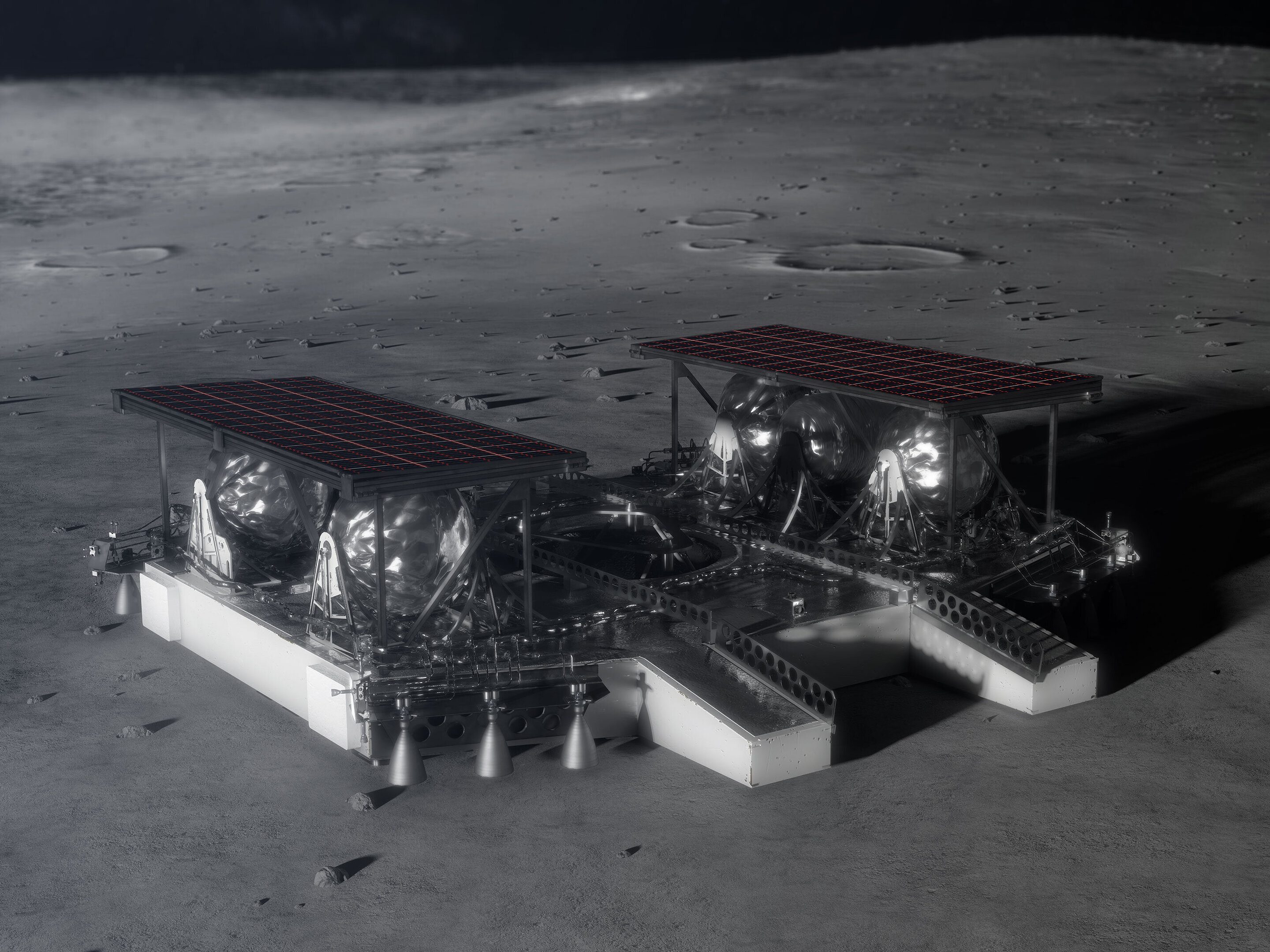
Illustration shows the mid-sized lander on the lunar surface. NASA

NASA already has plans to send one rover to the moon, but with the upcoming Artemis mission, the agency is planning other lunar explorers including a mid-sized lander. It unveiled its plans for an as-yet-unnamed lander that could deliver a rover to the polar regions of the moon, where it is thought that water ice is located.

Recommended Videos

“This lander was designed with simplicity in mind to deliver a 300-kilogram rover to a lunar pole,” Logan Kennedy, the project’s lead systems engineer at NASA’s Marshall Space Flight Center said in a statement. “We used single string systems, minimal mechanisms and existing technology to reduce complexity, though advancements in precision landing were planned to avoid hazards and to benefit rover operations. We keep the rover alive through transit and landing so it can go do its job.”

The lander would be delivered via NASA’s Commercial Lunar Payload Services program, which contracts private companies to provide transportation services between earth and the moon. NASA has already announced that it plans to use a private company to deliver the VIPER rover which will hunt for lunar ice to the moon in around 2022, as part of its plans to cut the cost of space travel by commercializing aspects of the logistics.

Last month, NASA announced it had selected nine more companies to assist with future lunar missions, including SpaceX and Blue Origin as well as smaller U.S. companies like Ceres Robotics and Tyvak Nano-Satellite Systems. The companies will begin delivering equipment to the moon beginning in 2021, likely including lunar rovers which are important for scouting the lunar surface.

Even with commercial partners, delivering landers to the moon is still a challenge. That’s why the new lander concept is designed to be as light as possible, though with rocket developments, the weight that can be delivered to the moon is gradually increasing.

“As robotic lunar landers grow to accommodate larger payloads, simple but high-performing landers with a contiguous payload volume will be needed,” Kennedy said. “This concept was developed by a diverse team of people over many years and meets that need. We hope that other lander designers can benefit from our work.”

Georgina Torbet
Georgina has been the space writer at Digital Trends space writer for six years, covering human space exploration, planetary…
Starlink V5 is here, and it’s lighter, smarter, and far more efficient
The next-generation satellite internet kit promises improved efficiency while maintaining high-speed connectivity.
Starlink V4 vs V5

Not every hardware upgrade needs to be about speed. With Starlink V5, SpaceX is betting that a lighter design and lower power consumption matter just as much. The company has officially introduced its next-generation Starlink V5 kit, featuring a smaller and lighter design with significantly improved power efficiency.

Smaller, lighter, and far more efficient

Read more
Frontier joins the Starlink club with high-speed in-flight internet
The carrier plans to roll out SpaceX's satellite-powered Wi-Fi across its fleet starting in 2027.
Frontier Starlink partnership featured

If there's one thing budget airlines aren't exactly known for, it's great onboard Wi-Fi. In Frontier Airlines' case, it hasn't offered in-flight internet at all. That's about to change. Frontier Airlines has announced a partnership with SpaceX's Starlink to bring high-speed, low-latency internet across its fleet. Installations will begin in early 2027, making Frontier the first ultra-low-cost carrier in the United States to adopt Starlink's satellite-powered connectivity.

Streaming, browsing, and even gaming at 35,000 feet

Read more
OpenAI’s first hardware product sounds more like a companion than a speaker
The AI company is reportedly building a mobile home device that understands context and proactively helps users.
OpenAI press image

For months, rumors have suggested that OpenAI's first hardware product could be a wearable AI device, or perhaps even the beginning of its long-term smartphone ambitions. As it turns out, the company's first gadget may be something far simpler, yet arguably far more ambitious. It will help control smart-home appliances, play media, answer questions, respond to messages, and tap into the range of capabilities offered by OpenAI's ChatGPT, according to people familiar with the matter.

OpenAI's first AI device could end up being a speaker, following plenty of hype that the company is actually working on a wearable AI device and might even launch a smartphone down the road. According to a Bloomberg report, the speaker will serve as a human-like AI companion that will integrate directly with the smart home ecosystem.

Read more