  1. Home
  2. Emerging Tech
  3. News

Boeing successfully landed its troubled Starliner capsule today

Add as a preferred source on Google

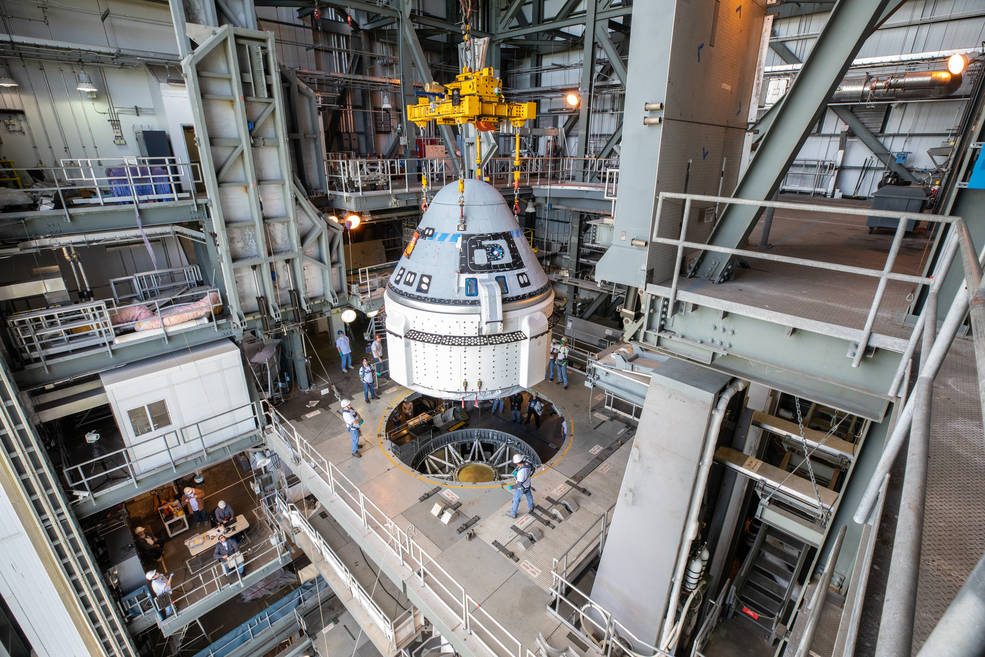
The Boeing CST-100 Starliner spacecraft is guided into position above a United Launch Alliance Atlas V rocket at the Vertical Integration Facility at Space Launch Complex 41 at Florida’s Cape Canaveral Air Force Station on Nov. 21, 2019. NASA/Cory Huston

The first orbital flight test of Boeing’s Starliner, the capsule which will eventually ferry astronauts to the International Space Station (ISS) as part of NASA’s Commercial Crew program, has not gone as planned. On Friday morning, the craft was scheduled to launch an uncrewed mission to the ISS, but it entered the wrong orbit and did not made it to the space station.

Recommended Videos

The Starliner made it to a stable 250-kilometer circular orbit, but the Boeing team chose not to attempt to dock with the ISS due to limited fuel availability. Instead, the craft headed back to Earth and landed early on Sunday morning.

In a press conference, Jim Chilton, senior vice president of Boeing’s Space and Launch Division, confirmed that the problems during the test were caused by a timing issue which led to the autonomous systems positioning the craft incorrectly. The craft needed to connect with the Atlas V rocket to get the correct time, but something went wrong in this process. This resulted in the craft thinking it was at a different point in the mission than it actually was, which led to it entering the wrong orbit.

NASA and Boeing representatives emphasized that the Starliner was a “healthy spacecraft” and an “able vessel” and that as far as they could tell at this early stage, there were no hardware problems onboard. The problem seems to be purely a software issue. But Boeing did admit that it had written the code which appears to have caused the problem.

“The plan was for Starliner to rendezvous and dock with the International Space Station and return home safely to Earth,” NASA Administrator Jim Bridenstine said in a statement. “While a lot of things went right, the uncrewed spacecraft did not reach the planned orbit and will not dock to the International Space Station. This is in fact why we test. Teams worked quickly to ensure the spacecraft was in a stable orbit and preserved enough fuel to ensure a landing opportunity.”

The Starliner landed safely just before 5 a.m. PT on Sunday in the White Sands Space Harbor in New Mexico, marking “the first time an American-made human-rated capsule has landed on land,” according to NASA TV.

Now the landing is complete, there will be a news conference about the test flight featuring NASA Administrator Jim Bridenstine, Jim Chilton, senior vice president of Boeing’s Space and Launch Division, and Steve Stich, deputy manager of NASA’s Commercial Crew Program. You can watch the conference using the video below, beginning at 7 a.m. PT.


NASA Live: Official Stream of NASA TV
Georgina Torbet
Georgina has been the space writer at Digital Trends space writer for six years, covering human space exploration, planetary…
Samsung’s humanoid robot ambitions are real, but factories come first
Samsung’s new robotics division has humanoids in its sights, although its immediate business is far more practical factory automation
Robot Touch Human Finger

Samsung wants a place in the humanoid race, but its new robotics push begins with machines built for factories rather than homes.

The CEO-led RX robotics division will initially focus on manufacturing robots. Samsung has separately identified humanoids as a priority, although it hasn’t announced a commercial model or explained where one fits into the division’s immediate plans.

Read more
The future of AI may depend on this one behind-the-scenes change
Running Claude on Android.

Whenever a new AI model arrives, it's easy to get caught up in the bells and whistles. We talk about how much smarter it is, how quickly it answers questions, or how realistic its images have become. But here's the thing: none of that matters much if the AI can't reliably work with the apps and services people use every day.

That's why an upcoming update to the Model Context Protocol (MCP) caught my attention. It isn't a new chatbot or a fancy AI model. In fact, most people will never even know it's happening. But it could quietly make the AI ecosystem a lot healthier. If you've never heard of MCP before, don't worry. Think of it as a shared language that lets AI assistants safely talk to apps like Gmail, Slack, calendars, databases, and countless other services. Instead of every company inventing its own way to make those connections, MCP gives everyone a common rulebook.

Read more
The AI game-dev boom has a dark side: fewer jobs for the people starting out
Solo creators are thriving with tools like Claude Code and Copilot, but entry-level game roles are disappearing.
Man playing a video game on a desktop with glowing red and blue lights

AI is making it easier than ever for a single person to build a game. That sounds like a win for creativity, and in many ways, it absolutely is. But there is a catch. As generative AI tools help solo developers and small studios do more with fewer people, the same shift is making life tougher for writers, artists, concept creators, and junior programmers trying to break into the gaming industry.

AI is giving solo developers superpowers

Read more