Scientists have created genetically engineered moths and released them into the wild. Before you start fretting about the insect version of Jurassic Park, however, it’s for our own good. At least, when it comes to feeding the planet.
No, the moths aren’t designed to be some lab-grown future foodstuff. Instead, researchers from Cornell University have worked with scientists from biotech company Oxitec to find environmentally friendly ways to limit the damage caused to crops by the diamondback moth, which can add up to billions of dollars in losses. Their answer? Genetically engineer your way out of the problem.
“We are interested in using genetic engineering of an insect species to help manage pest populations without the use of additional insecticides,” Anthony Shelton, professor of entomology at Cornell, told Digital Trends. “The ‘self-limiting’ technology we used is a vast improvement over the sterile insect technique, developed in the 1950s and promoted by Rachel Carson in her seminal book, Silent Spring.”
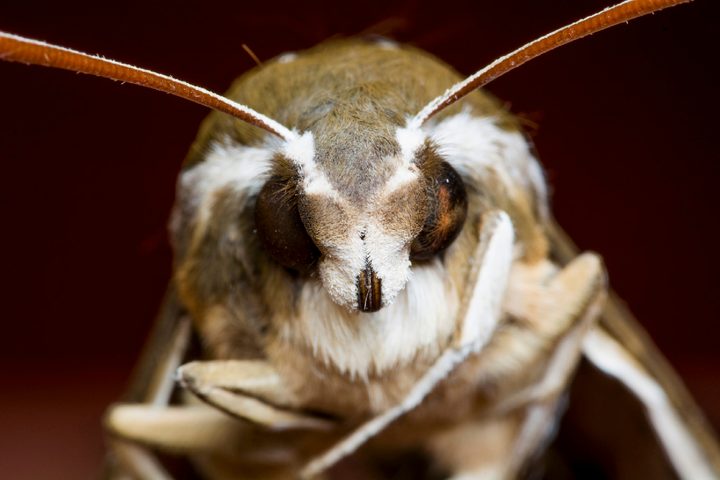
That approach of insect control involves releasing large numbers of sterile insects into the wild. The sterile male insects then compete with wild males to mate with females, which subsequently produce no offspring. The result is a reduction in the next generation’s population. This work takes the same broad approach, but with genetic engineering in place of sterilization using X-rays.
“Two genes – a self-limiting gene and a marker gene – were introduced into the insect, such that it can pass them onto offspring just like any other gene,” said Dr. Neil Morrison, agricultural lead for Oxitec. “After the release of these male moths, the self-limiting gene prevents their female offspring from surviving. So with sustained releases of self-limiting males, the number of pest females declines, leading to pest suppression. [The] marker gene – for a protein that is visible under suitable light – [meanwhile] allows us to monitor the moths in the field. The self-limiting moths are non-toxic and non-allergenic.”
In their research so far, the team has demonstrated that introducing these “self-limiting” male insects into the pest population causes it to collapse. They have also shown that these males have similar dispersal and longevity in the field as compared with a non-engineered strain.
“Combining these two studies suggests that ‘self-limiting’ male insects can be released in a field to manage the pest population without the use of insecticides,” Shelton continued. “Additional field studies are needed to verify this result under different agronomic conditions.”
A paper describing the work was recently published in the journal Frontiers in Bioengineering and Biotechnology.