1. Home
  2. Phones
  3. Mobile
  4. News

The FCC will hit phone carriers with a $200 million fine over location sharing

Add as a preferred source on Google

The Federal Communications Commission (FCC) is going to hit the big four U.S. phone carriers with a fine totaling $200 million for selling people’s location data. 

AT&T, Sprint, Verizon, and T-Mobile will have the chance to dispute their fines, according to a report from The Wall Street Journal. The FCC hasn’t officially announced anything yet, but the agency is expected to make the announcement, with details on final numbers, on Friday, February 28. 

Recommended Videos

That $200 million fine would reportedly be split four ways between the companies, so if they are all fined the same amount, each will end up having to pay $50 million. 

Just last month, FCC Chairman Ajit Pai, revealed that the FCC concluded an investigation into mobile phone carriers. He said that “one or more wireless carriers” have been found to have violated federal law as it relates to the exposure of consumers’ real-time location data.

Democratic FCC Commissioner Jessica Rosenworcel issued a statement shortly after Pai’s announcement last month, saying that the “safety and privacy of every American with a wireless phone” was put at risk. 

“For more than a year, the FCC was silent after news reports alerted us that for just a few hundred dollars, shady middlemen could sell your location within a few hundred meters based on your wireless phone data. It’s chilling to consider what a black market could do with this data,” she said. “Millions and millions of Americans use a wireless device every day and didn’t sign up for or consent to this surveillance.

After reports from The New York Times and Motherboard surfaced in 2018 about phone carriers abusing location data by selling it to bounty hunters, landlords, and other third parties, the FCC launched an investigation into the practices of the top carriers. Verizon reportedly stopped sharing cellular location data in 2018, and AT&T, Sprint, and T-Mobile followed in early 2019. 

Digital Trends reached out to the FCC to comment on the fine, but haven’t yet received a response. We also reached out to AT&T, Sprint, Verizon, and T-Mobile to comment, and we’ll update this story when we hear back. 

Allison Matyus
Former Digital Trends Contributor
Allison Matyus is a general news reporter at Digital Trends. She covers any and all tech news, including issues around social…
Apple starts testing cheaper Chinese RAM inside iPhones, but your pocket won’t feel the ease
Fourth-largest DRAM producer in the world, on the Pentagon's watchlist, and now quietly inside Apple's test labs.
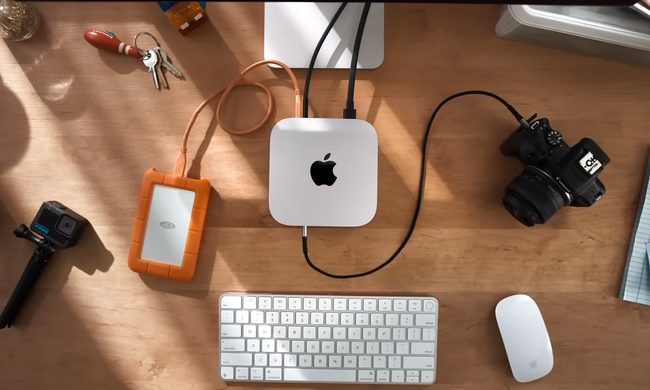
The M4 Mac mini on a desk.

Apple has quietly been testing a new memory supplier for some of its devices sold in China, and the name behind those chips is one that Washington has been keeping a close eye on.

It’s the one that I talked about a few days ago in another story, when rumors about Apple considering a Chinese memory supplier started surfacing after the company announced an ugly price hike for most of its devices (except iPhone and Apple Watch). 

Read more
Android 17’s new video standard fixes one of HDR’s biggest problems
Your HDR videos are about to look right, no matter what screen you use.
Electronics, Mobile Phone, Phone

Android 17 is packed with new features, but one small addition might end up mattering more than the flashy ones. It's called Eclipsa Video, and its whole purpose boils down to this: your HDR videos should finally look the way they're supposed to, regardless of which screen you're staring at.

Why does HDR look different on every screen?

Read more
Your free mobile VPN is a privacy disaster. Go figure
Android's free VPNs are somehow worse than you expected
VPN

The free VPN app you downloaded for your Android phone might be doing more harm than good. A recent large-scale audit of free Android VPN apps has shared some worrisome findings that justify some healthy suspicion. Researchers found these apps leaking traffic, sending identifying information to third parties, and basically the opposite of what a VPN is supposed to do.

The study comes from researchers at the University of Michigan, the University of New Mexico and IIT Delhi. Their findings were presented at the Network and Distributed System Security Symposium 2026 alongside MVPNalyzer, a framework designed to audit mobile VPN apps automatically and at scale.

Read more