As the COVID-19 coronavirus epidemic continues to spread, hospitals in China have turned to a trio of robots to help halt the spread of the flu-type virus. The robots include a food delivery robot, sanitizing robot, and directional guiding robot that can help people avoid unnecessary human contact, hopefully preventing further spread of the virus.
The robots were developed by an international collaboration between several companies, including the U.S.-based Orbbec, which manufactures 3D camera sensors. They are currently being utilized across 10 provinces in Chinese hospitals, with others reportedly planning to implement the technology as well.
The food delivery robot is responsible for delivering meals to patients, alongside medical supplies and other “daily necessities.” In doing so, it helps avoid cross-infection, while also reducing the workload for frontline medical staff. The sanitizing robot, meanwhile, assists in cleaning hospitals, thereby stopping interactions with unwanted germs. Finally, the guiding robot can direct patients between different hospital departments. Able to map spaces and determine its own position within them, this guiding robot then plans an optimal path toward its target location.
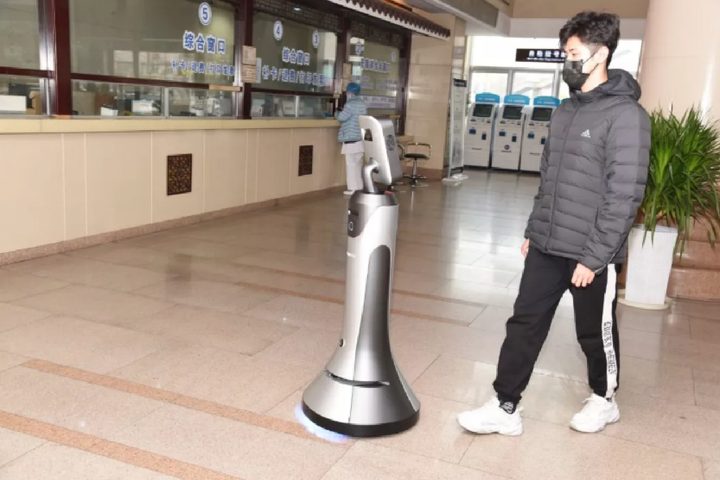
“It’s too soon to tell the full benefits of having robots act as intermediaries in contagious health care settings,” David Chen, co-founder of Orbbec, told Digital Trends. “But we do know that it helps in a few critical ways. First, one of the most effective ways to reduce the dangers of a contagion is by limiting contact with others. These robots are pioneers in delivering vital supplies and food to people who’ve been infected.
“The frontline of every epidemic is staffed with overworked medical professionals who are in contact with the infected day-in and day-out. These robotic assistants help provide a buffer between the medical staff, and allow them to stay focused on providing the best care without risk of infection.”
Digital Trends has already covered some of the ways that technology is being called into service to help battle the spread of coronavirus. For instance, one U.S. drone company is in discussions about using its quadcopters to help make potential diagnoses from a distance. Chen said that, in the future, he sees the robots Orbbec has helped develop being used “on a larger scale to provide for people who’re stuck in their homes.”