1. Home
  2. Computing
  3. News

All AMD processors since 2011 have had a security vulnerability

Add as a preferred source on Google

Coming on the heels of recent news that there is an unfixable vulnerability in Intel processors from the last five years, security researchers have identified a vulnerability in AMD processors from the last nine years as well.

A paper by researchers from the Graz University of Technology, first reported on by Tom’s Hardware, describes two attacks, Collide+Probe and Load+Reload, which are a subset of the “Take A Way” vulnerability and are based on a Spectre attack. The vulnerability is found in all AMD processes released between 2011 and 2019, including the Zen microarchitecture.

Recommended Videos

“We reverse-engineered AMD’s L1D cache way predictor in microarchitectures from 2011 to 2019, resulting in two new attack techniques,” the researchers wrote in the paper. “With Collide+Probe, an attacker can monitor a victim’s memory accesses without knowledge of physical addresses or shared memory when time-sharing a logical core. With Load+Reload, we exploit the way predictor to obtain highly-accurate memory-access traces of victims on the same physical core. While Load+Reload relies on shared memory, it does not invalidate the cache line, allowing stealthier attacks that do not induce any last-level-cache evictions.”

Fixes may compromise performance

These are what are called side-channel attacks, which can be deployed by exploiting vulnerabilities in JavaScript via internet browsers such as Google Chrome or Mozilla Firefox. The researchers did suggest both hardware and software fixes which could protect against the vulnerabilities, but these may involve a tradeoff in performance as most Spectre fixes have done. The suggestions include temporarily disabling the processor’s way predictor to prevent attacks, using a keyed mapping function, and flushing the way predictor after use. These fixes are all things that would have to be engineered by AMD, so if you are a regular user then there’s not much you can do except wait to see what security measures AMD will bring in.

This is some controversy around the findings of this paper, as the acknowledgments section includes mention of funding from Intel, first spotted by Hardware Unboxed: “Additional funding was provided by generous gifts from Intel.” This is not unusual in academic research, however, and the lead author responded on Twitter that he discloses the funding Intel provides to some of his students on all of his papers.


Georgina Torbet
Georgina has been the space writer at Digital Trends space writer for six years, covering human space exploration, planetary…
Microsoft wants Windows 11 and your phone to become best friends
Microsoft's latest plans reportedly focus on making the PC and smartphone experience feel seamless.
Windows 11 PC with Android Phone

For years, Phone Link has felt like that one app everyone knows exists but rarely remembers to open. Microsoft apparently wants to change that. According to a report from Windows Central, the company is working on a major overhaul of how smartphones integrate with Windows 11, making phones feel like a native part of the operating system instead of something users access through a separate app.

Phone Link is coming out of hiding

Read more
What are Copilot+ PCs? Everything you need to know
Copilot

Walk through a laptop aisle in 2026 and the Copilot+ PC branding is highlight for most Windows laptops. From Microsoft's own surface to other PC makers like Samsung, HP, and Dell, you can find notebooks that carry this badge to convey that they are AI-ready. At a glance, the name sounds like it refers to a computer with a better version of the Copilot chatbot, which only explains a small part of it.

A Copilot+ PC is a Windows 11 computer that meets Microsoft’s hardware standard for advanced on-device AI features like a compatible processor with a dedicated NPU. You also need a certain amount of RAM and storage, all of which brings access to Windows features such as Recall, Click to Do, and much more. Many of these experiences use the NPU to process information locally, reducing their reliance on cloud servers and helping them run more efficiently in the background.

Read more
ASUS expands its ProArt lineup with a compact keyboard and a smart creator mouse
The new ProArt KD300 and MD301 are designed to make life easier for designers, editors, and creators.
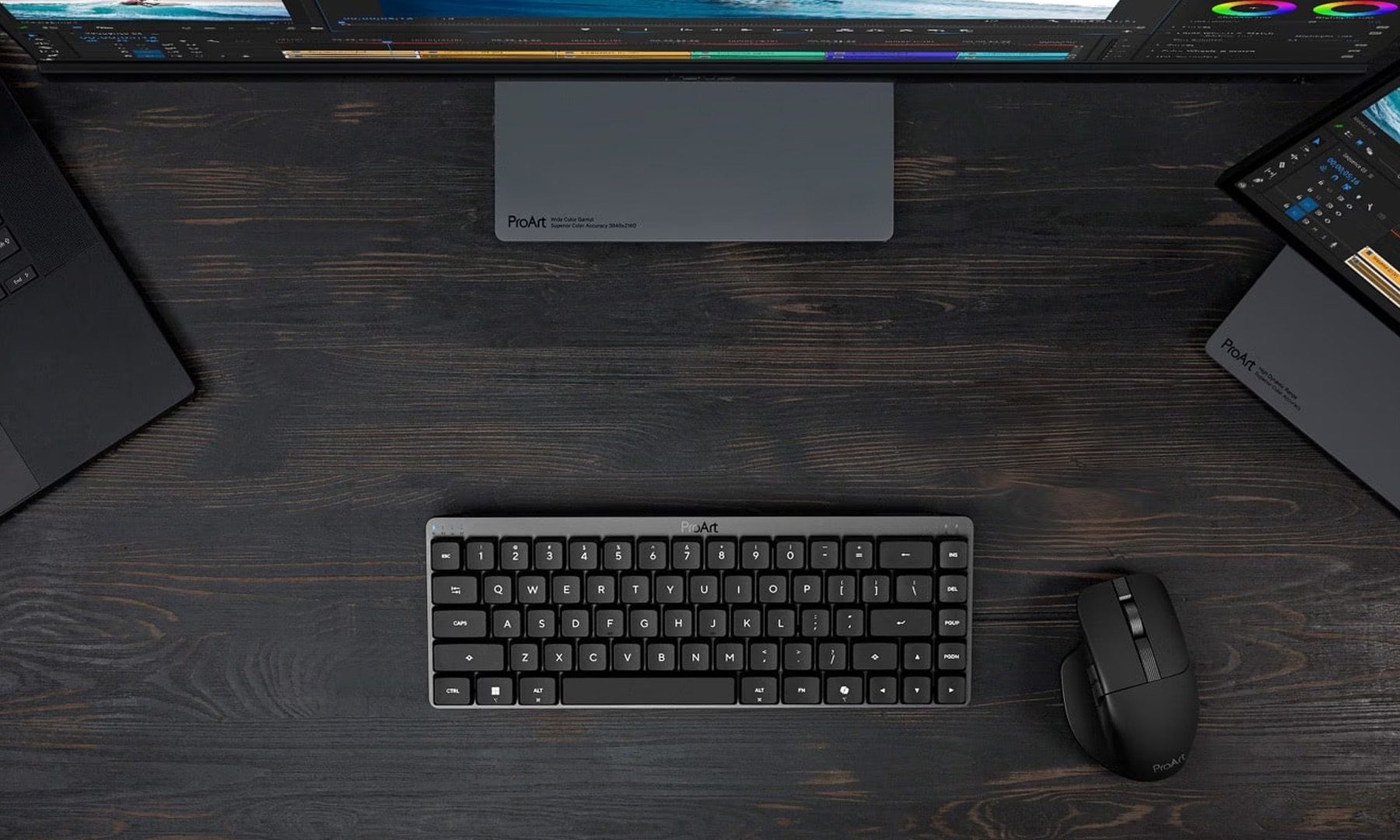
ASUS ProArt Keyboard KD300 and ProArt Mouse MD301

Creators have long had plenty of powerful laptops and monitors to choose from. Keyboards and mice? Not so much. ASUS is looking to change that with the expansion of its ProArt accessory lineup. Leading the announcement is the new ProArt Keyboard KD300, a compact low-profile keyboard that's designed to work alongside the ProArt Mouse MD301, giving creators a matching desktop setup built specifically for productivity instead of gaming.

A compact keyboard that doesn't sacrifice functionality

Read more