  1. Home
  2. Emerging Tech
  3. News

NASA suspends work on the James Webb Space Telescope

Add as a preferred source on Google

NASA is suspending work on its troubled James Webb Space Telescope due to the coronavirus pandemic. “The James Webb Space Telescope team, also in California, is suspending integration and testing operations,” NASA announced in a statement. “Decisions could be adjusted as the situation continues to unfold over the weekend and into next week. The decision was made to ensure the safety of the workforce. The observatory remains safe in its cleanroom environment.”

The James Webb telescope has been through more than its share of issues, even before the coronavirus outbreak. It has been delayed multiple times, due to the complexity of the project, and a report released in January of this year estimated a just 12% chance that the telescope would be able to meet its launch date of November 2020. With the project now suspended, it seems highly unlikely that the telescope will be launched this year.
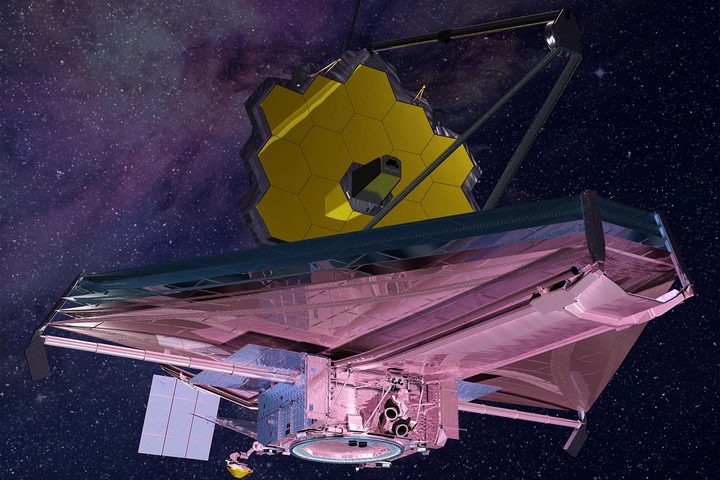
Artist's conception of the James Webb Space Telescope
Artist’s conception of the James Webb Space Telescope NASA

The suspension is necessary to protect NASA staff, the agency said. “We are going to take care of our people. That’s our first priority,” NASA Administrator Jim Bridenstine said in the statement. “Technology allows us to do a lot of what we need to do remotely, but, where hands-on work is required, it is difficult or impossible to comply with CDC guidelines while processing spaceflight hardware, and where we can’t safely do that we’re going to have to suspend work and focus on the mission-critical activities.”

Recommended Videos

NASA has said it still plans to go ahead with its mission with SpaceX in May. The aim is to launch astronauts on a journey to the International Space Station (ISS) in a SpaceX Crew Dragon capsule, which would mark the first launching of American astronauts from American soil since the closing of the Space Shuttle program in 2011. Despite the effects of the coronavirus on many aspects of the space industry, SpaceX seems to be making it through the crisis relatively unscathed, with the company not announcing any delays or issues caused by the pandemic.

NASA, on the other hand, has been hit hard by coronavirus. It has experienced outbreaks of the disease at and nearby to a number of its research centers, which has lead to it requiring employees to work from home. It has also suspended work on its Space Launch System and Orion projects, so it seems likely that the planned mission to the moon, aimed for a 2024 launch, may well be delayed. The agency says it will continue to prepare for other missions such as the launch of the Mars 2020 mission, the development of the X-59 plane, and planned activities for the International Space Station.

Georgina Torbet
Georgina has been the space writer at Digital Trends space writer for six years, covering human space exploration, planetary…
Google Earth’s AI misadventure lasted only a day. It was a tale of dangerous ignorance.
Nuclear reactors, tanks, and historical destruction on a life-like satellite map? Yeah, that's bad.
Nano Banana AI image generator representation.

Technology behemoths are clearly not reading the room, or they are just moving faster than they should when it comes to AI deployment. Google has already stuffed its Gemini AI in every corner of its software stack, from Android to daily productivity tools like Gmail that are used by hundreds of millions of users every day. AI is everywhere. Not all of it is bad, mind you. But in a few places, it just feels forced.

In its latest AI-fication experiment, the company targeted Google Earth. The idea was to let the audience use its Nano Banana 2 AI image generator and make images that can be placed on the map view. On paper, it's a cool idea. What would the Colosseum of Rome look like in your urban neighborhood? Yeah, fun stuff like that.

Read more
Google’s new AI gives robots better balance, smarter hands, and teamwork capabilities
Google just made robots a lot less clumsy and a lot more helpful.
Gemini robotics 2.0

Google DeepMind just brought sci-fi robots closer to reality, and it is very exciting. Building on its original Gemini Robotics model, the company has introduced Gemini Robotics 2, an AI system designed to help robots think, move, and even work together. Unlike most robots today, which rely on pre-programmed routines or someone controlling them remotely, this new system lets robots figure things out on their own when situations get unpredictable.

Can robots finally handle whole-body tasks?

Read more
Remember Samsung’s Ballie home robot? It may finally be inching closer to reality
Leaked app wireframes give the strongest hint yet that Samsung's Ballie home robot, first shown at CES 2020, might still be headed toward an actual release.
Samsung Ballie robot in a room next to a dog feeder.

Samsung's rolling home robot has been the industry's longest-running "will it ever actually ship" joke, and I'll admit I'd mostly given up on it. Now, there's finally a glimmer of hope.

Samsung first unveiled Ballie as a concept at CES 2020. Then, it showed it as a significantly upgraded version four years later. However, the company never confirmed a release date or committed to releasing it at all. 

Read more