  1. Home
  2. Trash
  3. News

New Earth-sized planet discovered 300 light-years away could support life

Add as a preferred source on Google
 

A new, Earth-size exoplanet has been discovered in old data from NASA’s Kepler space telescope — and scientists say this world has the potential to support life. 

The rocky exoplanet, known as Kepler-1649c, is only 1.06 times larger than Earth and is located about 300 light-years away, according to a new study released Wednesday in The Astrophysical Journal Letters.

Out of all the exoplanets found by the now-retired Kepler space telescope, Kepler-1649c is the closest to our planet in size and estimated temperature.

The exoplanet orbits a red dwarf star within the so-called “habitable zone,” the area of space around a star in which liquid water could exist on a rocky world.

Researchers initially missed the planet when their computer algorithm misidentified it as a “false positive” while looking for planets in past Kepler space telescope observations. After double-checking the algorithm, scientists realized Kepler-1649c was, in fact, another world.

“Out of all the mislabeled planets we’ve recovered, this one’s particularly exciting,” said Andrew Vanderburg, a researcher at the University of Texas at Austin and an author on the study.
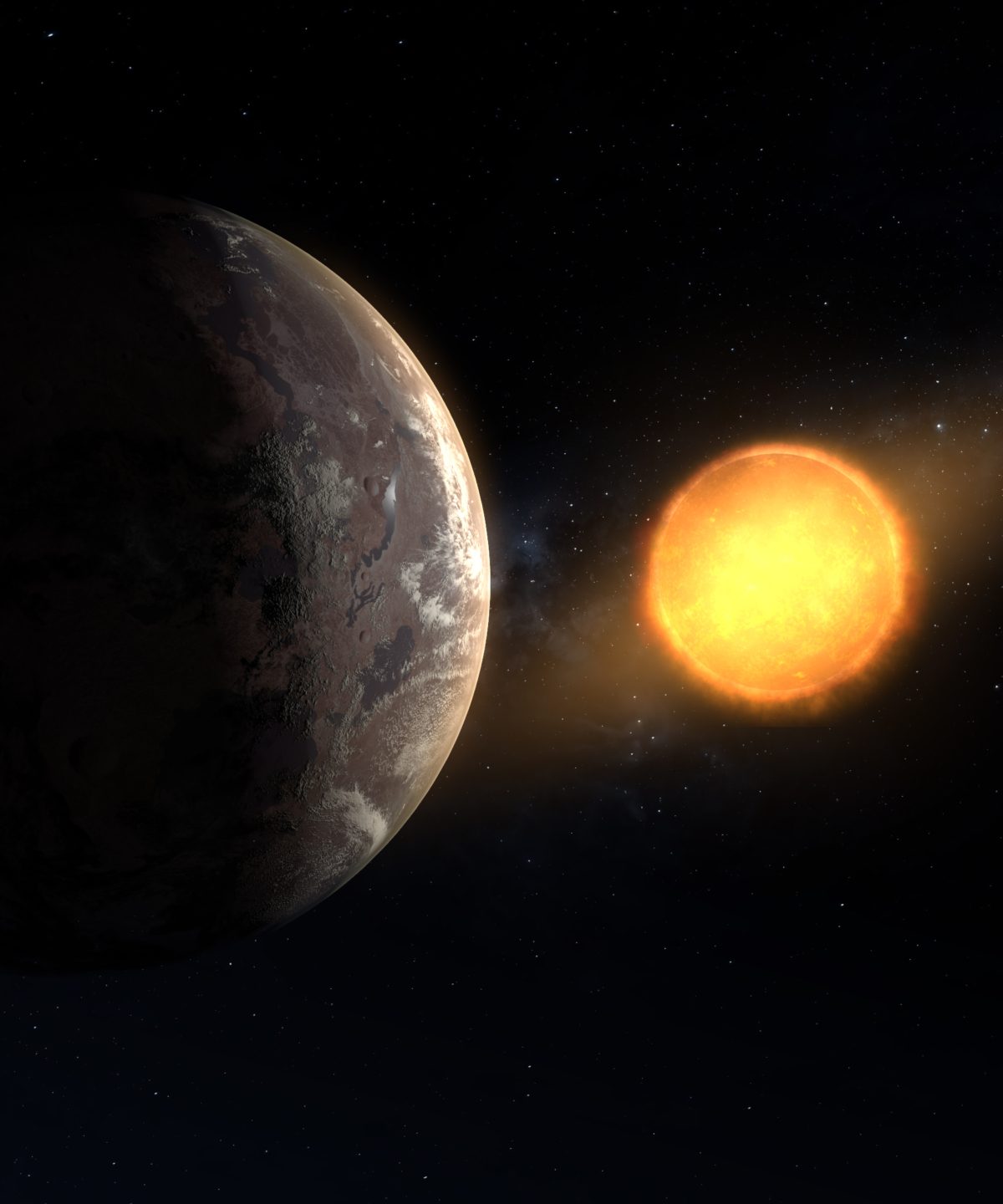
NASA/Ames Research Center/Daniel Rutter

The red dwarf star that Kepler-1649c orbits is much smaller than our own; the exoplanet only receives about 75% of the amount of light that we get from our sun. It also rotates its star more quickly than Earth does, making its years equivalent to only about 19.5 Earth days.

But Kepler-1649c’s sun may be prone to extreme flare-ups that could affect planets around it, so scientists are still unsure about the planet’s atmosphere and temperature.

Still, NASA is optimistic about the newly discovered planet and said that Kepler-1649c is one of the best matches to Earth found yet. On Friday, NASA will host a Ask Me Anything on Reddit about the discovery of Kepler-1649c from 11 a.m. to 12:30 p.m. PT.

This year alone, NASA has been able to identify 41 new exoplanets. In total, NASA has confirmed the existence of more than 4,100 planets outside our solar system in just 27 years of looking.

Allison Matyus
Former Digital Trends Contributor
Allison Matyus is a general news reporter at Digital Trends. She covers any and all tech news, including issues around social…
The Digital Trends App Bundle is yours to try for a whole week, free
Digital Trends App Bundle

Recently, we've entered an exciting collaboration with Maple Media, creating a bundle of 17 apps worth having on your phone. From relaxed fun to serious productivity boosts, these apps cover all your bases and provide a fun boost to your phone. Normally, the bundle is $9.99 per month (far lower than the cost of using the apps individually), but for your first 7 days you can get access to the bundle for free. View the full Digital Trends App Bundle for a complete list of the apps, or read on for a summarized take.

Start your free trial

Read more
The Galaxy S26 Ultra might not see much of a battery upgrade after all
It looks like it will stay the same as the last five years.
The back of the Samsung Galaxy S25 Ultra.

What's happened? This week, China's Quality Certification Center released information about a battery (EB-BS04898ABY) with a maximum capacity of 4,855mAh. That's the same capacity as was previously seen in the Samsung Galaxy S25 Ultra, and fans have taken this certification to mean the Galaxy S26 Ultra will not see a capacity increase after all.

The Samsung Galaxy Ultra models have had the same battery capacity for the last five years.

Read more
The Galaxy Tab S10 Lite is official, and it’ll be here sooner than you think
Galaxy Tab S10 Lite

What's happened? Samsung has officially announced the Galaxy Tab S10 Lite, a budget-friendly alternative to the Galaxy Tab S10. The device has been rumored for months, but this is the first time Samsung has officially acknowledged its existence.

The Galaxy Tab S10 Lite will have a 10.9-inch display and a peak brightness of 600 nits — a bit on the lower side, versus the iPad Pro's maximum brightness of 1,600 nits.

Read more