NASA astronaut Doug Hurley arrived at the International Space Station with Bob Behnken aboard SpaceX’s Crew Dragon spacecraft at the end of May 2020. The mission marked the first astronaut use of the Crew Dragon, and the first crewed launch from U.S. soil since the end of the space shuttle program in 2011.
Recommended Videos
As well as working on various scientific experiments, Hurley has also been taking photos of some of the incredible sights viewable from the space station as it orbits Earth about 250 miles up, and posting them on his Twitter account for everyone to enjoy. We’ve picked out some of the best so far:
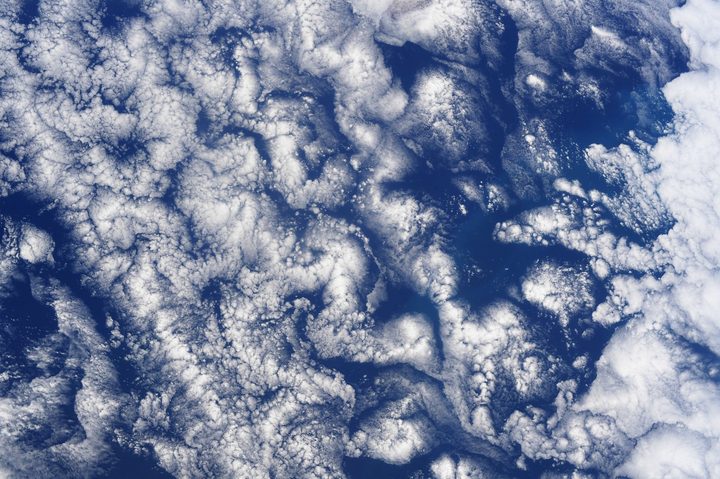
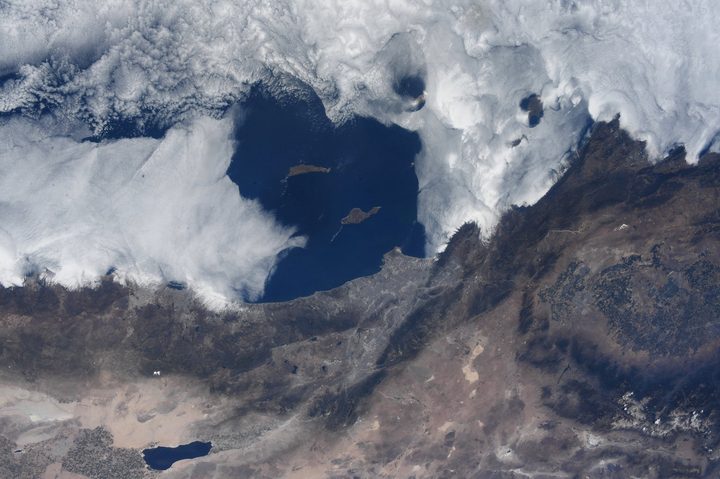
Doug Hurley: “I never get tired of this view from the Cupola as our orbit transitions into night.”Doug Hurley/NASA“Cloud art in the South Pacific.”Doug Hurley/NASA“The Bahamas, absolutely one of the most beautiful sights on Earth from space.”Doug Hurley/NASA“Sandstorms in Qatar, United Arab Emirates, and Saudi Arabia.”Doug Hurley/NASA“We flew over this Saharan dust plume today in the west central Atlantic. Amazing how large an area it covers!”Doug Hurley/NASA“Yellowstone and Grand Teton National Parks; Shoshone, Caribou-Targhee, and Bridger-Teton National Forests, as well as the Wind River Mountains, all in one picture.”Doug Hurley/NASA“After a long haul flying northeast over the Pacific, even at orbital speeds, the first sight of land is the Baja Peninsula.”Doug Hurley/NASA“Was hoping for clear weather as we flew over England, France, and Belgium but the cloud pattern was almost as good.”Doug Hurley/NASA“I stayed up late last night to spend some time looking out the window. It was a beautiful day to see the Great Lakes and my childhood home in upstate New York.”Doug Hurley/NASA“Earth Art, southwest Libya.”Doug Hurley/NASA“The Los Angeles Basin, where @SpaceX headquarters is located and where Dragon #Endeavour was built. The marine layer receded just enough to see Santa Catalina and San Clemente Islands.”Doug Hurley/NASA
Space is becoming Bezos and Musk’s next data center site, and we have every reason to worry
The AI boom is coming for the night sky
AI data centers already consume vast amounts of electricity and water on Earth, so Silicon Valley has begun looking somewhere considerably more spacious... literally.
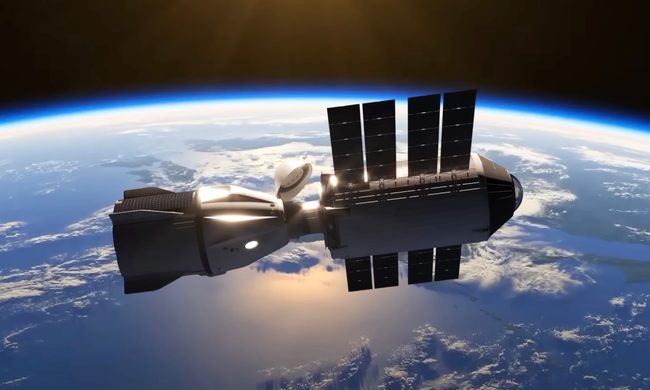
Elon Musk's SpaceX and Jeff Bezos' Blue Origin, along with several other companies, have proposed enormous constellations of satellites designed to operate as orbital data centers. However, environmental groups and former space officials are now warning that putting them into orbit at the proposed scale could have severe consequences for Earth's atmosphere and the night sky.
The first possible exomoon is here, and it makes our Moon look hilariously tiny
Scientists may have found the first exomoon, except this one is the size of Jupiter
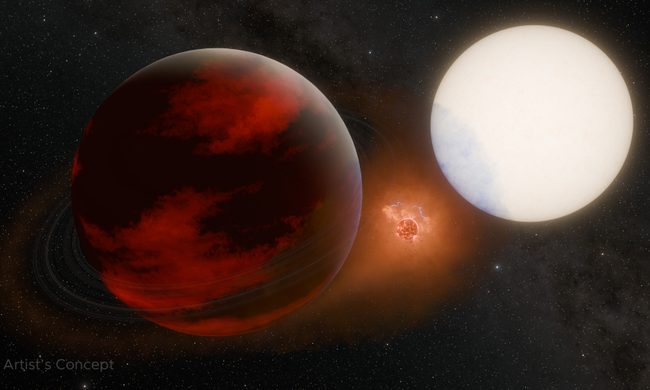
We have already discovered more than 6,000 planets outside of our immediate neighborhood. Yet, finding a moon orbiting one of those distant worlds has proved considerably harder. Astronomers may finally have something close to the real deal, but this particular object stretches the word “moon” almost beyond recognition.
Using the European Southern Observatory’s Very Large Telescope in Chile, researchers detected strong evidence for a moon-like object in the CD-35 2722 system. Further observations are still necessary to confirm the discovery, but it could become the first confidently detected natural satellite outside our solar system. There is still one tiny complication though. This moon is apparently massive.
China’s answer to SpaceX’s reusable rockets literally catches boosters in a net
SpaceX catches boosters on legs. China just used a net.
SpaceX's playbook for recovering a rocket booster generally involves legs, a precisely controlled vertical landing, and either a concrete pad or a drone ship.
China just managed to pull off something similar, but in a slightly different way, and on July 10, it tested the method as well.