If you’ve been saving up for a new camera, I’ve got some bad news for you. Waiting until fall just got a lot more expensive. And this isn’t some isolated issue troubling the camera industry.
It’s the same global chip crisis coming for basically everything with a processor and memory inside it.

So how bad is this price hike actually?
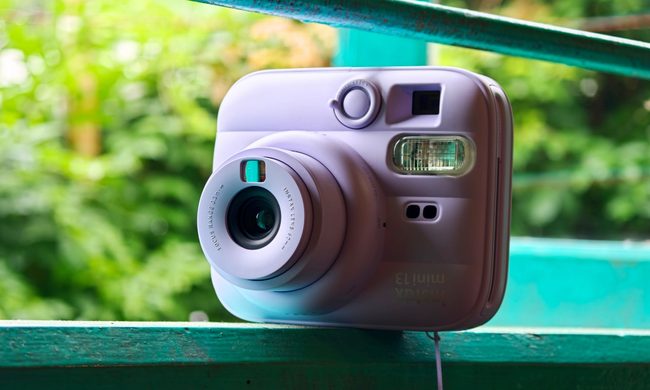
Fujifilm is raising list prices on at least five camera models starting September 1, 2026, according to Fuji-Store (via NotebookCheck). The X100 VI jumps €200 to €1,999, roughly $2,119 at current exchange rates, while the X-E5, X-T50, and X-S20 each climb €100.
The steepest hike lands on the medium-format GFX100 II, which is up €500 to €8,499. The revised price puts it a full €1,000 above its direct rival, Hasselblad’s X2D II.
Fujifilm points squarely to rising production costs tied to the ongoing DRAM crisis, which is squeezing not just RAM and NAND flash memory, but the camera sensors and processors these devices depend on.
Is this just a Fujifilm problem?
No, and I can’t stress this enough. Since the DRAM shortage is hitting every manufacturer’s supply chain identically, expect Canon, Sony, and Nikon to follow with price hikes of their own before long.
I’ve been covering the memory crisis and its effects on the consumer electronics industry since December 2025, and cameras aren’t even the worst-hit category right now.
Budget smartphones under $100 have become nearly “impossible to manufacture” profitably, according to Omdia analysts, while Samsung just raised prices across its entire new foldable lineup by $100 per model (and mind you, they already commanded a flagship price).

The memory crisis has already disrupted smartphone economics
Chipmakers have also jumped onto the price hike bandwagon. Most recently, Qualcomm told customers it’s raising chip prices by a double-digit percentage.
TSMC, which manufactures chips for nearly every major tech company on Earth (including Qualcomm), is separately expected to raise prices roughly 10% across most of its manufacturing nodes.
With RAM prices alone projected to climb another 40% to 50% this quarter, cameras won’t be the last product category getting noticeably pricier before 2026 wraps up. If you were waiting to upgrade your setup, I’d suggest you move now, before it’s too late and the upgrade costs you a couple hundred dollars more than it should.