
The sights and sounds of CES are the things that get most breathlessly reported on, but for anyone who’s ever crammed into the Las Vegas Convention Center with thousands of other sweaty tech fans (or lined up to use its restrooms), the smells can be a pretty memorable part of it, too.
Things are a bit different at this year’s all-virtual CES. However, German startup SmartNanotubes Technologies is on hand (at least, via cyberspace) to make sure that olfactory senses are well represented. The innovative startup has created what it calls the Small Inspector, a multichannel smell-detection chip that could be used to give your home’s smart devices a sensitive schnozz.
The Smell iX16 chip can reportedly be baked into Internet of Things systems and smart home devices, alongside single-board computers such as Arduino and Raspberry Pi. It can sniff out gases including ammonia, nitrogen monoxide, phosphine, carbon dioxide, water vapor, ethanol, acetone, toluene, and isopropanol, along with odors such as chocolate, wine, vodka, tea and coffee, onions, bananas, meat, and fish. If you ever dreamed of your mood lighting smart light setup advising you that you might also want to open a window to clear the smell of last night’s takeout before your date comes over… well, you may have come to the right place.
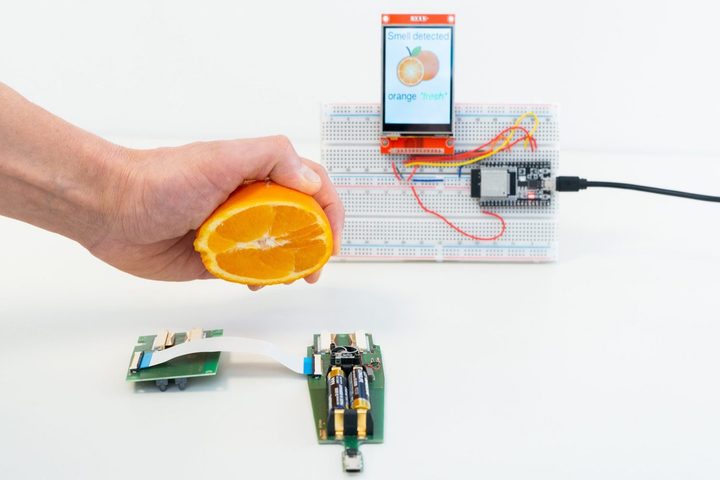
In reality, of course, the Smell iX16 is going to be most useful in areas like food control, hazard prevention, and the health sector. Nonetheless, it’s fascinating to imagine some of the more consumer-facing settings where the smell version of Shazam could play a role.
There’s still a bit more work to do, though. The company will be launching its sniff chip in February on Kickstarter. The goal of this will be to build a “functional and comprehensive database for smells,” ranging “from food to farming, [and] cosmetics to construction.” This will require at least 1,000 active users willing to participate. Backers will receive a ready-to-use developer kit and access to the A.I. software and smell database.
Compared to conventional gas sensors, SmartNanotubes Technologies promises that its chip is more sensitive, smaller, and energy efficient, and can be made more cheaply and in larger quantities. What could smell sweeter than that?


