  1. Home
  2. Computing
  3. Web
  4. Legacy Archives

China Cyberattack Targeted Google Password System

Add as a preferred source on Google
Image used with permission by copyright holder

In early 2009, Google announced it had been subjected to a “highly sophisticated and targeted attack” on its operations in China, with part of the attack targeting email accounts used by Chinese human rights activists. The incident has sparked an international policy dispute between China and the United States, and has seen Google shut down portions of its China operations and move its Google.cn search service to Hong Kong where it can operate outside the Chinese government’s censorship regime. Now the New York Times, citing an unnamed source with “direct knowledge” of the investigation, says the attack was after more than some Gmail accounts: it targeted Google’s single sign-in password system, widely regarded as on of the company’s most crucial technologies.

Google one-password technology, known in-house as “Gaia,” enables users to use a plethora of Google services—from Gmail to calendars to Google Apps to Picassa photo sharing to blogs to Google Wave and much more—without having to sign into each Google service separately.

Recommended Videos

According to the story, the attackers do not appear to have been able to access passwords of Gmail users, and Google quickly responded to the attack by making “significant” changes to its security and network profile after the attack. However, the story raises the possibility that Google’s single sign-on system may have been compromised. Attackers specifically targeted Google developers working on Gaia, and were able to access a group of computers at Google’s Mountain View headquarters, including a software repository.

As Google’s emphasis increasingly shifts to mobile and cloud-based services, security flaws with a single sign-in system could potentially put a great deal of business and personal data at risk.

Geoff Duncan
Former Contributor
Geoff Duncan writes, programs, edits, plays music, and delights in making software misbehave. He's probably the only member…
Lenovo’s Googlebook lineup could include two laptops, a 2-in-1 tablet, and an AI mouse
Images have emerged online giving us our first look at Lenovo’s upcoming Googlebooks
Googlebook

Google announced Googlebook at I/O in May, but we are still waiting to see what the finished hardware will actually look like. The first devices are expected this fall, and new images published by Android Headlines may have given us an early look at what Lenovo has planned.

Lenovo appears to be preparing at least three Googlebooks, including two traditional laptops and a detachable 2-in-1 tablet. There is also a new wireless AI mouse that seems to have been designed specifically for the platform.

Read more
Shopping for back-to-school? I’d recommend these GaN chargers for saving space and packing more power
From a $9 spare to a $56 desk hub, these chargers cut down on cable clutter so that you can focus on your studies, not how cluttered your desk looks.
Best GaN chargers in 2026 for back to school shopping.

Between a phone, a laptop, a tablet, and perhaps a pair of wireless earbuds that require charging every day or every few days, most students are packing multiple chargers for move-in day. Those big, heavy bricks take up valuable backpack space that could otherwise be free for carrying more items. 

However, GaN chargers fix that problem in two ways. First, they deliver the same amount of power from a much smaller body, thanks to gallium nitride transistors. Furthermore, if you're willing to spend a little more upfront, you can get a high-capacity, multi-device charger capable of powering your entire digital ecosystem from a single wall outlet, something that could be very useful for a dorm room.

Read more
Gemini Spark can now use Chrome logins and saved passwords to run errands on your behalf
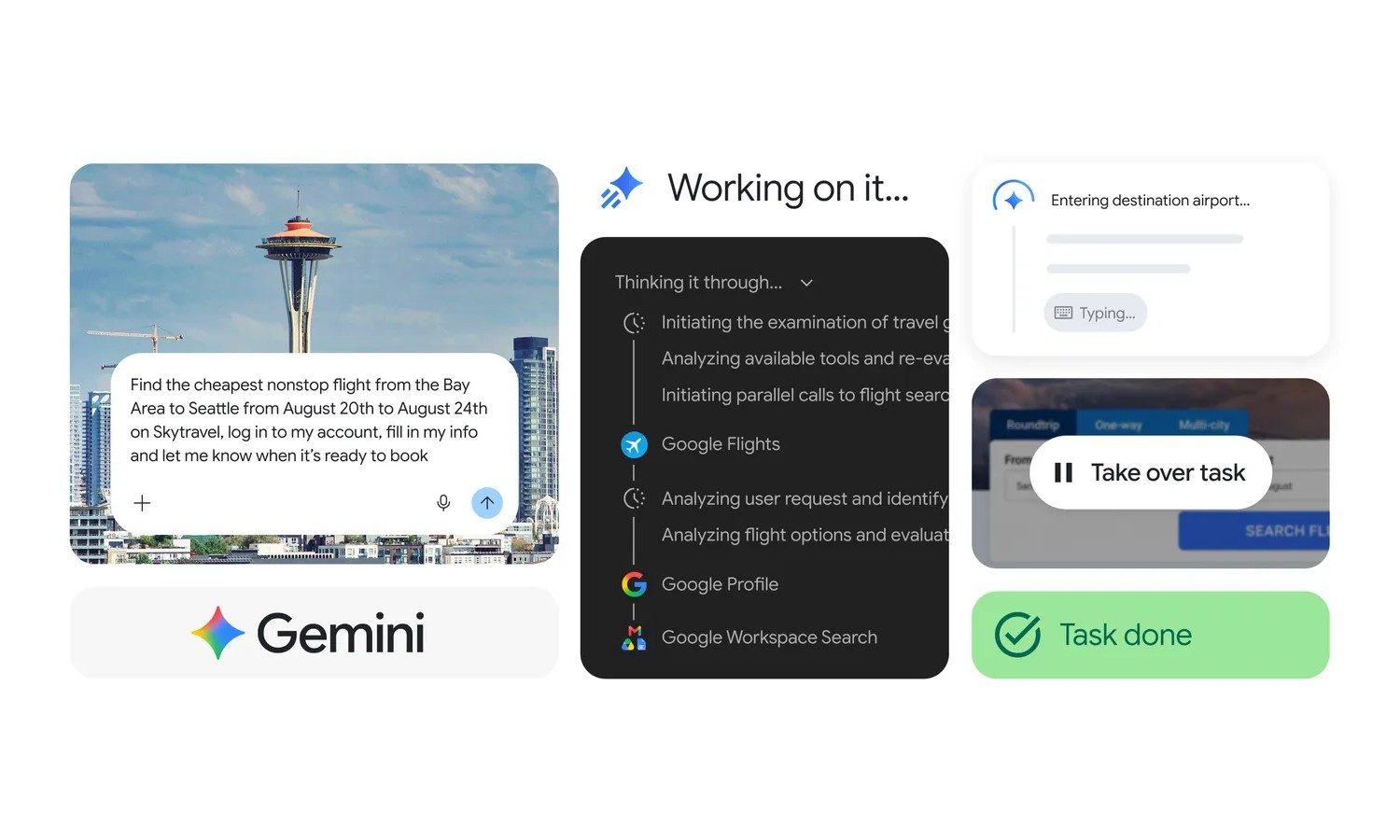
Gemini Spark can use Chrome’s auto browse feature to navigate websites and complete online tasks
Gemini Spark Chrome auto browse feature

Google is integrating Gemini Spark with Chrome so it can carry web-based tasks further without users having to take over at every step. The search giant is also expanding access to AI Pro subscribers in more than 160 additional countries, although the new browser capabilities are initially limited to the United States.

How Chrome auto browse works

Read more