1. Home
  2. Space
  3. News

Space station toilet flushes its way to a new milestone

Add as a preferred source on Google

When you gotta go, you gotta go, and according to the “flush” counter on one of the International Space Station’s three toilets, astronauts have gone more than 40,000 times over the past 20 years.

Current ISS crew member Thomas Pesquet broke the news in a post on Twitter on Wednesday, May 12.

Recommended Videos

Clearly delighted at seeing the toilet’s counter reach a new landmark figure, Pesquet tweeted, “40,000 times this space toilet has been used, a milestone!” He added, “We need to maintain it as clean sanitation and sewage treatment is a human right and a UN Sustainable Development Goal.”

40 000 times this space toilet has been used, a milestone! We need to maintain it as clean sanitation and sewage treatment is a human right and a @UN Sustainable Development Goal. #MissionAlpha #SDG6 pic.twitter.com/ekQYXB3CTc

— Thomas Pesquet (@Thom_astro) May 12, 2021
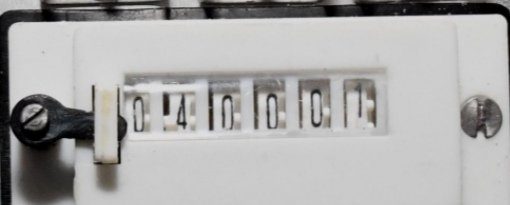
Image used with permission by copyright holder

The space station currently has three toilets on board, so it should be noted that the habitable satellite has in fact hosted thousands more flushing events over the years.

Of course, the microgravity conditions aboard the ISS mean that going to the bathroom in space is a very different process from here on Earth. Indeed, space toilets are not really flushed in the way most earthlings understand the process. Rather, they use a suction mechanism to capture liquid waste before it has a chance to float away and cause a mess. (Interesting tidbit: Urine on the station is later filtered and processed for use as drinking water.)

Solid waste drops into a plastic bag before being sealed and put in a container located at the toilet’s base, which is emptied after around 30 deposits. And no, number twos are not transformed into food. Instead, it will burn up in the Earth’s atmosphere when ejected as part of the station’s trash, while a small amount will be sent to Earth for scientific analysis.

The most recent commode arrived at the space station last year. Known as the Universal Waste Management System, the compact contraption features a more ergonomic design than the other two toilets and has been built with more durable parts that should reduce the need for maintenance.

NASA astronaut Chris Cassidy last year revealed that the most common question he’s asked is, “How do astronauts go to the bathroom?” In the video below, he kindly offers a run-through of the process using the station’s newest toilet.

How to use the Bathroom in Space

The ISS usually hosts around six astronauts, though last month, during a busy crew rotation process, it briefly had 11 on board, putting a little more pressure on resources and possibly causing the occasional line outside a bathroom or two. Commenting on the unusual situation, former NASA astronaut Nicole Stott said, “It’s a blessing that there are three toilets up there now.”

Trevor Mogg
Contributing Editor
Not so many moons ago, Trevor moved from one tea-loving island nation that drives on the left (Britain) to another (Japan)…
Space is becoming Bezos and Musk’s next data center site, and we have every reason to worry
The AI boom is coming for the night sky
How Vast's space station will look in orbit.

AI data centers already consume vast amounts of electricity and water on Earth, so Silicon Valley has begun looking somewhere considerably more spacious... literally.

Elon Musk's SpaceX and Jeff Bezos' Blue Origin, along with several other companies, have proposed enormous constellations of satellites designed to operate as orbital data centers. However, environmental groups and former space officials are now warning that putting them into orbit at the proposed scale could have severe consequences for Earth's atmosphere and the night sky.

Read more
The first possible exomoon is here, and it makes our Moon look hilariously tiny
Scientists may have found the first exomoon, except this one is the size of Jupiter
This artist’s concept depicts a potential volcanic moon between the exoplanet WASP-49 b, left, and its parent star. New evidence indicating that a massive sodium cloud observed near WASP-49 b is produced by neither the planet nor the star has prompted researchers to ask if its origin could be an exomoon.

We have already discovered more than 6,000 planets outside of our immediate neighborhood. Yet, finding a moon orbiting one of those distant worlds has proved considerably harder. Astronomers may finally have something close to the real deal, but this particular object stretches the word “moon” almost beyond recognition.

Using the European Southern Observatory’s Very Large Telescope in Chile, researchers detected strong evidence for a moon-like object in the CD-35 2722 system. Further observations are still necessary to confirm the discovery, but it could become the first confidently detected natural satellite outside our solar system. There is still one tiny complication though. This moon is apparently massive.

Read more
China’s answer to SpaceX’s reusable rockets literally catches boosters in a net
SpaceX catches boosters on legs. China just used a net.
Ammunition, Missile, Weapon

SpaceX's playbook for recovering a rocket booster generally involves legs, a precisely controlled vertical landing, and either a concrete pad or a drone ship. 

China just managed to pull off something similar, but in a slightly different way, and on July 10, it tested the method as well.

Read more