FidelityFX Super Resolution, or FSR, is AMD’s always expected, long-awaited, and almost-too-late, upscaling technology that enables higher frame rates at greater detail settings than simple native rendering. It’s the answer to Nvidia’s deep learning super sampling (DLSS) that on the face of things, brings AMD’s RX 6000 graphics cards to feature parity with Nvidia’s RTX 3000 series. But it has the potential to be much more.
FSR is still unreleased and unproven, but it is already the technology that DLSS was always supposed to be.
DLSS augments without uplifting
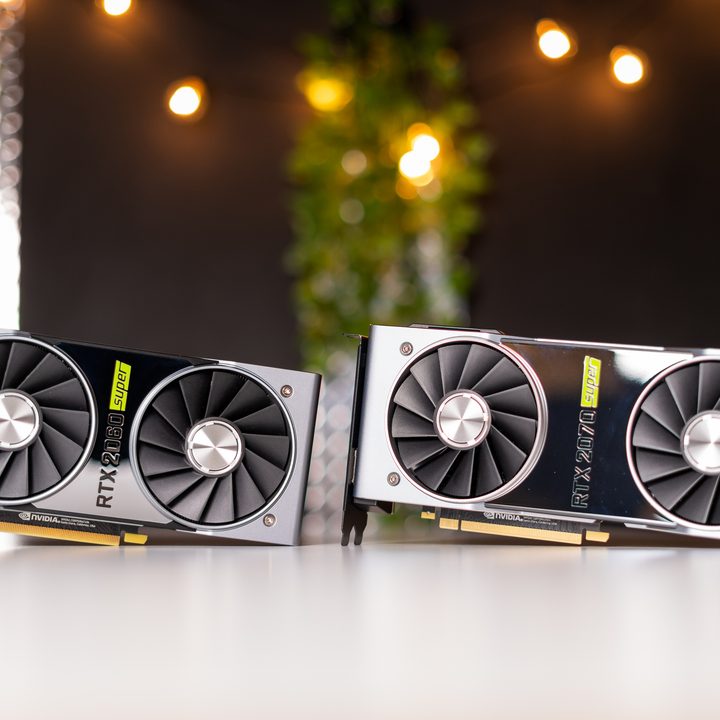
DLSS has come a long way since its original release. Where the first iteration didn’t impress us much, even if it did make the early ray tracing experiences that bit more playable on Turing GPUs, DLSS 2.0 has been a big improvement. In supporting games it can provide a huge uplift in performance with only minor visual artifacts and it makes some of the latest ray traced AAA games playable at very comfortable frame rates, even at 4K.
But it’s a gatekept technology wholly targeted at the wrong segment of the gamer audience. DLSS is only usable on RTX 2000 and 3000 graphics cards and as much as it’s great that those who can afford RTX GPUs can get better frame rates in the 30 or so games that support DLSS, do they really need it? If you can afford an RTX 2060 on up, then there are no modern games you cannot play at comfortable resolutions and frame rates.
Who needs frame rate boosts? Those on lower-end GPUs. Those who can’t afford super-powered graphics cards but still want to play the latest games. Not at 4K with ray tracing, but at all — at 1080p, with frame rates that don’t dip into single digits when the action picks up. Those chasing the minimum requirements of games. Not the privileged few who don’t even need to consider whether their system can play a game or not.
Almost three years on from the original release of DLSS and relatively no one has access to it, and even then (and perhaps because of that), the list of supporting games remains slim. There are fewer than 15% of all Steam gamers who own a graphics card that has the tensor cores required to leverage DLSS. The most popular graphics cards are still Nvidia’s own GTX 10-series and by a huge margin. Its own 16-series is the next in line, with only then some Turing GPUs and a smattering of Ampere making an appearance.
Most gamers in normal times use affordable entry-level or mid-tier GPUs, many of them years old, but that trend is only exacerbated by the recent ridiculousness of a market that makes it all but impossible for anyone but the luckiest or richest to buy a decent graphics card.
FSR is doing things very differently.
FidelityFX Super Resolution — the hero we need?
FSR isn’t perfect. The early demonstrations at Computex were a little blurry, and it’s not yet clear if it can match DLSS in its blend of performance and visual quality improvements. Then there’s the leaked list of launch titles. It was hardly impressive.
But none of that matters.
The real strength of FSR is that it enables higher frame rates for low-end graphics cards and APUs. That’s it. That’s all FSR needs to be an absolutely killer technology, potentially making modern games accessible to millions of gamers who are already, or in the process of, being shut out from their hobby due to factors outside their control — Nvidia’s hubris included.
FSR has no hardware requirements. That means it works on just about everything. It works on almost every generation of AMD graphics card from the past five years, and the past three years of APUs, too. It works on Nvidia’s graphics cards, the latest RTX cards, and the GTX options, including 10th-generation Pascal GPUs.
It makes intense, demanding, modern games playable on graphics cards that would otherwise have hit a relevancy limit. Considering the near impossibility of buying graphics cards in 2021, FSR is a much-needed lifeline, especially if you’re one of the millions of gamers with a GTX 1060, 1050, 1660, or RX 580.

FSR has the potential to give these gamers the ability to play modern games and not just at the lowest settings and resolutions, but even turn on a few options that would otherwise be out of reach. It lets them play at a frame rate that doesn’t consistently dip below 30. It takes the pressure off them having to find some way — any way — to get hold of a slightly better graphics card during the worst GPU shortage there has ever been. It means they might not have to pay over the odds for a card that will be just as outdated in a year from now, and worth practically nothing once the shortage finally comes to an end … whenever that may be.
For those who already have a great GPU too, FSR opens up new options for more fluid gameplay. It has the potential to make AMD’s RX 6000 GPUs more competitive with RTX 3000 in games with ray tracing enabled. And yes, it makes 4K 60 FPS more viable for those who languished on sub 60 FPS 4K before. That’s nice, but it’s not the crux of what makes FSR great.
It’s a democratizing technology that gives those who need it, those without the funds or luck to get a better graphics card, the ability to play (some of) the games they want in a manner that doesn’t cripple their ability to enjoy it, or compromise the vision of the developers by resorting to super low-detail gameplay.
This wider hardware support base also gives developers a much greater reason to implement FSR in their games. Though there’s no guarantee they will, if it comes down to making a choice between benefiting the sub-15% of RTX gamers with DLSS, or just about everyone with FSR, it seems obvious which way many of them will go.
FSR isn’t a silver bullet
None of this is to say that FSR is single-handedly going to fix the GPU shortage crisis, or make every game better, or even look good enough compared to native that most gamers will use it. Only time will tell just how many developers support FSR — it’s already a lot more than have been announced — whether it comes to new-gen consoles, and it seems likely that Nvidia gamers who can, will continue to use DLSS.
But for everyone else? For those who want to play the games that include FSR support? It could be a real game-changer.
Instead of being used as a carrot to tempt gamers to pony up and buy the latest and greatest graphics cards at exorbitant prices, FSR is a free performance boost for almost everyone. Gamers still playing with their aged RX 470 can expect a modest performance boost with FSR in supporting games. Gamers playing on AMD APUs while they wait to buy a GPU can get a little bump with FSR. The 20% of Steam gamers playing on a GTX 1060, 1050, 1050 Ti, or 1650, can all play some of the latest and upcoming games at decent frame rates at the quality of their choosing.
The real strength of upscaling technologies, like FSR, is in bringing high-end gaming experiences within reach of those who cannot otherwise afford them. That’s what DLSS was always supposed to be, and even in its earliest iteration, FSR will make that a reality.