1. Home
  2. Computing
  3. Legacy Archives

Seagate GoFlex Home Offers Backup for PCs and Macs

Add as a preferred source on Google

Storage manufacturer Seagate has expanded its GoFlex line of hard drives with the new GoFlex Home network storage system, which offers backup for WIndows PCs and Macs along with capacities up to 2 TB. In addition, the GoFlex home can connect up to SeaGate’s Seagate Share Pro to remotely access content stored on the device from things like iPhones and BlackBerry devices, as well as push images and files to services like Facebook and Flickr.
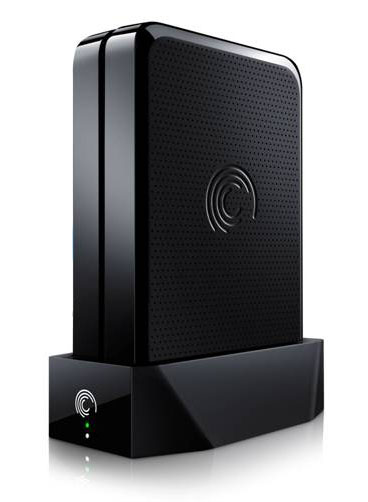
Image used with permission by copyright holder

“With broadband and home networks reaching higher levels of penetration and operating at higher speeds, consumers are increasingly downloading and streaming content into their home and wanting to access that content from anywhere,” said Seagate marketing VP Darcy Clarkson, in a statement. “We spent a lot of time focusing on simplicity with this product and believe people will find it very intuitive to set-up and get started.”

Recommended Videos

The GoFlex drive enables users of PCs, Macs, and netbooks to back up their systems with ease: owners can connect it to a home network using gigabit Ethernet—users can just pop the drive into an open port on their Wi-Fi router to offer wireless backup services. The drive can handle backups for up to three PCs or Macs in a household; the GoFlex home drive also works with Apple Time Machine software in Mac OS X 10.5 and newer, so Mac users don’t have to install any additional software. Users can also stream movies, music, photos, and more to DLNA-compatible devices (like PCs, game consoles, and home media systems).

If the built-in 1 TB or 2 TB drive isn’t large enough, users can connect more storage via a USB port, or swap out the unit’s internal drive for a new, larger one: no tools required.

The Seagate GoFlex Home network storage system should be available now; the 1 TB version carries a suggested retail price of $159,99, while the 2 TB version carries a $229.99 suggested price.

Geoff Duncan
Former Contributor
Geoff Duncan writes, programs, edits, plays music, and delights in making software misbehave. He's probably the only member…
How to set up selfie video sign-in for your Google account
Your face can now serve as a way to get back into your Google account. Here's how to set it up.
Google account selfie sign in tutorial featured

Losing access to a Google account is rarely a quick fix, but Google has been actively working to make things easier. Last year, the company introduced a feature called Recovery Contacts that lets you designate a trusted friend or family member to verify your identity if you ever get locked out. Now, Google has introduced a new option, one that uses your face to get you back in instead of a phone call to a friend.

Like Recovery Contacts, the new selfie video authentication feature requires some setup before you can use your face to sign into your Google account. This involves recording the reference video that Google will use to verify your identity whenever you attempt to log in this way. Here's how to set up selfie video sign-in for your Google account.

Read more
Framework Desktop packs Ryzen AI Max, up to 192GB of RAM, and local AI into a mini PC
192GB of RAM in a desktop this small? Framework says yes.
Framework Desktop feature

Framework has built a reputation for shipping things other PC makers won't even attempt, and its latest teaser keeps that streak alive. At AMD's Advancing AI event, the company previewed a new version of its Framework Desktop, and this one is clearly built with one goal in mind: running large AI models locally on your computer. If you have been eyeing a way to run local AI, this could be the machine to watch.

So what's actually new here?

Read more
AI is becoming the shoulder we cry on, and that worries me
Chatbots are learning to generate comfort now
Siri AI voice change

I expected artificial intelligence to be faster in performing calculations or data analysis than humans. But emotional support is one of the last things I could imagine it being better at. New research led by the University of Manchester, alongside Durham University, found that leading AI chatbots could match or sometimes outperform humans when responding to everyday emotional problems. The researchers conducted five studies involving 1,233 participants and tested responses from ChatGPT-4o, Claude 3.5 Sonnet, and Gemini 1.5 Pro.

The researchers conducted five studies involving 1,233 participants and tested responses from ChatGPT-4o, Claude 3.5 Sonnet, and Gemini 1.5 Pro. Participants evaluated messages responding to situations such as being passed over for a promotion or returning to an untidy shared home. They were initially kept unaware of whether each response came from a person or an AI system.

Read more