1. Home
  2. Space
  3. News

Volcanoes on Mars exploded in ‘super eruptions’ that blotted out the sun

Add as a preferred source on Google

Mars is home to the solar system’s largest volcano, Olympus Mons, and volcanic activity has had a profound impact on shaping the planet into the state it is in today. Now, new evidence shows that volcanic eruptions on ancient Mars were incredibly dramatic, with thousands of “super eruptions” throwing huge quantities of dust and gases into the air and blocking out the sun.

Thousands of Ancient Super Eruptions on Mars, Scientists Confirm

Starting around 4 billion years ago, volcanic activity on Mars crescendoed into a period of around 500 million years when super eruptions spewed water vapor, carbon dioxide, and toxic sulfur dioxide into the atmosphere. These eruptions spread a thick blanket of ash for thousands of miles around the volcanoes, and according to NASA, they threw out the equivalent of 400 million Olympic-size swimming pools of molten rock and gas.
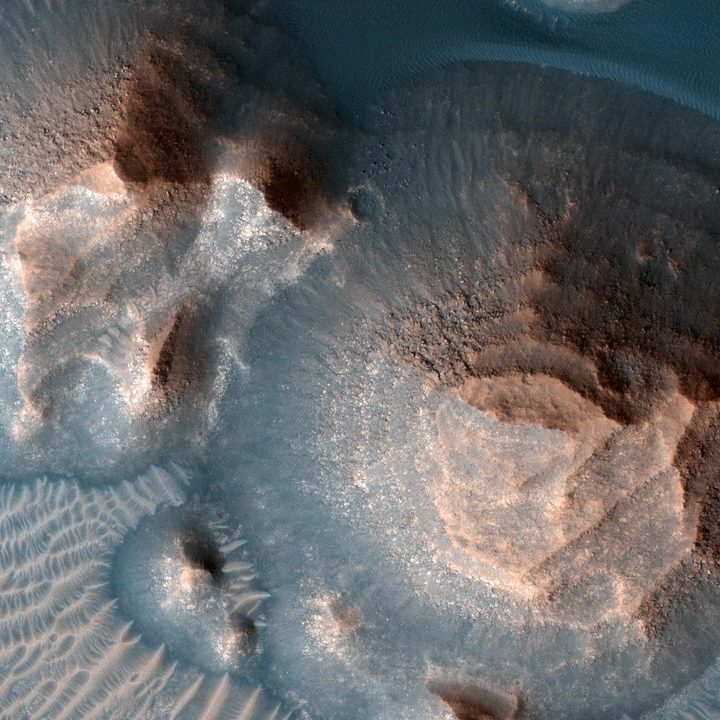
This image shows several craters in Arabia Terra that are filled with layered rock, often exposed in rounded mounds. The bright layers are roughly the same thickness, giving a stair-step appearance.
This image shows several craters in Arabia Terra that are filled with layered rock, often exposed in rounded mounds. The bright layers are roughly the same thickness, giving a stair-step appearance. The process that formed these sedimentary rocks is not yet well understood. They could have formed from sand or volcanic ash that was blown into the crater, or in water if the crater hosted a lake. The image was taken by a camera, the High Resolution Imaging Experiment, on NASA’s Mars Reconnaissance Orbiter. NASA/JPL-Caltech/University of Arizona

There was so much of this activity that it changed the entire planet’s climate, according to the study’s lead author Patrick Whelley, a geologist at NASA’s Goddard Space Flight Center. “Each one of these eruptions would have had a significant climate impact — maybe the released gas made the atmosphere thicker or blocked the sun and made the atmosphere colder,” Whelley said in a statement. “Modelers of the martian climate will have some work to do to try to understand the impact of the volcanoes.”

Recommended Videos

Whelley and his colleagues were investigating vast basins in the martian surface which were originally thought to be from asteroid impacts. But more recently, researchers realized that the craters could actually be the sites of ancient volcanoes which had collapsed in on themselves.

“We read that paper and were interested in following up, but instead of looking for volcanoes themselves, we looked for the ash, because you can’t hide that evidence,” Whelley said.

They investigated an area called Arabia Terra and looked for the way volcanic minerals were distributed across the surface using the Mars Reconnaissance Orbiter’s Compact Reconnaissance Imaging Spectrometer for Mars instrument. They found these volcanic minerals even thousands of miles from the craters and used 3D topographical maps to see that the ash had been laid down in consistent layers, suggesting it was deposited around the same time. Not only that, but the layers were so thick that the ash must have been created from thousands of super eruptions.

Currently, the Arabia Terra region is the only place on Mars with evidence of these huge explosive volcanic eruptions has been found, making this a special place on the planet.

“People are going to read our paper and go, ‘How? How could Mars do that? How can such a tiny planet melt enough rock to power thousands of super eruptions in one location?’” co-author Jacob Richardson said. “I hope these questions bring about a lot of other research.”

The research is published in the journal Geophysical Research Letters.

Georgina Torbet
Georgina has been the space writer at Digital Trends space writer for six years, covering human space exploration, planetary…
Space is becoming Bezos and Musk’s next data center site, and we have every reason to worry
The AI boom is coming for the night sky
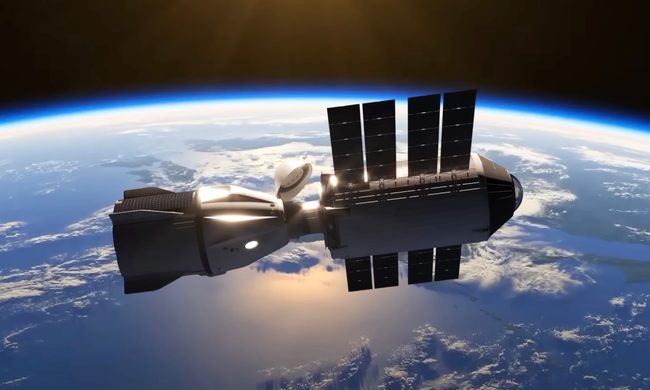
How Vast's space station will look in orbit.

AI data centers already consume vast amounts of electricity and water on Earth, so Silicon Valley has begun looking somewhere considerably more spacious... literally.

Elon Musk's SpaceX and Jeff Bezos' Blue Origin, along with several other companies, have proposed enormous constellations of satellites designed to operate as orbital data centers. However, environmental groups and former space officials are now warning that putting them into orbit at the proposed scale could have severe consequences for Earth's atmosphere and the night sky.

Read more
The first possible exomoon is here, and it makes our Moon look hilariously tiny
Scientists may have found the first exomoon, except this one is the size of Jupiter
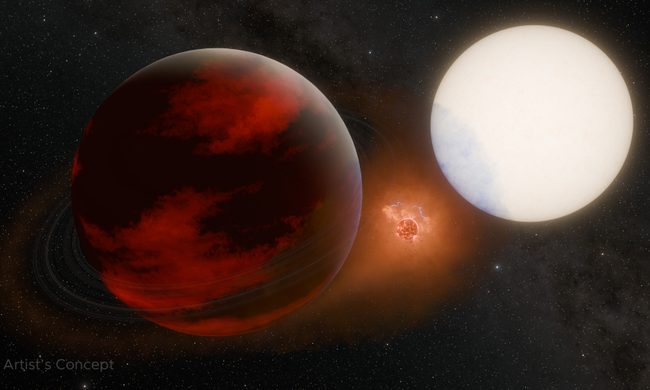
This artist’s concept depicts a potential volcanic moon between the exoplanet WASP-49 b, left, and its parent star. New evidence indicating that a massive sodium cloud observed near WASP-49 b is produced by neither the planet nor the star has prompted researchers to ask if its origin could be an exomoon.

We have already discovered more than 6,000 planets outside of our immediate neighborhood. Yet, finding a moon orbiting one of those distant worlds has proved considerably harder. Astronomers may finally have something close to the real deal, but this particular object stretches the word “moon” almost beyond recognition.

Using the European Southern Observatory’s Very Large Telescope in Chile, researchers detected strong evidence for a moon-like object in the CD-35 2722 system. Further observations are still necessary to confirm the discovery, but it could become the first confidently detected natural satellite outside our solar system. There is still one tiny complication though. This moon is apparently massive.

Read more
China’s answer to SpaceX’s reusable rockets literally catches boosters in a net
SpaceX catches boosters on legs. China just used a net.
Ammunition, Missile, Weapon

SpaceX's playbook for recovering a rocket booster generally involves legs, a precisely controlled vertical landing, and either a concrete pad or a drone ship. 

China just managed to pull off something similar, but in a slightly different way, and on July 10, it tested the method as well.

Read more