
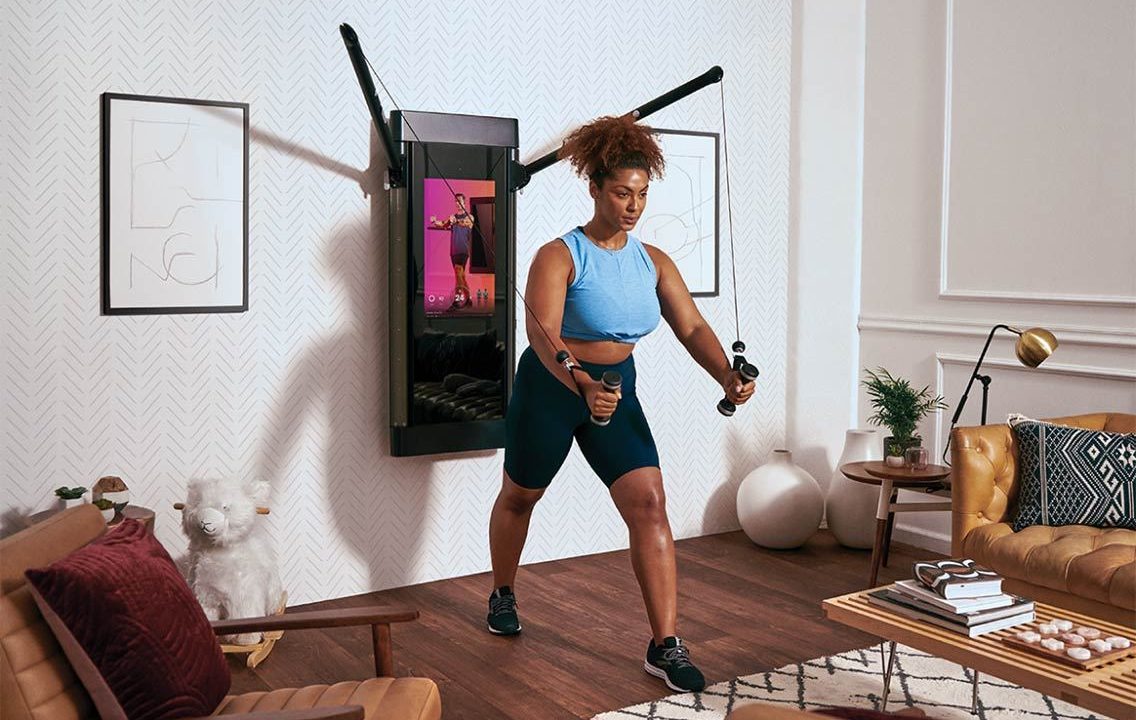
Gym memberships may be on the decline, but that’s not necessarily a bad thing. An increasing number of people are ditching their gym membership and replacing it with cutting-edge home fitness equipment. At the top of the list for home gym gear is the fitness mirror, which provides a full-body workout while occupying minimal space. We’ve already looked at the Tempo Studio and the Mirror. Now it’s time to compare the Tonal with the Tempo Studio to find out which smart mirror is the right pick for you.
Hardware
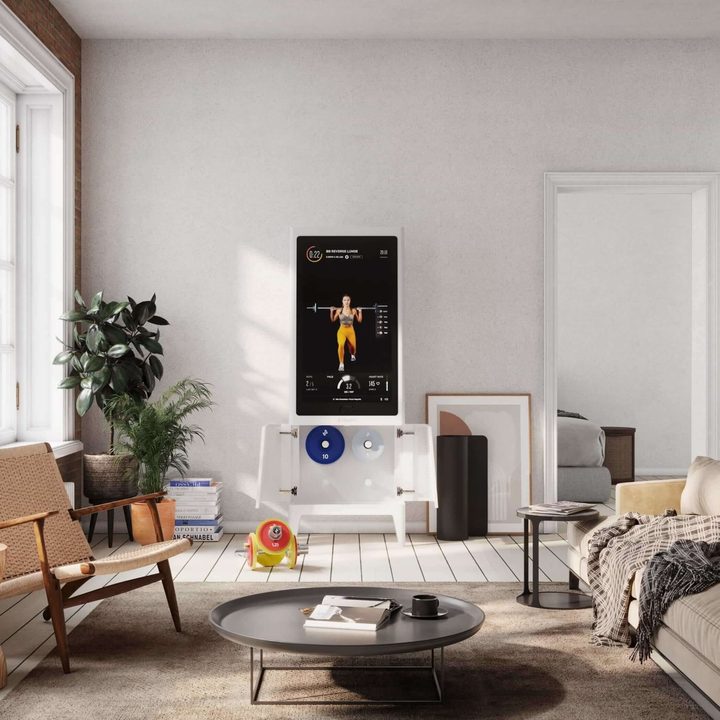
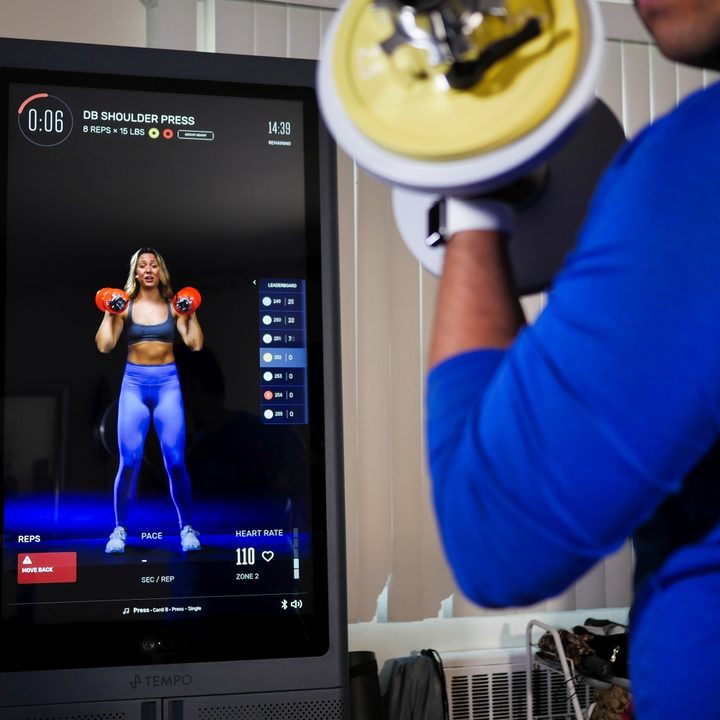
Tonal and Tempo are very different when it comes to their hardware. Tempo is a freestanding mirror with a 42-inch touchscreen and an easel-like stand. You can store gear in the included cabinet stand, giving Tempo a stylish look that fits almost any room. It also is relatively lightweight, at only 100 pounds without the accessories or weight plates. Don’t like how it looks? You can easily move it to another room.
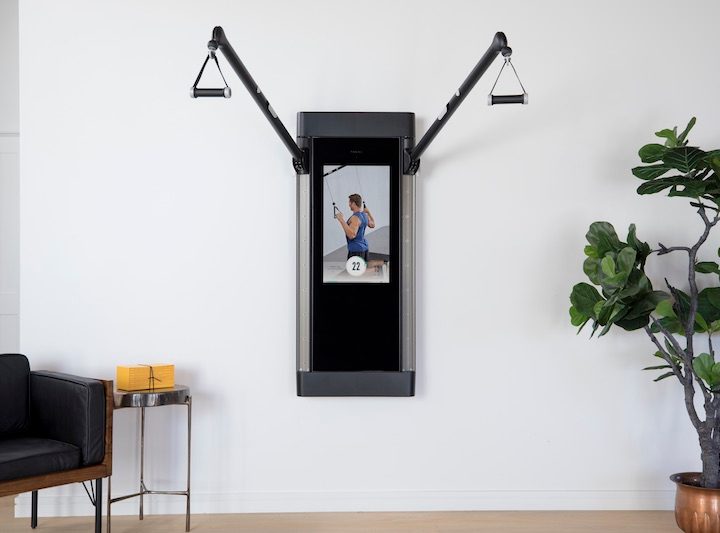
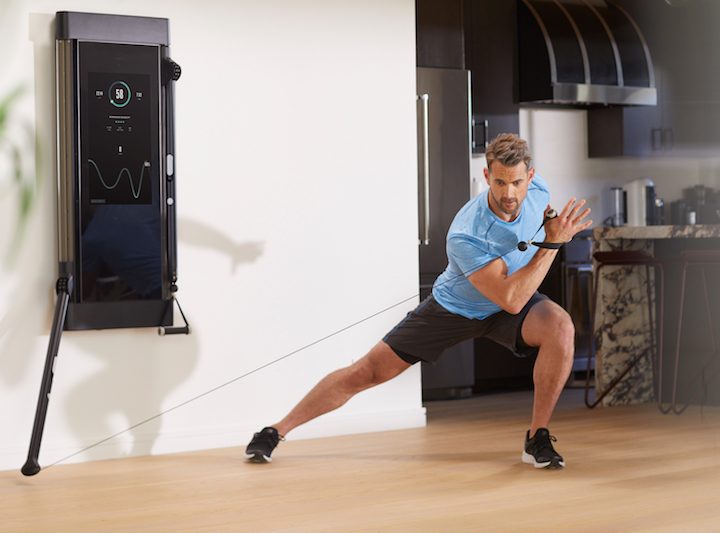
Tonal, is a wall-mounted mirror with a 24-inch touchscreen and movable arms that lay flat against the wall for storage. Instead of dumbells or kettlebells, Tonal uses cables and digital resistance to simulate weights. Though stylish and compact, Tonal looks more fitness-like and less like a piece of furniture. You need to be careful with the placement as it is difficult to move Tonal once it is mounted.
Installation
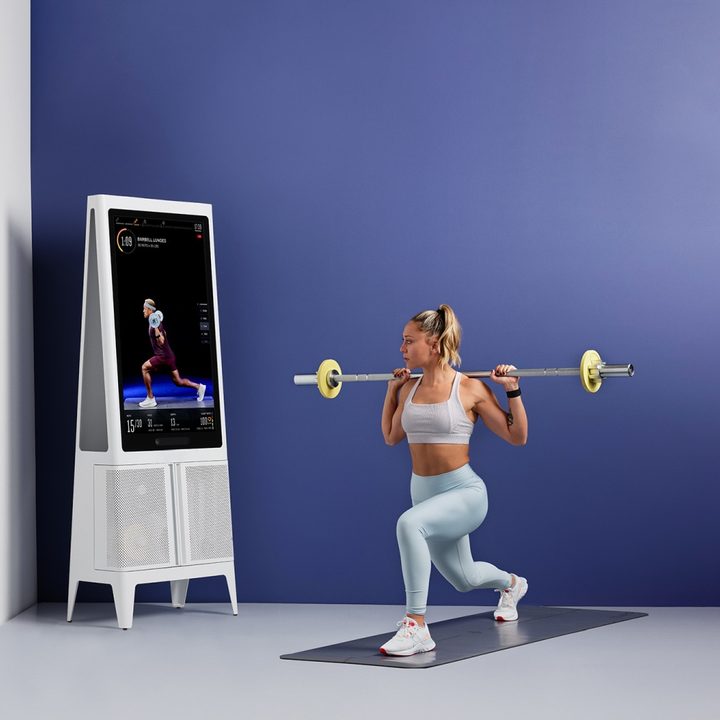
Tempo is a freestanding system with a cabinet to store the included free weights that ship with the system. It’s ideal for apartment dwellers who cannot permanently install the mirror on a wall.
Tonal is a bit more compact than the Tempo studio, but it requires mounting on a wall. To use the Tempo, you pull against the arms of the mirror, so it also requires professional installation to anchor it properly to the studs. You can move Tonal to a new location, but the company recommends hiring one of their recommended professional installers.
Space requirements
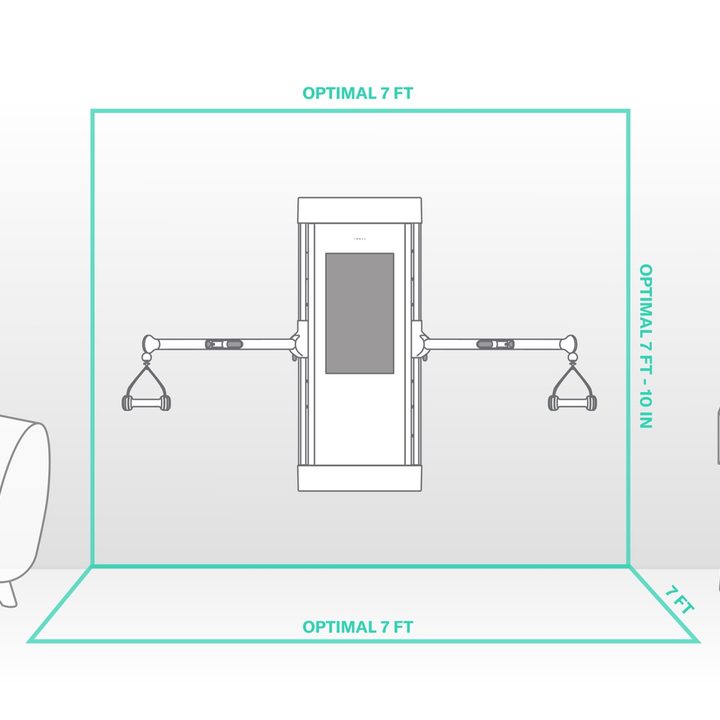
Both the Tonal and Tempo require a minimal amount of space, especially compared to a traditional weight bench or gym. Tonal may be relatively compact, but it has more stringent space requirements than the Tempo Studio. Since you exercise using the arms and cables attached to the mirror, you have to work out right in front of the unit. You need a 7-foot by 7-foot space around the mirror to adjust the arms and the room to pull on the cable. This space is non-negotiable. If there is a light fixture or a hanging plant in the way, you will have to move the objects or move Tonal.
On the other hand, Tempo requires an 8-foot by 6-foot space, but you can choose that space. You can work out right in front of Tempo or decide to exercise in the middle of your room. The 42-inch display is large enough that you can still see the trainers even when you stand away from the mirror.
Strength training
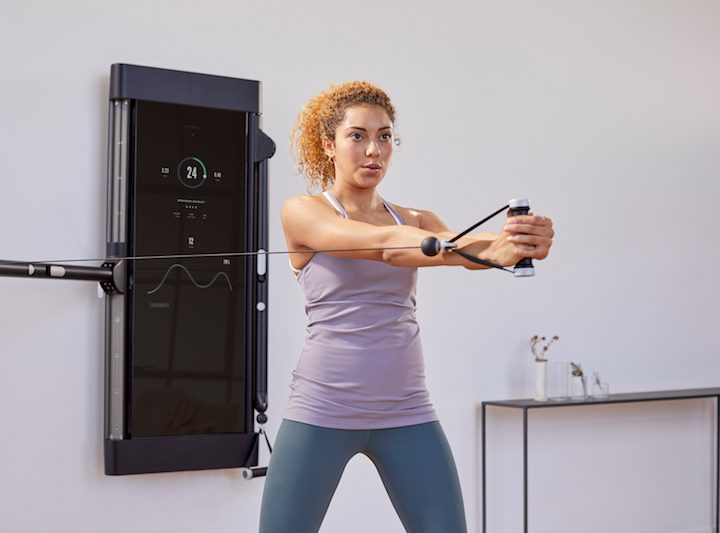
Both Tempo and Tonal emphasize strength training, but the two smart mirrors use very different strategies to accomplish that goal. Tempo ships with dumbells, a barbell, and kettlebells, depending on the bundle you buy. You can even use your own free weights, up to 400 pounds, for convenience. Like most smart mirrors, Tempo is equipped with sensors that track your movement and provide form feedback, so you know you are doing an exercise correctly.
Instead of free weights, Tonal uses a digitally controlled resistance that increases as your strength improves. These digital weights are designed to mimic a traditional weight gym, and they do a decent job of it. There is a limit of 100 pounds per arm in resistance, which is plenty for most people. Similar to Tempo, Tonal also tracks your form and offers suggestions when your movements are incorrect. The mirror also remembers your weight level for each exercise and automatically stores it.
Fitness library
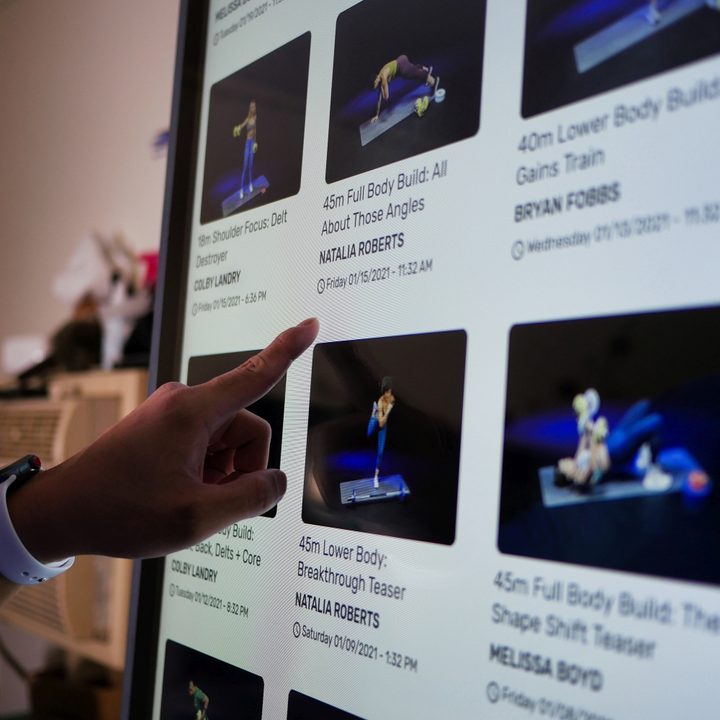
Tempo’s library of guided classes is extensive, with a nice mix of on-demand and live classes as well as custom workouts. It offers classes for all fitness levels. Whether you are a beginner or a seasoned pro, you’ll find yourself continually challenged. Tempo’s standout feature is the large screen that makes it easy to follow the trainer from anywhere in a room. It also has 3D sensors that help you dial in your form whether you are doing strength training, cardio, or high-intensity interval training (HIIT). Not only does this tracking ensure you are exercising correctly, but it also protects you from injury.
Tonal has thousands of workouts in its fitness library. Most are on-demand workouts, but the company is adding an increasing number of live activities for those who prefer a class-like experience. The trainers are upbeat and take the time to detail the machine settings and the movements needed to complete the exercise effectively. Despite its focus on strength training, Tonal offers a diversity of workouts ranging from busting bicep curls to relaxing pilates stretching. Most of the library includes preset activities and multi-day workout plans, but there is the option to create and save custom workouts.
Subscription fees
Both Tonal and Tempo Studio require a monthly membership to access the online content. Tonal’s monthly membership costs $49 per month and requires a minimum 12-month commitment to start. Tonal’s membership allows you to create a profile for each family member who uses the Tonal in your house. Like most smart mirrors, you can only do basic exercises without a monthly subscription. You lose the classes, coaches, and more.
Tempo costs $39 per month for a family membership that gives your household complete access to Tempo’s live and on-demand classes. Without a subscription, you can use the weights with Tempo, but you lose the classes, coaches, and form feedback technology that sets the Tempo Studio apart from the competition.
Price
The entry-level Tonal retails for $2,995 for the base model. Plan to add $495 for the intelligent accessories that add a workout bench, roller, workout mat, smart bar, and more. Though you can use Tonal without these extras, they are highly recommended. You will not be able to do all the workouts if you do not have them.
The Tempo Studio starts at $1,995 for the starter package, which includes the Mirror, cabinet, and a few weights. Tempo also is available in a $3,245 Plus package with a barbell, heart rate monitor, and folding bench. There’s also a premium Plus version that retails for a whopping $3,995 and includes a folding squat rack, a kettlebell system, and more.
The two systems are comparable, but which you pick will depend more on your available space and preferred method of weight training.


