  1. Home
  2. Emerging Tech
  3. Web
  4. Legacy Archives

NASA twin probes let us view the sun in 3D

Add as a preferred source on Google
nasa-first-ever-stereo-images-of-sun
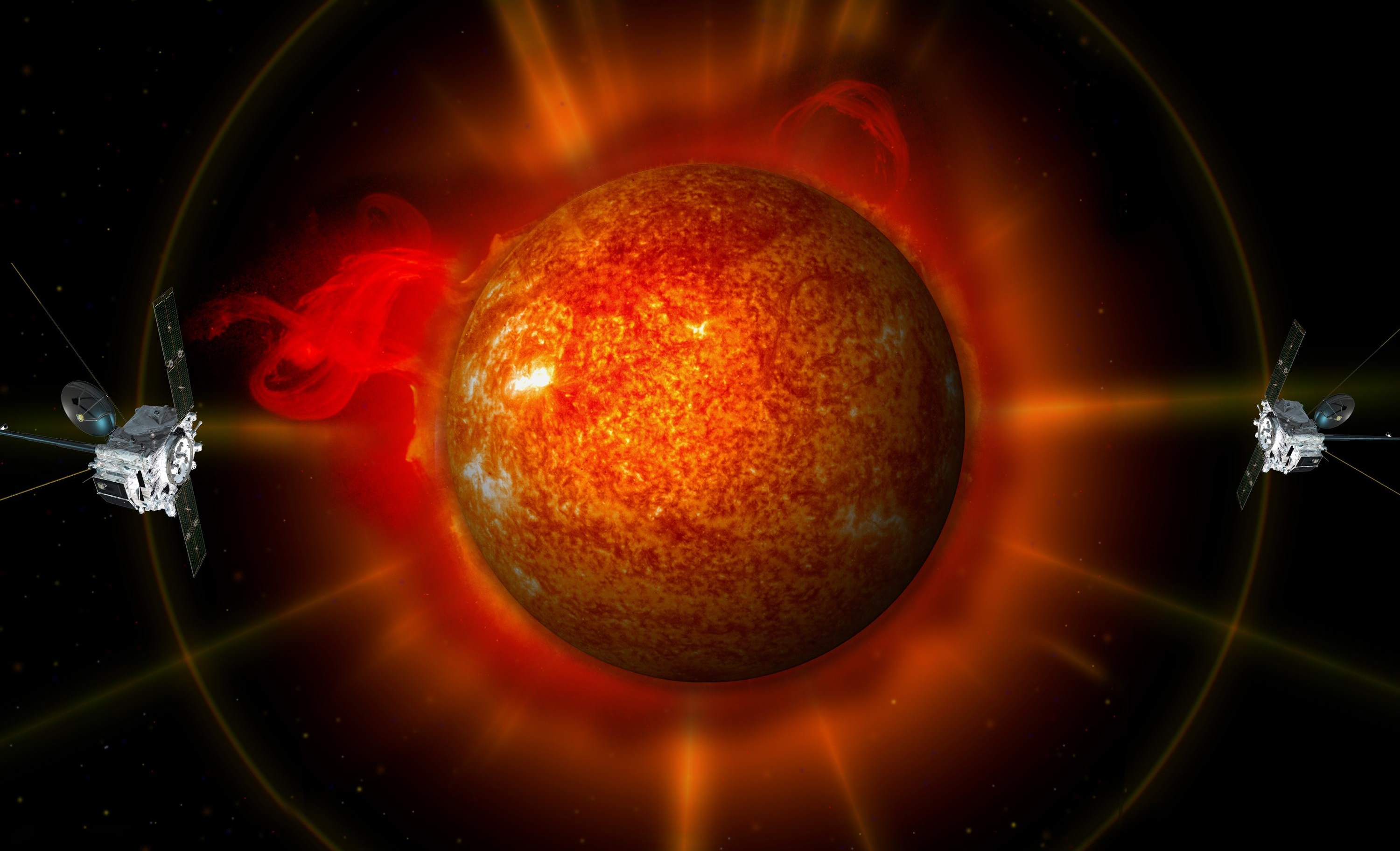
Image used with permission by copyright holder

Yesterday, NASA confirmed a very vital piece of information to all mankind: we now know that the sun is, without a doubt, a sphere. For the first time, the space agency is able to see both the front and back of the sun. Luckily, there were no surprises. NASA now has an uninterrupted feed of both sides of the sun, allowing it to monitor and gather invaluable information about its health and inner workings.

To obtain the 360 degree view, NASA launched twin STEREO probes into opposing orbits of the sun. Each satellite sends back high resolution pictures of half of the star and computers here on Earth combine the images to form a full view. The human eye is no match for these cameras. The probes can actually take pictures of four wavelengths of extreme ultraviolet radiation, giving scientists even more important information on a consistent basis.

Recommended Videos

“With data like these, we can fly around the sun to see what’s happening over the horizon—without ever leaving our desks,” said STEREO program scientist Lika Guhathakurta. “I expect great advances in theoretical solar physics and space weather forecasting.”

Like advances in weather forecasting, seeing the backside of the sun can help scientists see things like sunspots form before they are in view of Earth, giving us valuable time to prepare for events like flares and plasma clouds that could head toward our small planet. “With this nice global model, we can now track solar storms heading toward other planets, too,” points out Guhathakurta. “This is important for NASA missions to Mercury, Mars, asteroids … you name it.”

The STEREO probes left earth in Oct. 2006 and have been working toward alignment ever since. The two probes aligned on Feb. 6, 2011, which is when NASA received its first full view of the sun. The agency receives new photos every 10 minutes.

NASA has been busy lately. In the last few months it has discovered alien life on Earth and discovered several habitable planets outside of our solar system.

See the sun in 3D

Jeffrey Van Camp
As DT's Deputy Editor, Jeff helps oversee editorial operations at Digital Trends. Previously, he ran the site's…
Google Flow Music Spaces is becoming an all-in-one AI music studio
The latest update brings song editing, stem splitting, image generation, lyrics, and video creation into a single workspace.
Google Flow Music Featured

The company has announced a major update for Flow Music Spaces, bringing a suite of new AI-powered creative tools directly into collaborative workspaces. Instead of jumping between different apps or sessions, users can now generate and edit songs, split audio stems, create images, write lyrics, and even generate videos without leaving a Space.

What's new in Flow Music Spaces?

Read more
A Florida pastor asked ChatGPT if he was okay. It nearly got him killed.
When "just relax and recover" turns out to be the worst medical advice you could get.
ChatGPT on iPhone

Scott Winters, a pastor from Florida, is suing OpenAI after ChatGPT allegedly gave him what his lawsuit calls "extremely dangerous" medical advice, advice that nearly cost him his life.

What happened to the pastor?

Read more
Scientists made robots curious like toddlers, and it helped them learn language twice as fast
Give a robot curiosity, and it starts learning language (and misbehaving) just like a toddler.
robots and kids photo

Scientists have been trying to figure out how kids pick up language so fast for decades, and a new study out of the Okinawa Institute of Science and Technology (OIST) might have cracked part of the puzzle: curiosity.

Researchers built a virtual robot with a brain-inspired neural network and set it loose in a simulated 3D world full of shapes, colors, and simple commands like "push left magenta dumbbell." 

Read more