I’ve been following Microsoft for over two decades, have cataloged a number of major mistakes and ranked them over time. Against most of them, I have names of people who mostly are no longer with the company. One of my major aggravations in the 1990s was that many of Microsoft’s mistakes were first made by IBM, and last decade it was Microsoft mistakes that were made by Google. For an analyst, this kind of gets old – like watching a bad movie multiple times. In contrast, Intel this week demonstrated they actually could avoid a Microsoft mistake, and I think that too is worth talking about.
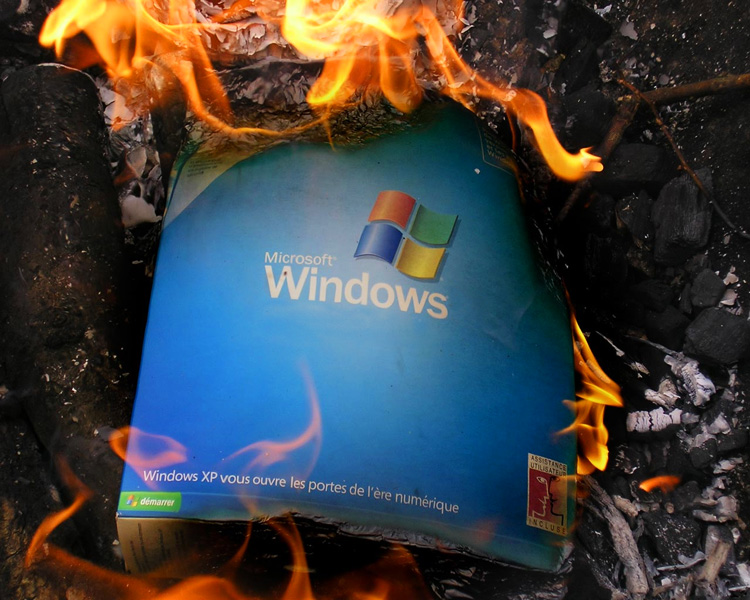
Microsoft’s six biggest mistakes
1) The first major mistake Microsoft made was after Windows 95 launched, and that was to drop anyone who called in for support after they exceeded the three-minute wait time. This upset hundreds of thousands of people, and turned the company’s biggest success into what was arguably its biggest disaster.
2) The second major mistake was “scalability day” a major event surrounding Windows NT that was supposed to showcase how it could perform as well as UNIX, or even a mainframe. It couldn’t, and Microsoft bled credibility.
3) The third biggest mistake was taking on the US Department of Justice and making it personal with the then US Attorney General. After they lost more than the case, Microsoft lost its image of being invulnerable and everyone, including the EU, jumped on the anti-Microsoft bandwagon.
4) The fourth biggest mistake was decoupling Office from Windows. Office had, up until Office 9, been the primary first application to showcase the new features of an OS, but once it was decoupled, Microsoft lost one of the biggest drivers to get people to upgrade. Then came Vista.
5) The fifth biggest mistake was to require the guy who owned quality for Windows Vista to ship the product before he would be allowed to leave and go to work for Amazon. Getting it out became more important than getting it right and Windows Vista became infamous.
6) The sixth biggest mistake was to over-focus on the enterprise market, and lose any ability to deliver success to the consumer market (except the Xbox). This led to a long string of failures (PlaysforSure, Media Center, Windows Home Server, Zune, Origami, Tablets, Spot Watch, WebTV, Portable Media Center, Windows Mobile, Pocket PC, Microsoft Phone, Mira, the list goes on) through much of the last decade. In most cases, Microsoft both failed to complete the products, and failed to generate demand for them. In some cases they were simply horrid products. This is the mistake of tossing out unfinished products and crap without marketing, and it’s the same mistake Google most often makes.
I get tired of seeing the same mistakes over and over again, so it was nice to see Intel come through this week with an explanation of a plan to avoid one of them.
Intel and McAfee have been paying attention
When Intel and McAfee announced their merger was done this week, they also spoke about a new reason why this acquisition was done. That explanation gave me hope that the duo had learned to avoid Microsoft’s fourth mistake.
Intel has the same problem that Microsoft now has after decoupling Office from Windows. How do you get people excited about new features in a new processor? Developers – particularly security developers – don’t like to write for something unless it has huge numbers in the market. It can take up to several years or more to get major software products into market after Intel has enabled a new capability.
This is particularly troubling for security because Intel can take up to two years to develop a new feature in response to a threat. Now add up to seven years to make use of that feature, and you have an abysmal response time for a threat of up to nine years. You wouldn’t just call that bad, you’d call that negligent.
But the only way to change this is to buy or fund a company to fix it earlier; because that company can’t be initially assured there will be enough revenue to pay for the effort. However, by assuring there will be security software at launch that will take advantage of a new chip security feature, Intel can get companies to buy more processors, and McAfee can be more successful at selling related new products. This is the Windows 95 model, and Windows 95 is the only version of Windows that had sustained lines at launch like an Apple product.
Now, I’m not suggesting this will cause lines for Intel products, because it is a security- and business-oriented solution, but it will, if executed well, increase initial demand for a new processor and for security software.
The benefit for us is that our hardware should become vastly more secure than it currently is.
Watch and learn
It kind of amazes me that companies generally seem to like to repeat the mistakes of others rather than learn from them. Google, for instance, seems to be going down a list of Microsoft mistakes, from bringing out incomplete products to upsetting governments, as if they have a to-do list. It is kind of nice to see Intel and McAfee hook up to use a lesson from a Microsoft mistake, rather than repeat one for once. In the end, the idea of a more secure future is likely something we can all get behind.