
  1. Home
  2. Computing
  3. Web
  4. Legacy Archives

Thumb drives and porn: How Osama bin Laden communicated from his lair

Add as a preferred source on Google

Osama Bin Laden Dead KilledNo phone and no internet might make Jack a dull boy, but Osama found a way around the disconnect–through pornography and couriers.

In an Associated Press report, government officials learned how Osama bin Laden conveyed email messages to his followers worldwide, despite having no internet access. He would type up email messages and save them to USB thumb drives. Then his trusted courier would copy the message and send it out at an innocuous Internet cafe, far away from the compound. The sneakernet also worked in reverse, as the courier would take messages and other data back to Osama.

Recommended Videos

Close to 100 thumb-flash drives as well as 10 hard drives have been found in bin Laden’s Pakistan hideout. The trove of data Navy SEALS have uncovered contains thousands of email messages, and hundreds of email address which U.S. Officials hope will lead them to other lead  al-Qaeda figures in the network. The information gleaned from the thumb drives does not point to any new terror attacks against the United States.

According to Reuters and ABC, the couriers may have been bringing back more than just digital handshakes and terror plots. Apparently, the Osama compound had an extensive cache of electronically recorded pornography kept in a wooden box. Osama bin Laden lived in the compound with his son and two other men who were his couriers, but U.S. Officials say they have no way of knowing who the porn belonged.

In an article on MSNBC, government officials are wondering whether there might be a connection between the pornography found in the possession of other al-Qaeda operatives, and the porn found in Osama’s compound.

The article said, “U.S. Officials had pursued a probe into whether al-Qaeda was using special software that would allow the email transmission of porn photos implanted with hidden messages that could be deciphered by recipients with the right code.’We thought this was the way that messages were being transmitted,’ said one official.”

Jeff Hughes
Former Digital Trends Contributor
I'm a SF Bay Area-based writer/ninja that loves anything geek, tech, comic, social media or gaming-related.
Topics
The Mac Pro nearly received an M3 Extreme chip twice as powerful as M3 Ultra
High production costs likely killed Apple’s M3 Extreme plans
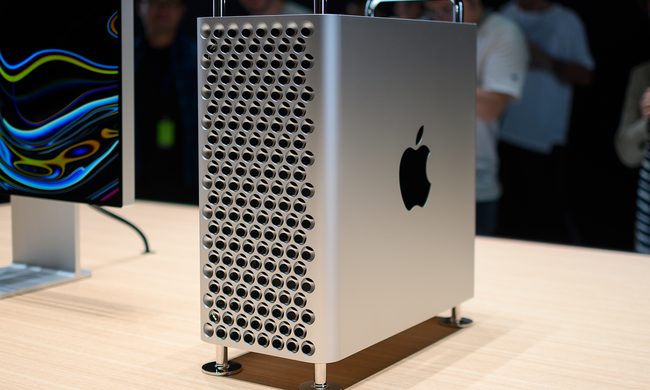
Apple's Mac Pro on a table at a press event.

Apple discontinued the Mac Pro earlier this year, ending a 20-year run for a computer that once represented the very best of the company’s desktop lineup. However, Apple reportedly had much bigger plans for the machine before ultimately replacing it with the Mac Studio.

According to Bloomberg’s Mark Gurman, Apple developed an M3 Extreme chip that could have offered twice as many CPU and GPU cores as the M3 Ultra. The processor was intended to sit above the Ultra tier and could have finally given the Mac Pro the performance advantage it badly needed. Apple eventually abandoned the chip due to concerns over production costs and limited demand for such an expensive machine.

Read more
Hidden prompts can secretly rewrite an AI’s memory, and researchers say that’s a serious problem
Researchers discover AI attack that rewrites an assistant's long-term memory
Chatbot on a smartphone.

Large language models are getting better at remembering us. Whether it's your preferred writing style, recurring tasks, shopping habits or project deadlines, AI assistants are increasingly storing long-term memories to make future conversations feel more personal and useful. But according to new research, that same feature could become one of AI's biggest security vulnerabilities.

Researchers from New Mexico State University have demonstrated a new attack called GhostWriter, capable of secretly planting false memories inside AI agents. Rather than stealing information outright, the attack manipulates what an AI remembers, potentially causing it to make dangerous decisions long after the original attack has taken place.

Read more
This experiment shows how easy it is to poison an open-weight AI model for under $100
This research raises new doubts about trusting open weight AI models.
Computer, Electronics, Laptop

Open-weight AI models have been having a moment lately. Just this month, Moonshot's massive Kimi K3 model landed close behind Claude Fable 5 and GPT 5.6 Sol in several benchmarks, all while remaining fully open-weight and downloadable by anyone.

However, Katie Paxton-Fear, a cybersecurity lecturer at Manchester Metropolitan University and staff security advocate at Semgrep, managed to poison an open-weight model and proved how easily that openness can be turned against you (via The Register).

Read more