1. Home
  2. Mobile
  3. Wearables
  4. News

Waverly Labs’ new translation tech targets both consumers and businesses

Add as a preferred source on Google

The smorgasbord of announcements at CES 2022 is dominated by flashy hardware in diverse forms and cool software for the days to come. But there are a few reveals sprinkled in between the mad rush that focus more on the immediately practical side of things. One such instance comes from Waverly Labs, a company specializing in translation tech that announced three impressive products at CES.

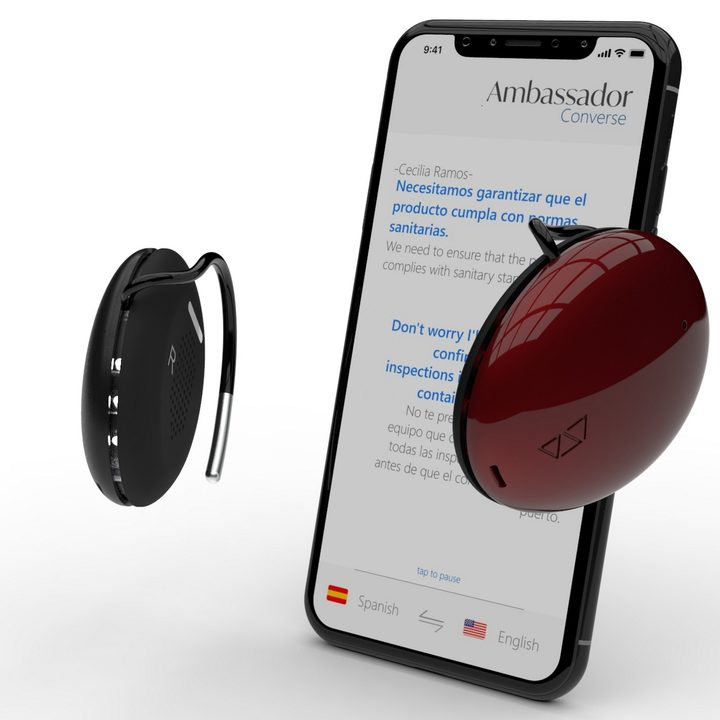
Let’s start with the Ambassador Interpreter 2.0, an updated version of its over-the-ear wearable that is said to translate speech almost in real time. Waverly Labs’ tech supports audio and text translation in more than 20 languages and 42 dialects. And if the company’s claims are anything to go by, the Ambassador Interpreter 2.0 can facilitate free-flowing conversations in which multiple users hear translated versions of speech in different languages simultaneously.

Recommended Videos

A personal on-ear translator

Waverly Labs Ambassador Interpreter 2 device.
Image used with permission by copyright holder

This is not offline translation, though. All the text or voice input is first uploaded to the cloud, where Waverly Labs’ translation system does its magic and relays back the translated version, all in a matter of seconds. And to truly enhance the sharing potential of its translation gizmo, Waverly Labs created a specific Bluetooth protocol that allows multiple Ambassador Interpreter 2.0 units to connect with a single smartphone.

In the Listen Mode, translations are delivered as an audio input via the on-ear gadget, while a text version simultaneously appears in the companion app. This mode is suited for one-on-one conversations where the speaker is within a 2.5-meter range and translation happens automatically in the listener’s native language.

In the Lecture Mode, the broadcaster’s speech is translated and relayed to multiple users via the app. And finally, there is the Conversation Mode, which lets up to four people engage in a cross-language conversation and understand each other without language barriers getting in the way. Ambassador Interpreter 2.0 is now up for grabs for $179 and is sold in pairs.

One for the walls
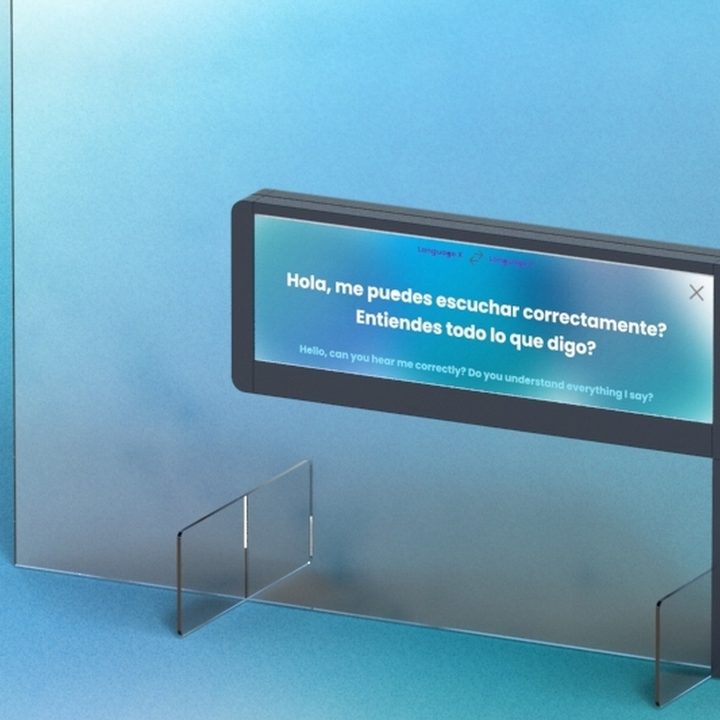
Waverly Labs Subtitles device.
Image used with permission by copyright holder

Waverly Labs’ second offering is called Subtitles, and it’s a device tailor-made for professional settings in the pandemic era. This one is a two-sided display that listens to the speaker on either side of a physical partition, translates it into the language selected by the person on either side of it, and shows the results in text form. Waverly says the translation happens in “near real time,” and that the tech is ideal for hospitals, restaurants, banks, and similar businesses. It will be available in the next quarter, but there’s no word on the pricing as of now.

Listening to the room
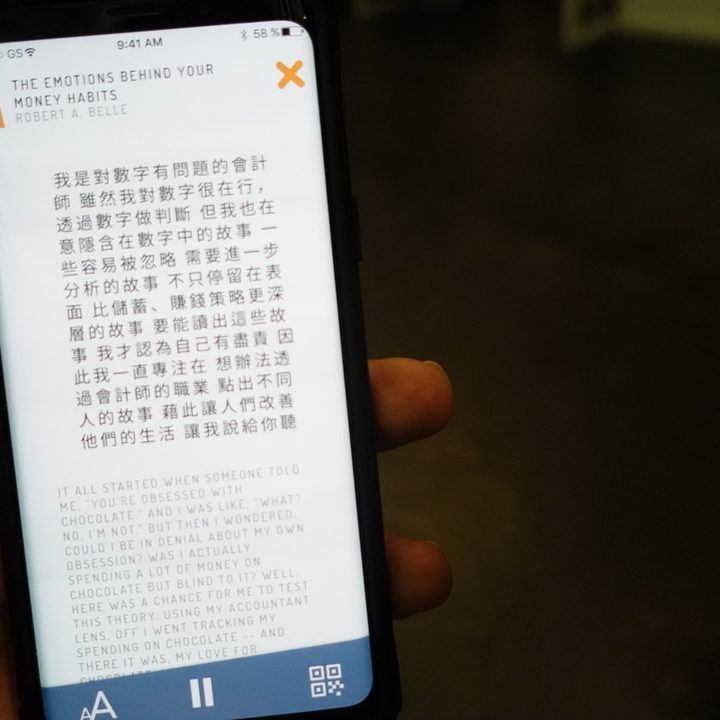
Waverly Labs Audience app.
Image used with permission by copyright holder

The last Waverly Labs offering is Audience, an app that is suited for conferences and large meetings where language barriers are a serious hurdle for attendees. The app brings a translated version of the speaker’s audio stream captured by the mic straight to the mobile phones of audience members with minimal lag. All one has to do is scan a QR code, set up their preferred language, and they’re ready to understand what the speaker is saying as audio or text. The app will be released in the next quarter.

Nadeem Sarwar
Nadeem is the Managing Editor at Digital Trends.
The best note-taking apps for iOS and Android
I tested these apps for months so your notes never have to switch homes again.
iPhone showing note-taking apps

Choosing a note-taking app is not easy. What note-taking app you choose depends on your needs, the platform you use, and of course, the cost. The process becomes even more complicated as it seems that there’s a new shiny app released every other week. 

That’s why I always suggest choosing a note-taking app that has all the features you need and can last you for a long time. Also, don’t chase new apps. The real power of a note-taking app comes when all your notes live in one place, making it easy to spot connections between them.

Read more
The best phones in 2026: our 14 favorite smartphones right now
We tested phones across all price brackets so that you can make the best pick based on your needs and budget.
Google Pixel 10 Pro Fold vs Galaxy Z Fold 7 cameras

Choosing the right smartphone in 2026 is no easy task. Apple and Android manufacturers now have strong options at almost every price, while better cameras, longer battery life, improved software support, new AI features, and more refined foldable designs have made the market more competitive than ever. But picking one is not easy, especially if your budget is tight, or you are just legitimately concerned about getting the best value for your money and need a reliable daily driver for long-term usage.

We have tested and compared the leading smartphones available today, looking beyond the spec sheet to see how they actually perform in daily use. Camera quality, battery life, performance, display quality, software, design, and long-term value all play a part in our recommendations. Whether you are looking for a powerful flagship, a dependable budget phone, a compact device, or a foldable, this guide should help narrow down your choices.

Read more
Snapchat Planets Meaning: Order, Rankings, and How Friend Solar System Works
Snapchat Planets turns your best friends list into a solar system, and yes, your orbit says a lot
Snapchat Planets being shown on the Snapchat app on iPhone.

Snapchat+ includes several exclusive features, but few have generated as much curiosity as Snapchat Planets. Part of the app's Friend Solar System, it transforms your Best Friends list into a planetary ranking, assigning each of your top eight friends a planet based on how often you interact.

From Mercury, which represents your closest friend, to Neptune, which represents your eighth closest, the system offers a quick visual snapshot of your interactions. But what do the different planets actually mean, and how does Snapchat decide who gets which one?

Read more