Environmental sustainability has been a hot-button issue for quite some time now and that’s not changing any time soon. The European Union is looking to pass a new law that requires tech manufacturers to meet certain sustainability requirements before launching new devices. A trade association that represents the biggest names in tech — including Apple, Google, and Samsung — is pushing back on the legislation.
According to The Financial Times, the legislation would require manufacturers to provide additional spare parts for device repairs for at least five years following the device’s launch. It also calls on companies to improve battery life so that batteries can survive 500 full charges before dipping below 83% capacity. Additionally, the law aims to make all devices display an energy effectiveness rating similar to those found in other common appliances.
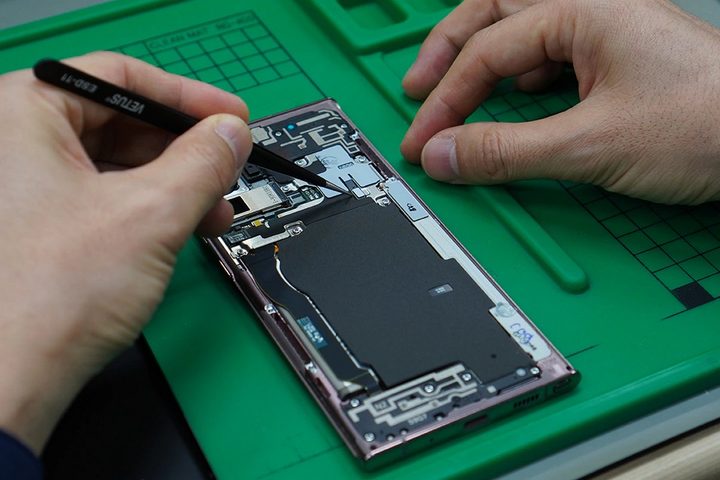
While the law certainly means well, as used tech is quickly growing to become the largest waste product in the world, the pushback from major tech companies isn’t completely unwarranted. The “15 component parts” that the law seeks to require come with every device is vague, to say the least, and the five years of manufacturing support that would be needed to meet those requirements would be costly and potentially not any more environmentally friendly than the system that’s in place currently. On top of that, the production of even more device components doesn’t necessarily mean that more repairs will even be happening and could even have the opposite intended impact, resulting in additional tech waste.
The creation of new batteries to be more sustainable is perhaps the most achievable goal laid out in the law, as a completely broken battery can lead to a device becoming unusable. That said, most major tech companies have already introduced ways to repair/replace batteries and other components on older devices, greatly increasing the life spans of nearly all current devices.
While the EU has been on something of a hot streak in terms of proposing new consumer-friendly legislation that focuses on big tech, this move is a little off-color. As mentioned above, it does seem to have good intentions, but unless the EU can provide better, more specific information about device repair requirements, it seems like there’s a possibility that the law could actually result in more tech waste. Although the section that requires better batteries does seem pretty solid and in the best interest of consumers, it’s paired with legislation that’s lacking in so many other areas, so it isn’t being given the fair shot that it likely deserves.
It’s still to be seen what will come of this, but hopefully, a middle ground can be reached so that true sustainability efforts are being implemented that also benefit consumers.