1. Home
  2. Phones
  3. Mobile
  4. News

Digital Trends may earn a commission when you buy through links on our site. Why trust us?

This is how your iPhone 14 will make those lifesaving SOS satellite calls

Add as a preferred source on Google

When Apple introduced the Emergency SOS via satellite feature in the iPhone 14 lineup in September, it said it wouldn’t be activated until sometime toward the end of the year. The company confirmed in a press release on Thursday that it is launching the service later this month for iOS users in the U.S. and Canada.

Emergency SOS via satellite will be powered in partnership with Globalstar, a global satellite company based in Covington, Louisiana, to help iPhone 14 users connect to an overhead satellite and reach out to emergency services while in remote areas away from cellular and Wi-Fi coverage — like forests or deserts. The service will be free for the first two years, but Apple hasn’t revealed how much it will cost afterward.
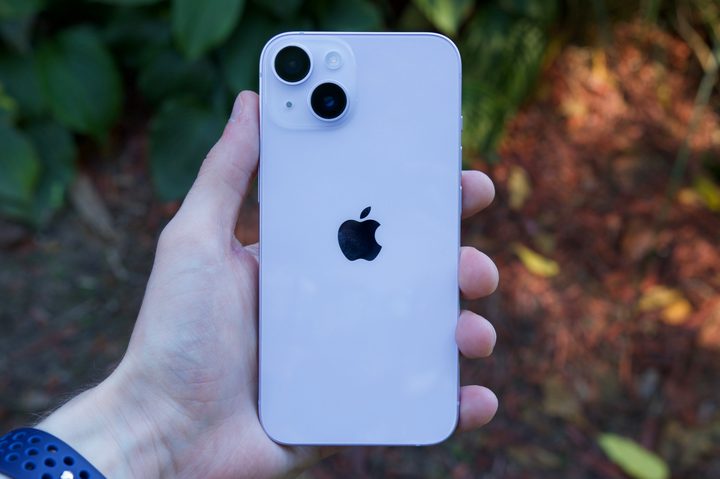
Someone holding an iPhone 14.
Joe Maring / Digital Trends

“Emergency SOS via satellite is a perfect example of how American ingenuity and technology can save lives,” Apple’s chief operating officer Jeff Williams said. “We are proud this service is enabled by leading U.S. companies, and that our users can explore off-the-grid areas knowing they are still within reach of emergency services if they are in need.”

Recommended Videos

The feature uses spectrum bands L and S in order to contact the overhead satellite. When you make an Emergency SOS request, you need to ensure the sky is clear enough to point your iPhone 14 in the right direction with the help of the on-screen UI to reach one of 24 Globalstar satellites orbiting Earth, which will then transmit the message to a ground station. Once the station receives the message, it will dispatch emergency services to your location. If the message is sent to an area where local emergency services don’t support text messages, Apple contractors working at relay centers will call them on your behalf.

Apple invested $450 million from its Advanced Manufacturing Fund to provide the infrastructure to support Emergency SOS via satellite. Most of the funding will go to Globalstar, which has an existing partnership with Apple. New antennas have already been installed at all of Globalstar’s ground stations worldwide to provide the best coverage possible, including existing stations in Nevada, Hawaii, Texas, Florida, Alaska, and Puerto Rico.

Cristina Alexander
Gaming/Mobile Writer
Cristina Alexander is a gaming and mobile writer at Digital Trends. She blends fair coverage of games industry topics that…
TSMC might set up a price hike that could come straight for your next phone, laptop, or tablet
Here's what TSMC's rumored 10% chip price increase actually means in dollar terms, and why your next phone or laptop could end up costing more.
TSMC Fab

My wallet flinched the second I saw the words "TSMC" and "price increase" in the same headline, and honestly, yours should too.

Turns out the company behind the silicon powering basically every flagship device out there, including Apple’s A-series and Qualcomm’s Snapdragon processors, is reportedly about to make all of it a little pricier.

Read more
Samsung’s free storage doubling for preorders is gone in Austria, and the replacement isn’t as sweet
Samsung's free storage doubling deal might just be history.
The back of the Galaxy Z Fold 7

If you've pre-ordered a Samsung foldable purely for the free storage bump, tomorrow's Unpacked event might sting a little.

For years, pre-ordering a new Galaxy meant automatically getting double the storage at no additional charge. Buy the 128GB model, walk away with 256GB for the same price. The same applied to the 256GB and 512GB models. However, that might change at the upcoming Galaxy Unpacked event. 

Read more
Apple fixes Hide My Email bug that exposed users’ real email addresses
Here's how Apple's Hide My Email flaw leaked real addresses for over a year, and why it only got fixed once the story went public.
apple-merging-sign-in-with-apple-hide-my-email-icloud+

Turns out the "Hide" part of Hide My Email wasn't doing its job quite as advertised, something that I covered early in July. Security researcher Tyler Murphy reported the flaw in June 2025, but despite Apple claiming it was resolved in March 2026, independent tests confirmed it remained exploitable, at least until July 3, 2026.

So how did this bug actually work?

Read more