1. Home
  2. Space
  3. News

James Webb gets most detailed look yet at an exoplanet’s atmosphere

Add as a preferred source on Google

One of the big advances promised by the James Webb Space Telescope is the ability to investigate exoplanets in greater detail than ever before. Webb has already imaged its first exoplanet and made the first detection of carbon dioxide in an exoplanet atmosphere, but now astronomers have used the telescope to get the most in-depth look yet at the atmosphere of planet WASP-39 b.

Webb uses instruments called spectrometers which break light down into different wavelengths to see which ones have been absorbed by various molecules in an atmosphere. This allows researchers to see spectra of the planet’s atmosphere, telling them what elements are present, which the researchers describe as a “game changer” for the study of exoplanets.
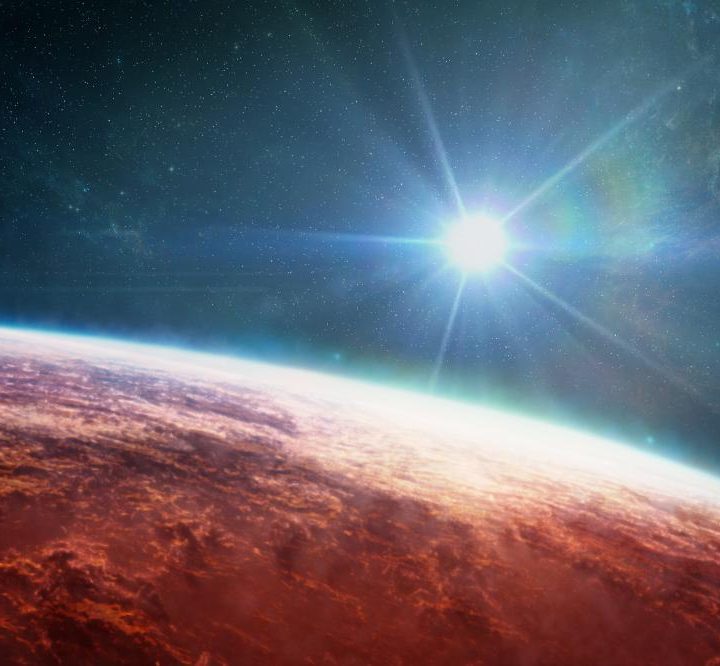
Artist's illustration of WASP-39b displays newly detected patches of clouds scattered across the planet.
New observations of WASP-39b with the JWST have provided a clearer picture of the exoplanet, showing the presence of sodium, potassium, water, carbon dioxide, carbon monoxide, and sulfur dioxide in the planet’s atmosphere. This artist’s illustration also displays newly detected patches of clouds scattered across the planet. Melissa Weiss/Center for Astrophysics | Harvard & Smithsonian

This planet is very hot, orbiting its host star every four days. In the atmosphere, researchers found water and confirmed the previous finding of carbon dioxide, but most importantly they found sulfur dioxide for the first time. This is created by light from the star interacting with the atmosphere and creating new molecules, and this is the first time that this photochemistry has been observed on an exoplanet.

Recommended Videos

Learning about an exoplanet’s atmosphere is important not only for understanding the planet as it is now but also for understanding how it formed in the past. ‘‘The moment I first saw the results of my analysis was probably the most exciting moment of my career to date,’’ said one of the researchers, Dominique Petit dit de la Roche, in a statement. ‘‘The chemical inventory of WASP-39b suggests that the planet was assembled by a succession of mergers with smaller bodies, and that its formation originally took place far from the central star.”

The research is early release, meaning it has not yet been published in an academic journal. It is presented in five papers, three of which are accepted and two of which are under review for the journal Nature.

Georgina Torbet
Georgina has been the space writer at Digital Trends space writer for six years, covering human space exploration, planetary…
Space is becoming Bezos and Musk’s next data center site, and we have every reason to worry
The AI boom is coming for the night sky
How Vast's space station will look in orbit.

AI data centers already consume vast amounts of electricity and water on Earth, so Silicon Valley has begun looking somewhere considerably more spacious... literally.

Elon Musk's SpaceX and Jeff Bezos' Blue Origin, along with several other companies, have proposed enormous constellations of satellites designed to operate as orbital data centers. However, environmental groups and former space officials are now warning that putting them into orbit at the proposed scale could have severe consequences for Earth's atmosphere and the night sky.

Read more
The first possible exomoon is here, and it makes our Moon look hilariously tiny
Scientists may have found the first exomoon, except this one is the size of Jupiter
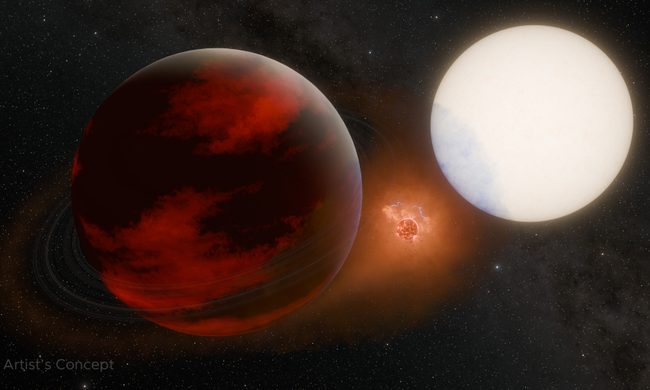
This artist’s concept depicts a potential volcanic moon between the exoplanet WASP-49 b, left, and its parent star. New evidence indicating that a massive sodium cloud observed near WASP-49 b is produced by neither the planet nor the star has prompted researchers to ask if its origin could be an exomoon.

We have already discovered more than 6,000 planets outside of our immediate neighborhood. Yet, finding a moon orbiting one of those distant worlds has proved considerably harder. Astronomers may finally have something close to the real deal, but this particular object stretches the word “moon” almost beyond recognition.

Using the European Southern Observatory’s Very Large Telescope in Chile, researchers detected strong evidence for a moon-like object in the CD-35 2722 system. Further observations are still necessary to confirm the discovery, but it could become the first confidently detected natural satellite outside our solar system. There is still one tiny complication though. This moon is apparently massive.

Read more
China’s answer to SpaceX’s reusable rockets literally catches boosters in a net
SpaceX catches boosters on legs. China just used a net.
Ammunition, Missile, Weapon

SpaceX's playbook for recovering a rocket booster generally involves legs, a precisely controlled vertical landing, and either a concrete pad or a drone ship. 

China just managed to pull off something similar, but in a slightly different way, and on July 10, it tested the method as well.

Read more