When I first laid eyes on the Alienware 34 QD-OLED, I knew it was something special.
Maybe not so much from the outside. There’s nothing wrong with Alienware’s white, sci-fi design, which takes cues from the films like THX 1138, Oblivion, and 2001: A Space Odyssey. But we’ve seen that before.

Promising panel
It was the panel itself that made it such an important monitor this year. It’s the first gaming monitor to use one of Samsung’s QD-OLED panels. It was announced and released alongside the first QD-OLED televisions from Samsung and Sony, which was a rarity in its own right. The latest panel technology often goes to televisions first, while PC monitors are often many years behind.
But that’s beginning to change, and the Alienware 34 QD-OLED is a great example of that.
Despite that positive development, this monitor remains the sole carrier of this technology in the world of monitors this year. It’s still the only QD-OLED monitor you can actually go out and buy this year. Both Samsung and MSI have announced their own models, most noticeably the OLED version of the popular Odyssey G9, But neither managed to come out in 2022.
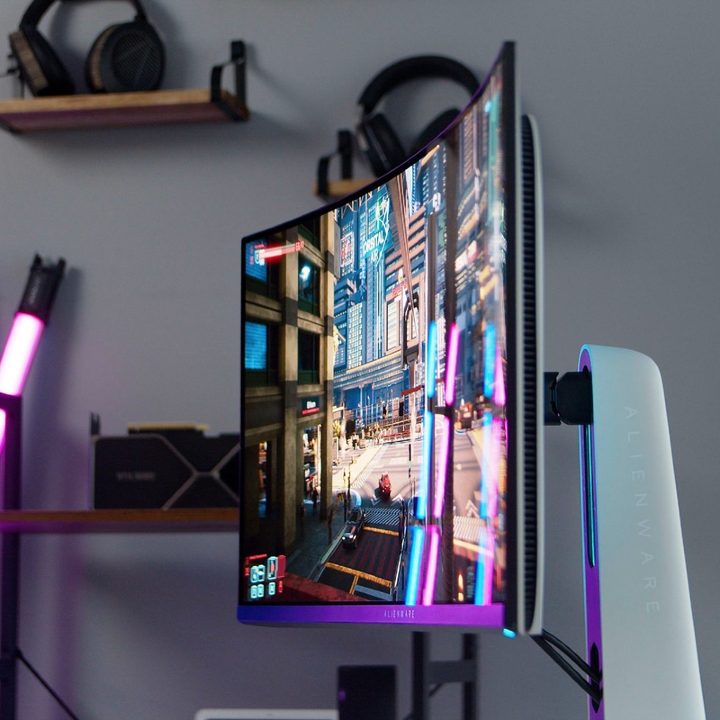
The crazy part? Alienware actually released two of these models, with a second launch in the back half of the year that was slightly cheaper and aimed toward AMD gamers.
So yeah, Alienware seems to have had an exclusive with these QD-OLED panels, and that makes this monitor special on its own. But being unique wouldn’t matter much if the technology itself wasn’t impressive. It’s the incredible image quality that made the Alienware 34 QD-OLED such a standout this year.
The vast majority of PC gamers have never experienced good HDR performance.
The jump ahead that QD-OLED provides is an even bigger deal with the Alienware 34 QD-OLED than it was on televisions. After all, there are already really solid options in the world of high-end TVs that can rival Samsung’s QD-OLED panels. OLED and mini-LED are already prominent technologies in the TV space, but in the world of monitors, they’re still extremely rare. The few OLED monitors that do exist come in massive screen sizes that are impractical for most people. Instead, IPS and VA are still the most common panel types for monitors — even if you’re shopping among the most expensive gaming monitors you can buy.
These forms of backlighting just don’t have the brightness and contrast provided by OLED or mini-LEDs. That means the vast majority of PC gamers have never experienced good HDR performance. And that’s where the most noticeable benefits of the Alienware 34 QD-OLED come into play.
Preview of the future
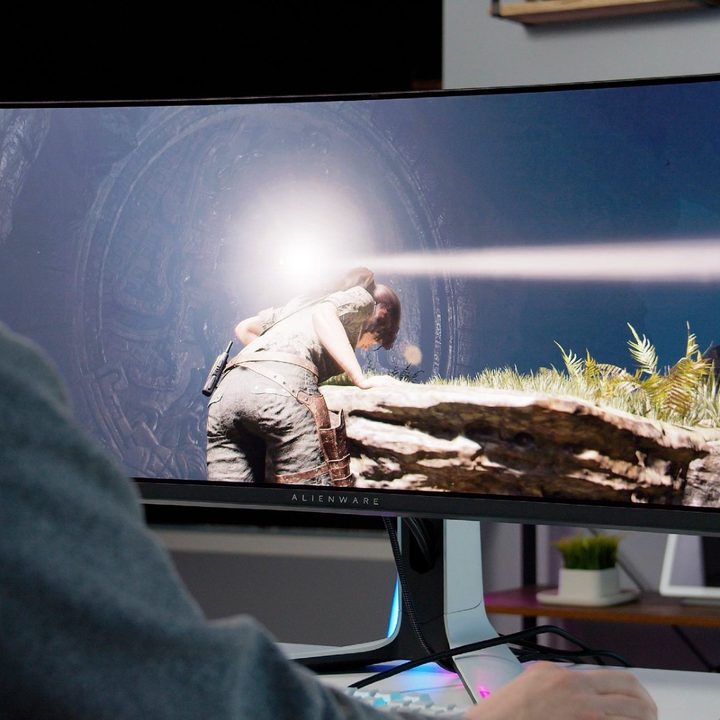
Gaming in HDR on the Alienware 34 QD-OLED looks incredible. The combination of a peak brightness of 1,200 nits and the extreme contrast of OLED offers HDR performance that can finally rival some of the best TVs. In games that support it like Cyberpunk 2077 or Shadow of the Tomb Raider, the visuals are completely transformed by this new range of color and light — all without taxing your GPU.
In a world where Nvidia and AMD offer multiple ways to increase frame rates (sometimes to the detriment of visuals), proper HDR doesn’t require adjusting texture quality or DLSS settings. And yet, there’s no question these games look significantly better in HDR.
In that way, the Alienware 34 QD-OLED feels like a preview of the future of PC gaming. As more and more OLED and mini-LED monitors become available, developers will (hopefully) be incentivized to build it into more games. The first 27-inch OLED gaming monitors are already in the works, and by the end of 2023, there should finally be an assortment of options that have decent HDR performance.
It’s not going to happen overnight, but gaming monitors are finally catching up to TVs — and we’ll look back at the Alienware 34 QD-OLED as one of the most important releases to push this trend forward.