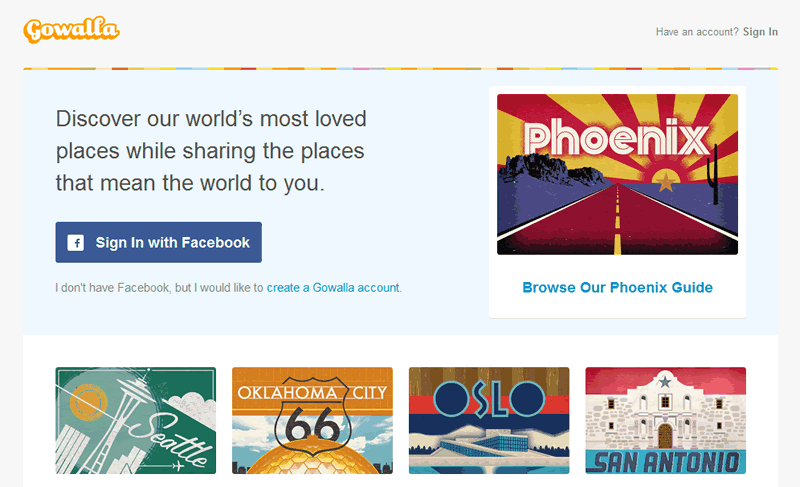
According to a report from CNN, Austin-based Gowalla was purchased today by Facebook. Two years ago, Gowalla attempted to compete with Foursquare in building a social network that promoted user locations. While Foursquare dominated Gowalla in regards to adding users, the company shifted directions to travel discovery guides that provide a visual look at various landmarks and cities around the globe as well as telling a story about each location. According to the CNN article, Gowalla founder Josh Williams and many employees will be relocated to Palo Alto to work in Facebook’s offices. However, some employees will remain in Austin, Texas and work from a satellite Facebook office.
 The team will be working directly on Timeline, the revision of the Facebook wall that was announced earlier this year. Facebook Timeline was scheduled to be released over a month ago, but has fallen behind schedule. Based on previous acquisitions, it’s highly unlikely that Facebook will continue to run Gowalla in the current state. Facebook typically purchases companies like Snaptu and Hot Potato to integrate talented developers and engineers into the Facebook family. No official announcement has been made on the fate of the Gowalla site or the Gowalla mobile application available for iPhone and Android phones.
The Gowalla application has about 10,000 daily active users, but that’s a pittance compared to rival Foursquare with over half a million daily active users. According to Mashable, Foursquare officials released the follow statement about the acquisition: “Congrats to Josh and the team in Austin. Here at Foursquare, we continue to focus on building an amazing product and growing our 15,000,000-strong community.” Gowalla raised about 10 million dollars during two rounds of funding and notable investors include Digg founder Kevin Rose, wine aficionado Gary Vaynerchuk and Mahalo founder Jason Calacanis as well as some venture capitalist firms.