  1. Home
  2. Computing
  3. Legacy Archives

Acer to stop selling ‘cheap, unprofitable’ products, focus on Ultrabooks, says CEO

Add as a preferred source on Google
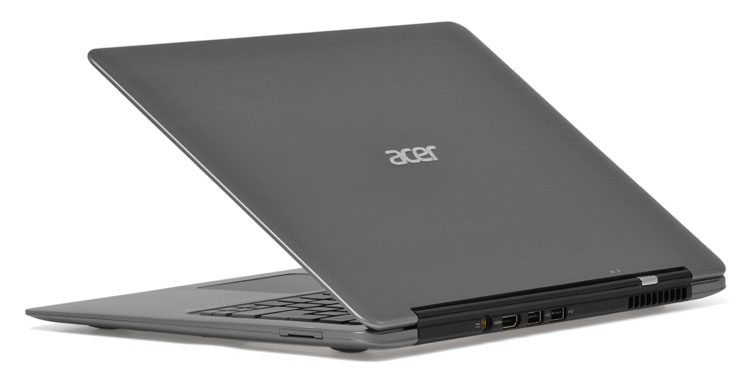
Acer-Aspire-S3-angle-lid-open
Image used with permission by copyright holder

The days of Acer being a low-end brand are coming to an end, according to the company’s chief executive, J.T. Wang, reports AllThingsD. Instead, the computer-maker is going to focus on producing ultrabooks, the super-thin laptops that mimic the design and portability of Apple’s increasingly popular MacBook Air line. The move comes after Acer suffered through two consecutive quarters of net losses.

“We will shift our strategy to improving profitability from pursuing market share blindly with cheap and unprofitable products,” said Wang in an interview with Dow Jones. “Ultrabooks will become our key growth driver next year as customers want a lighter, thinner notebook with longer battery life. Selling more ultrabooks will also help improve our profit margins as they command higher prices.”

Recommended Videos

According to Wang, the company hopes to increase sales of its laptops by 10 percent next year as it aims to once again turn a profit. Unfortunately for Acer, it looks as though the Ultrabook market will be a tough one in which to compete. At the 2012 Consumer Electronics Show in January, computer companies are expected to launch as many as 50 Ultrabook models — and that’s likely just the beginning. In addition, some analysts say it remains unclear whether Ultrabooks will actually help computer companies increase profits.

To get an idea of what Acer has in store in the Ultrabook department, check out our review of the Aspire S3, a 13.3-inch Ultrabook that’ll run you $100 less than a smaller MacBook Air.

Andrew Couts
Features Editor for Digital Trends, Andrew Couts covers a wide swath of consumer technology topics, with particular focus on…
The Mac Pro nearly received an M3 Extreme chip twice as powerful as M3 Ultra
High production costs likely killed Apple’s M3 Extreme plans
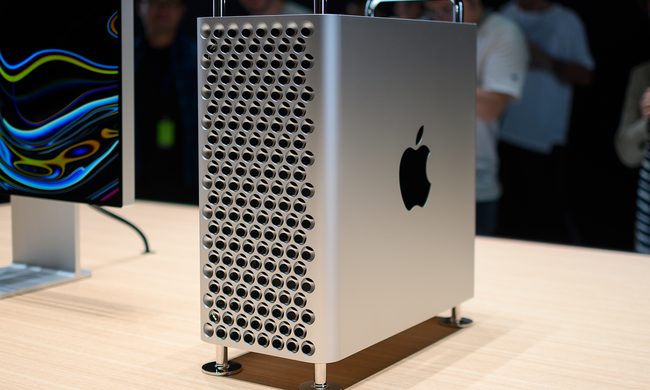
Apple's Mac Pro on a table at a press event.

Apple discontinued the Mac Pro earlier this year, ending a 20-year run for a computer that once represented the very best of the company’s desktop lineup. However, Apple reportedly had much bigger plans for the machine before ultimately replacing it with the Mac Studio.

According to Bloomberg’s Mark Gurman, Apple developed an M3 Extreme chip that could have offered twice as many CPU and GPU cores as the M3 Ultra. The processor was intended to sit above the Ultra tier and could have finally given the Mac Pro the performance advantage it badly needed. Apple eventually abandoned the chip due to concerns over production costs and limited demand for such an expensive machine.

Read more
Hidden prompts can secretly rewrite an AI’s memory, and researchers say that’s a serious problem
Researchers discover AI attack that rewrites an assistant's long-term memory
Chatbot on a smartphone.

Large language models are getting better at remembering us. Whether it's your preferred writing style, recurring tasks, shopping habits or project deadlines, AI assistants are increasingly storing long-term memories to make future conversations feel more personal and useful. But according to new research, that same feature could become one of AI's biggest security vulnerabilities.

Researchers from New Mexico State University have demonstrated a new attack called GhostWriter, capable of secretly planting false memories inside AI agents. Rather than stealing information outright, the attack manipulates what an AI remembers, potentially causing it to make dangerous decisions long after the original attack has taken place.

Read more
This experiment shows how easy it is to poison an open-weight AI model for under $100
This research raises new doubts about trusting open weight AI models.
Computer, Electronics, Laptop

Open-weight AI models have been having a moment lately. Just this month, Moonshot's massive Kimi K3 model landed close behind Claude Fable 5 and GPT 5.6 Sol in several benchmarks, all while remaining fully open-weight and downloadable by anyone.

However, Katie Paxton-Fear, a cybersecurity lecturer at Manchester Metropolitan University and staff security advocate at Semgrep, managed to poison an open-weight model and proved how easily that openness can be turned against you (via The Register).

Read more