  1. Home
  2. Emerging Tech
  3. Web
  4. Legacy Archives

Japanese company building 13-foot working Gundam tribute robot

Add as a preferred source on Google

gundam robotHajime Sakamoto, president of the Osaka-based Hajime Research Institute is working to make Gundam fan’s dreams a reality. His latest project, already underway, is a mobile 13-foot robot with a cockpit within for a human pilot

Development on the 13-foot mobile robo suit began in 2010, though the Japanese company has been churning out humanoid robots since 2002. The robots are slowly getting larger as well; in 2007, Hajime Robot 25 was three feet tall, and in 2009 robot 33 was seven feet tall, reining as one of the largest humanoid robots in the world.

Recommended Videos

The giant robot from HRI aims to be the largest in the world and will be able to do bipedal walking, though at the moment only one leg has been finished. The company is currently looking for sponsors to jump in and help with the project. NKK Kyousei and various contractors are working to build the giant robot’s parts.
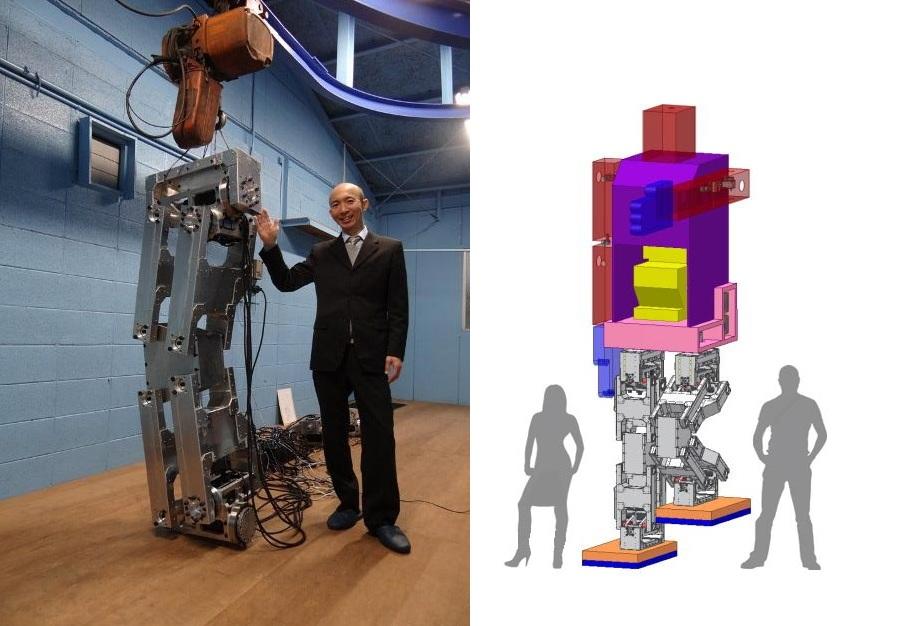
giant mecha suit
Image used with permission by copyright holder

Why would someone want to unleash a giant, possibly destructive, robot suit into the world? Cnet points out that the Hajime Web site’s philosophy, developed in 2002, is “to cheer people by dream power. We provide a dream to people through robotic technology.”

The 13 foot Gundam tribute may seem amazing enough, but Hajime Sakamoto’s dreams rest far into the future. The HRI president is a devout fan of Gundam and aims to make a working version of the now-dissasembled, 59-foot giant mecha in Shizuoka, Japan which was created as part of the anime series’ 30th anniversary. HRI plans on creating a 26-foot robot to lead up to the final giant Gundam suit, which the company president hopes to complete in eight years, just in time for the Gundam series’ 40th anniversary.

Via Plastic Pals

Jeff Hughes
Former Digital Trends Contributor
I'm a SF Bay Area-based writer/ninja that loves anything geek, tech, comic, social media or gaming-related.
Anti-surveillance clothing is getting cheaper, but don’t expect an invisibility cloak
Affordable shirts now claim to confuse facial recognition, although their protection depends heavily on the camera and software watching you
Chart, Plot, Adult

Anti-surveillance clothing is starting to look less like an art-school experiment and more like something you could actually wear outside. Shirts designed to confuse facial recognition systems now cost about as much as ordinary streetwear, although buying one won’t make you disappear.

The Guardian reports that designers are using face-like prints, unusual cuts and infrared lights to interfere with computer vision. These techniques target specific weaknesses, so their success depends on what happens to be watching you.

Read more
This spinning drone hides in plain sight using a visual illusion
This drone doesn't turn invisible. It tricks your brain into thinking it has.
Phantom Twist

For decades, engineers have chased the dream of an invisible drone. The usual approaches have involved transparent materials, camouflage coatings, or complex optical systems that bend light around an object. Researchers at Northwestern University decided to take a completely different route. Instead of hiding the drone itself, they chose to fool the human eye.

The result is Phantom Twist, an experimental drone that spins so rapidly it almost disappears into the background. It's not technically invisible, but to anyone watching, it looks more like a faint blur than a flying machine.

Read more
This smart knitted fabric can flip switches, count your steps, and even change shape
Grandma's knitting just entered its Iron Man era
Representative Image

For most of us, knitting brings to mind sweaters, scarves, and perhaps an ambitious grandmother determined to make winter more fashionable. Researchers at Harvard University, however, have a far more futuristic vision. They've transformed ordinary knitted fabric into a programmable material capable of changing shape, acting as an electrical switch, sensing movement, and potentially forming the foundation of tomorrow's wearable technology.

The research, published in Advanced Functional Materials by scientists at the Harvard John A. Paulson School of Engineering and Applied Sciences (SEAS), demonstrates how machine-knitted textiles can "snap" between multiple stable shapes without relying on motors or rigid mechanical parts.

Read more