1. Home
  2. Space
  3. News

Russian replacement Soyuz scheduled for February 24 launch

Add as a preferred source on Google

Russia’s space agency has announced it plans to launch a replacement Soyuz spacecraft to bring home ISS crew members later this month.

In an announcement posted to Telegram, Russian space agency Roscosmos said it was planning to launch the replacement Soyuz vehicle on February 24 at 3:34 a.m. Moscow time, which is equivalent to 7:34 p.m. ET on February 23.

Recommended Videos

The replacement Soyuz is needed due to a coolant leak in the original Soyuz craft which was scheduled to carry NASA astronaut Francisco Rubio and Roscosmos cosmonauts Sergey Prokopyev and Dmitry Petelin back to Earth. The leak in the coolant system meant that temperatures inside the Soyuz could have reached dangerous levels during the return trip through the atmosphere.

To avoid this potential danger, the replacement Soyuz will carry the trio home instead. In case of an emergency, a SpaceX Crew Dragon capsule is available if the ISS crew needs to be evacuated before the replacement Soyuz arrives.
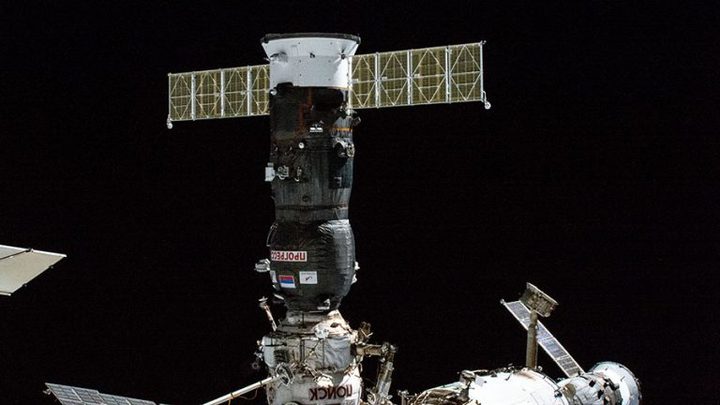
The ISS Progress 82 cargo craft is pictured shortly after docking to the space station in October of 2022.
The ISS Progress 82 cargo craft is pictured shortly after docking at the space station in October of 2022. NASA

The announcement of the replacement Soyuz launch date follows a second coolant leak that occurred on an uncrewed Progress cargo spacecraft while the vehicle was docked to the ISS. Roscosmos decided to check on the status of the Progress craft before confirming the launch date of the replacement Soyuz crew craft.

Roscosmos said that its external checks of the Progress craft revealed no damage to its radiator, so the craft was undocked and deorbited as planned. Loss of coolant was not a concern for the deorbiting process as the only cargo within the vehicle as it traveled away from the station was trash and it was to be destroyed during deorbiting anyway.

According to NASA updates, the Progress was undocked from the station at 9:26 p.m. ET on Friday, February 17, though its deorbit was delayed by around 24 hours to allow time for inspection of the vehicle. During this time the craft was put into a trajectory away from the station for safety reasons, before performing its final deorbit burn at 10:15 p.m. ET on February 18 and burning up in the atmosphere.

The source of both of the two recent coolant leaks is not entirely clear. The most likely culprit is an impact by a micrometeoroid, a known threat in the vicinity of the ISS as small particles of rock can travel at very high relative speeds and damage space station components.

Georgina Torbet
Georgina has been the space writer at Digital Trends space writer for six years, covering human space exploration, planetary…
Space is becoming Bezos and Musk’s next data center site, and we have every reason to worry
The AI boom is coming for the night sky
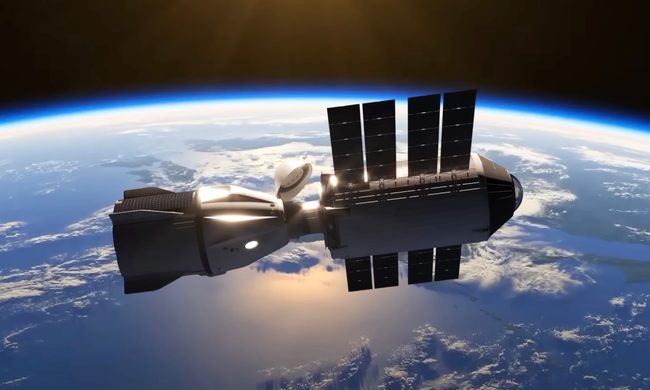
How Vast's space station will look in orbit.

AI data centers already consume vast amounts of electricity and water on Earth, so Silicon Valley has begun looking somewhere considerably more spacious... literally.

Elon Musk's SpaceX and Jeff Bezos' Blue Origin, along with several other companies, have proposed enormous constellations of satellites designed to operate as orbital data centers. However, environmental groups and former space officials are now warning that putting them into orbit at the proposed scale could have severe consequences for Earth's atmosphere and the night sky.

Read more
The first possible exomoon is here, and it makes our Moon look hilariously tiny
Scientists may have found the first exomoon, except this one is the size of Jupiter
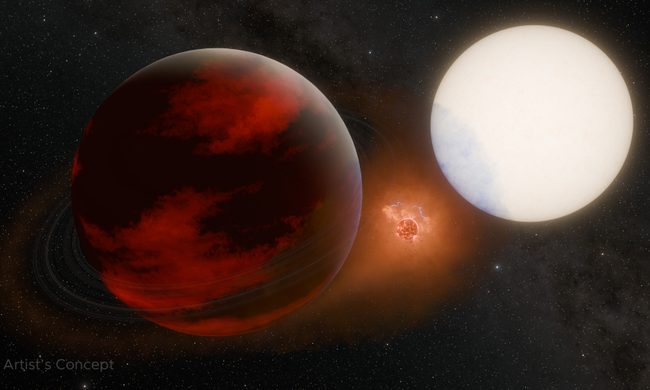
This artist’s concept depicts a potential volcanic moon between the exoplanet WASP-49 b, left, and its parent star. New evidence indicating that a massive sodium cloud observed near WASP-49 b is produced by neither the planet nor the star has prompted researchers to ask if its origin could be an exomoon.

We have already discovered more than 6,000 planets outside of our immediate neighborhood. Yet, finding a moon orbiting one of those distant worlds has proved considerably harder. Astronomers may finally have something close to the real deal, but this particular object stretches the word “moon” almost beyond recognition.

Using the European Southern Observatory’s Very Large Telescope in Chile, researchers detected strong evidence for a moon-like object in the CD-35 2722 system. Further observations are still necessary to confirm the discovery, but it could become the first confidently detected natural satellite outside our solar system. There is still one tiny complication though. This moon is apparently massive.

Read more
China’s answer to SpaceX’s reusable rockets literally catches boosters in a net
SpaceX catches boosters on legs. China just used a net.
Ammunition, Missile, Weapon

SpaceX's playbook for recovering a rocket booster generally involves legs, a precisely controlled vertical landing, and either a concrete pad or a drone ship. 

China just managed to pull off something similar, but in a slightly different way, and on July 10, it tested the method as well.

Read more