

If you were excited to hear about some truly futuristic and innovative technology this year from CES, then Fulton Innovation, the creator of eCoupled, is exactly what you have been waiting for. While we’ve had a chance to see Fulton’s products before, the company was also on hand at CES 2012 to demonstrate its wide range of wireless charging technology, and it’s obvious the folks over at Fulton hate wires as much as we do. Its research and breakthroughs in wireless technology is nothing short of amazing.
But what exactly is eCoupled? Well, the simple explanation is that eCoupled is a technology that will allow users to use a wide array of devices and power them wirelessly. Sure, there are power mats that will charge your phones and tablets already, but not like this. A device doesn’t have to be fixed to a pad, but rather within a given area. For instance, Fulton demoed a cell phone being charged wirelessly while inside a handbag.

It doesn’t stop there, though. Part of what makes eCoupled such an amazing and useful new technology is the fact that Fulton has also developed an advanced wireless power solution that can be built into almost any surface, including magazines, consumer packaging, and more. We happened to see a recent copy of Entertainment Weekly with Daniel Radcliffe of Harry Potter fame – his eyes were lighting up intermittently, and needless to say it was pretty cool. When we inspected further by turning the page to see what kind of techno wizardry was behind this, we saw nothing but the next page. Of course there is an explanation: The magazine is powered by eCoupled intelligent wireless power technology, which allows it to light up while on the shelf using wirelessly powered printed electronics. According to Fulton, these printed parts will be both low-cost and low-power. Think of all the new and creative ways manufacturers, publishers, and advertisers could use this technology.
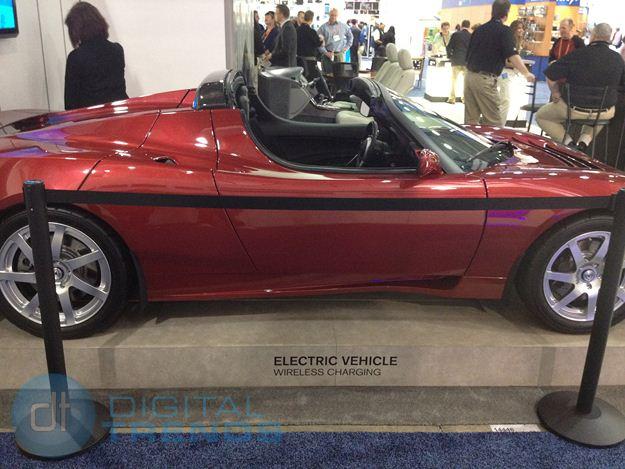 Of course there is a direct benefit to everyday consumers as well. Fulton showed off its wireless blender, and a Tesla electric car that has its interior surfaces enabled for wireless power, allowing you to power your smartphone virtually anywhere in the car – even the car itself had the ability to be charged wirelessly.
So just remember: While Samsung is showing off its gorgeous OLED TV’s, eCoupled was off in the corner pushing true innovation of another kind and bringing us another step closer to getting rid of all our pesky cables and wires.


