1. Home
  2. Computing
  3. News

ChatGPT gets banned in Italy as the fight against AI begins

Add as a preferred source on Google

ChatGPT has been temporarily banned in Italy due to privacy concerns and faces a Federal Trade Commission (FTC) complaint in the U.S. that calls for new releases of ChatGPT to be halted.

According to the Associated Press, the Italian Data Protection Authority will maintain the ban “until ChatGPT respects privacy.” The problem with user data being visible to others during ChatGPT’s March 20 outage was mentioned as the reason for this action.

Recommended Videos

No details were shared about how this ban would be enforced or whether it would affect OpenAI partners that use ChatGPT, such as Microsoft’s Bing Chat. OpenAI is ChatGPT’s creator.
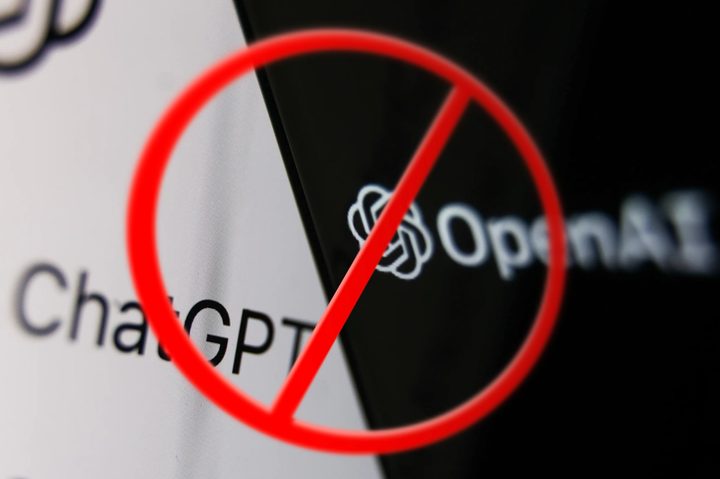
OpenAI and ChatGPT logos are marked do not enter with a red circle and line symbol.
OpenAI and ChatGPT logos are marked do not enter with a red circle and line symbol. openAI

In the U.S., OpenAI might have to deal with a bigger problem. The Center for AI and Digital Policy (CAIDP) filed a complaint with the FTC about ChatGPT.

The nonprofit cited the FTC’s declaration that the use of AI should be “transparent, explainable, fair, and empirically sound while fostering accountability.” Transparency is clearly an issue for OpenAI since the model used for ChatGPT is proprietary — many others are open-source.

CAIDP’s complaint cites OpenAI’s report, the GPT-4 System Card, as evidence for the need for regulation. “Nonetheless, these efforts are ‘limited and remain brittle … .’ OpenAI concedes that ‘this points to the need for anticipatory planning and governance.'”

The complaint also highlighted OpenAI’s admission of a bias risk in the GPT-4 System Card, and is concerned about “harmful stereotypical and demeaning associations for certain marginalized groups.”

CAIDP urges the FTC to “halt further commercial deployment of GPT,” and “establishment of independent assessment of GPT products prior to future deployment,” along with other regulatory actions to rein in the rapid advance of potentially dangerous and biased AI distribution without government supervision.

An FTC complaint might not lead to any action, but given OpenAI’s anticipation of governance, some regulation seems likely in the future and could slow the release of GPT-5.


Alan Truly
Alan Truly is a Writer at Digital Trends, covering computers, laptops, hardware, software, and accessories that stand out as…
Gemini Notebook’s new Collections arrive just as Google turns it into a bigger workspace
Google is cleaning up notebook organization as the former NotebookLM expands across Gemini and Search
Gemini Notebook branding on a MacBook

Google has barely finished renaming NotebookLM, and it’s already addressing one of the headaches that comes with building a large research library.

Collections are rolling out to all Gemini Notebook users, giving them a way to group related notebooks while keeping everything visible under My Notebooks. The dashboard gets some structure without asking users to rearrange the library they’ve already built.

Read more
Samsung’s humanoid robot ambitions are real, but factories come first
Samsung’s new robotics division has humanoids in its sights, although its immediate business is far more practical factory automation
Robot Touch Human Finger

Samsung wants a place in the humanoid race, but its new robotics push begins with machines built for factories rather than homes.

The CEO-led RX robotics division will initially focus on manufacturing robots. Samsung has separately identified humanoids as a priority, although it hasn’t announced a commercial model or explained where one fits into the division’s immediate plans.

Read more
WhatsApp’s Liquid Glass redesign is finally coming to Mac after months of waiting
WhatsApp's Mac app is getting Apple's Liquid Glass-inspired makeover
WhatsApp

WhatsApp has been steadily adopting Apple's new design language across its apps, but Mac users have largely been left watching from the sidelines. That is finally beginning to change.

The messaging platform has started rolling out its Liquid Glass redesign for the WhatsApp Mac app, bringing the desktop experience much closer to what iPhone and iPad users have been seeing over the past few months. The update introduces a refreshed interface with redesigned navigation elements, updated menus, and a cleaner layout that aligns with Apple's latest software aesthetic. According to WABetaInfo, the rollout has begun through the latest Mac App Store update and is currently reaching a limited number of users.

Read more