Dell has two new high-end UltraSharp monitors, both of which boast IPS Black, a display technology that’s supposed to offer higher contrast and deeper blacks. The two monitors in question are the UltraSharp 32 6K monitor (U3224KB) and UltraSharp 38 Curved USB-C Hub Monitor (U3824DW).
The 6K model is the most premium one Dell has ever sold, launching at a dizzying $3,200 price point. Beyond the 6K resolution, it also comes with a 4K HDR webcam (located in the top bezel), 140 watt-power delivery through the Thunderbolt 4 port, and DisplayHDR 600 certification.
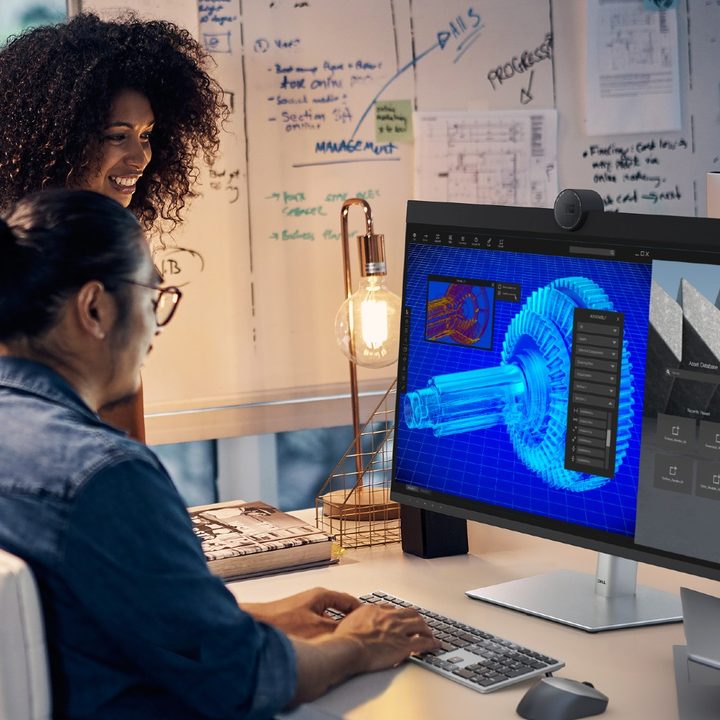
The ultrawide 38-incher is impressive too. It comes with a WQHD+ resolution and a built-in KVM switch. But seriously: where’s the OLED or mini-LED options? Companies like Samsung, LG, Asus, and more are adopting these more advanced display technologies, especially in the world of gaming monitors. We’ve seen all sorts of different mini-LED and OLED gaming monitors come out this year, ranging from standard 27-inch options up to massive, desk-dominating wonders like the Asus ROG PG42UQ. It’s not hard to imagine why these companies have turned to gaming monitors first. Gaming is one of the best use cases for HDR, especially since most PC gamers have yet to experience a proper HDR panel.
To be fair, Dell is making one of the popular models itself — the Alienware 34 QD-OLED. But that’s what makes the lack of Dell OLED monitors more glaring. Lenovo introduced mini-LED ThinkVision monitors this year, and Asus has had its ProArt OLED monitor since last year. But Dell has been quiet on this front. We know the tech is out there, but the company seems more interested in doubling down on IPS Black — at least with its non-gaming monitors.
IPS Black first debuted in 2022 on a number of Dell monitors, including the U2723QE, U3223QE, and U3223QE. But it’s not a Dell-exclusive technology — it’s actually from the panel maker LG. And since then, HP has used IPS Black too, with its HP Z32K G3. And for what it is, IPS Black does offer a meaningful improvement over standard IPS displays. They have great color accuracy, and in with the unit we tested, hit an impressive 2,050:1 contrast ratio.
But it was only certified for DisplayHDR 400, which is pitiful HDR performance compared to OLED or mini-LED panels that are much brighter and have higher-contrast. The UltraSharp 32 6K does improve brightness, with a claimed peak of 600 nits, but these are still a bit behind the competition in terms of HDR.
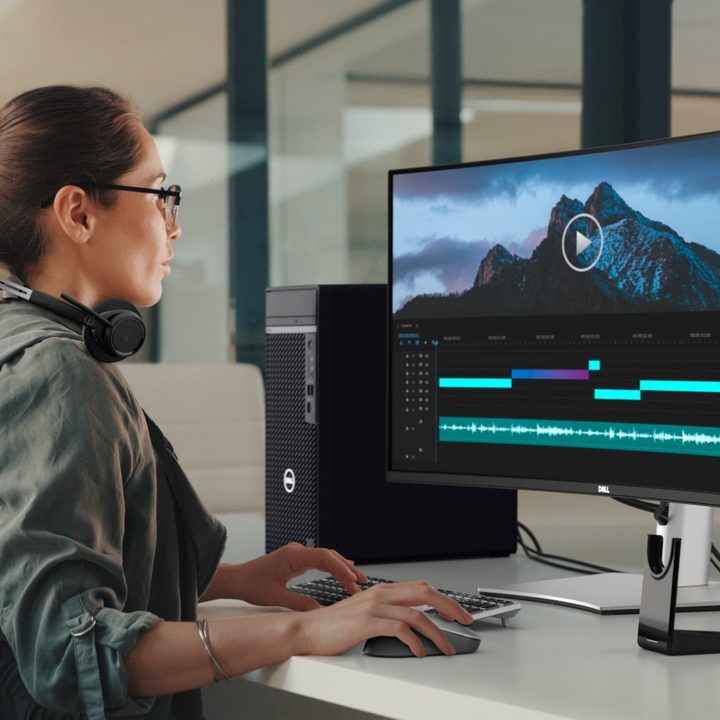
The resolution, of course, is the spec Dell is selling the 6K monitor on — not so much the HDR performance. And with IPS Black, it’s bound to be a great option for color graders, video editors, and designers.
But without the added dimming zones of mini-LED or per-pixel backlighting of OLED, these monitors will just never be able to compete in HDR performance — especially compared to the televisions out there. We’re already seeing some non-gaming laptops embrace mini-LED to great effect, most notably on the MacBook Pro.
The UltraSharp 32 6K will be available to purchase today on Dell.com for $3,200, while the UltraSharp 38 Curved USB-C Hub Monitor won’t be available until June 22 and will cost $1,530.