I’ve really liked many of the Motorola phones I’ve used this year, from the excellent Motorola Razr Plus and Motorola Razr 40 to the interesting, but odd Motorola ThinkPhone.
But I’m increasingly annoyed by the lack of one simple feature across all of them. It’s beginning to really bother me, as I don’t understand why Motorola refuses to add it in. I’m talking about a true always-on screen.
No permanent always-on option

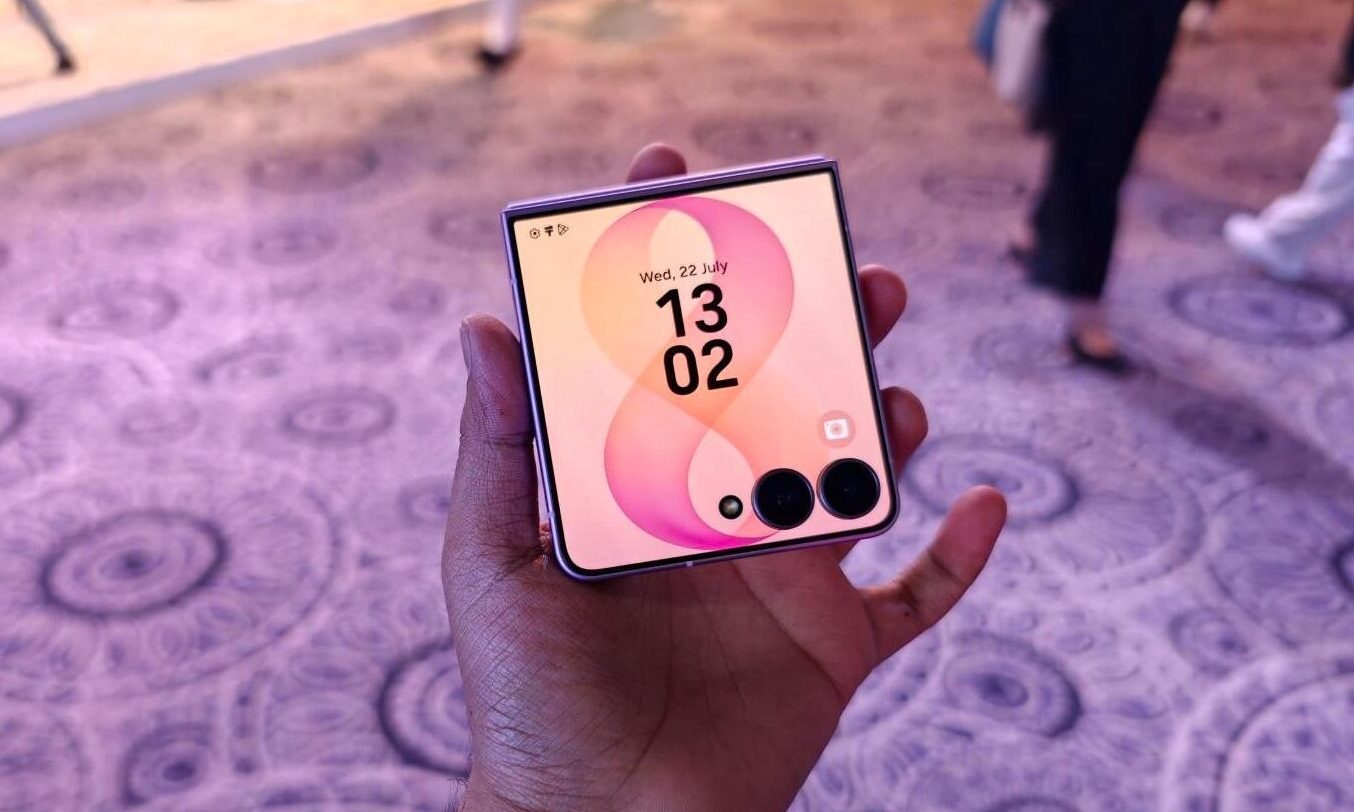
It probably sounds strange, but it’s true. No modern Motorola phone has an always-on screen that permanently shows the time, notification icons, battery level, and other helpful at-a-glance information. What you get is a feature called Peek Display, which uses gestures or movement to wake the screen, so you can then see the time and various informative icons. There is no option to leave Peek Display on, so you see a black screen on the front of your phone almost all the time.
A permanently available always-on screen is, for me, exceptionally helpful. Like many people, I have my phone on silent and like to take a quick look at the screen to see if I’ve missed anything, especially when I’ve been busy with something else and the phone isn’t close to hand.
While it’s not the end of the world to go over to the phone and tap the screen, I shouldn’t have to do it. I don’t need to do the walk-and-tap with any other phone except a Motorola one. Even the iPhone now has an always-on screen, a feature that was avoided for years before Apple came to its senses.

Yet Motorola is still holding out. The reason, according to the company, is to conserve battery life. It’s a bizarre excuse that makes almost no sense at all, especially in the era of dynamic refresh rate screens. But always-on screens are off by default most of the time anyway, so you have to make an effort to activate it.
If someone is really dedicated to maximizing battery life, they can either not activate it, or turn the feature off if they desperately miss the few percentage points of charge it’ll pull from the battery each day. But for those of us with different priorities, it can remain active.
I want the choice

I simply want the choice to let the always-on screen drain the battery in my phone, rather than have Motorola make the decision for me. It’s baffling that it’s not an option because every other manufacturer is confident enough in its power management to enable what is a helpful feature. Why isn’t Motorola? Peek Display (and its various ways of interacting with notifications) is a decent added feature. But the absence of an always-on option has now gone from irritating me to making me rather angry.
I’ve been using the Motorola Razr 40 Ultra (known as the Razr Plus in the U.S., due to Motorola’s love of confusing everyone with its nomenclature), and have enjoyed it apart from the stupidity of not being able to fully utilize the excellent cover screen. However, what I began to notice is that I only have to breathe in the phone’s direction to wake the cover screen up. It’s unbelievably sensitive, and springs into life at almost every opportunity — to the point where its incessant, sudden illumination became distracting when the phone is in my peripheral vision.

This made me angry because there’s no way this saves any power, or is any more efficient than just giving me a regular, monochrome, low-refresh rate always-on display. Instead, Moo (the best Motorola wallpaper you can get) constantly leaps on to the screen in all its animated glory, eagerly sucking that valuable energy Motorola is apparently going out of its way to retain by not giving me what is a basic phone feature in 2023.
It makes the “saving battery” excuse sound very weak indeed. It’s no substitute for a normal always-on screen either, as the moment I look over at the screen to see if there’s some helpful information, it goes black again. It’s infuriating.
Is this a deal breaker?

I understand not everyone will be angered by this in the same way as I am, and I’m not claiming that ignoring a permanent always-on screen is as stupid as something like not installing a Phone app. It’s obviously not a reason to avoid buying a Motorola phone completely, particularly because the company has put out some great phones recently — from the aforementioned Razr foldables to the Motorola Edge Plus (2023).
However, because its top phones have steadily improved over the past year or so, the lack of a true always-on display becomes more irksome. “Oh great, I’ve got to put up with Peek Display” has become the first thing I think of every time I put my SIM in a new Motorola phone. It makes me wonder if there’s a clause in Motorola’s contracts that says, “I promise to never fully enable the always-on display,” like some ancient directive handed down over the years. Sounds ridiculous. I know, but then, so is not giving people the option to use an always-on display all the time.
Still, I’m holding out hope that Motorola will one day realize a really helpful feature is missing from its phones, and a short software update will be sent out to cure the oversight. Until that day, I’ll continue to roll my eyes when I glance over to see absolutely nothing apart from a black screen on my Motorola phone.