NASA has shared its top picks for what to look out for in the night sky in the final month of the year.
Highlights include excellent views of the moon with various planets, a chance to see the peak of the Geminid meteor shower, and a rare opportunity to witness an asteroid passing by Earth.
Moon and planets
Stargazers can check out the crescent moon appearing to get close with the planet Venus and the bright Spica star between December 7 and 10.
A week later, on December 17, you’ll see the moon hanging just below Saturn for the first few hours following sunset. Peering through binoculars will reveal the moon and the planet in the same field of view. At the same time, NASA also suggests trying to spot Saturn’s giant moon Titan as a faint dot just off to the side of Saturn.
On December 21 and 22, the moon appears close to Jupiter, which is easy to spot as it’s one of the brightest planets in the night sky.
Meteor shower
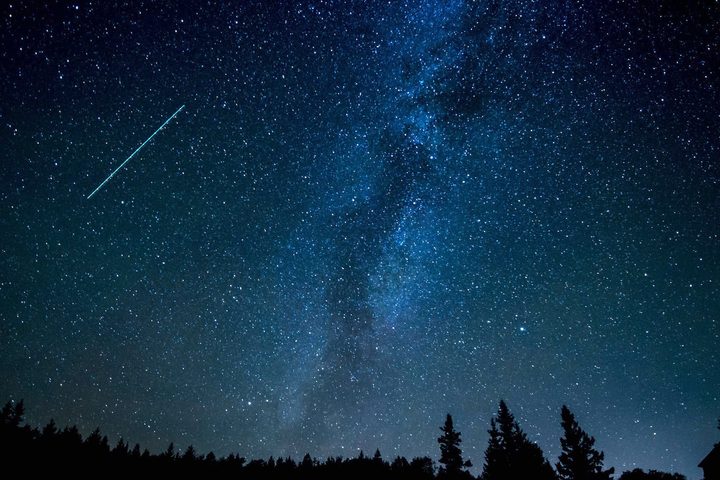
Following November’s Leonid meteor shower, this month it’s the turn of the Geminids. NASA describes it as “the year’s most reliable meteor shower,” with skywatchers potentially able to see as many as one meteor every minute.
The Geminids meteor shower peaks on the night of December 13 and the following morning. Viewers in the Northern Hemisphere can look for meteors as early as 9 or 10 p.m. on December 13, with the greatest number of meteors streaking across the sky between midnight and morning twilight.
Southern Hemisphere skywatchers will also have a view of the Geminids, but they’ll appear in the middle of the night and at about a quarter of the rate viewed in the Northern Hemisphere.
Asteroid
Last but not least, December offers a chance to see an asteroid zipping by Earth. NASA said there’s a chance you’ll be able to spot it with the naked eye, though a pair of binoculars or a telescope will offer a much better chance of tracking it down.
This month, asteroid Vesta is viewable starting around 10 p.m. nightly, though the best chance to see it will come at around 1 or 2 in the morning, when it’ll appear about halfway up the eastern sky, NASA says.
You’ll be able to spot Vesta in-between the raised arm of Orion and the leg of Castor in Gemini. Around December 8, Vesta will appear between Betelgeuse and Propus. Watch NASA’s video at the top of this page for more information on how to track down Vesta.
For further help with understanding what you’re looking at in the night sky, be sure to try one of these astronomy apps for iOS and Android.