  1. Home
  2. Audio / Video
  3. News

These $200,000 speakers billed as “world’s best” may also be “world’s ugliest”

Add as a preferred source on Google

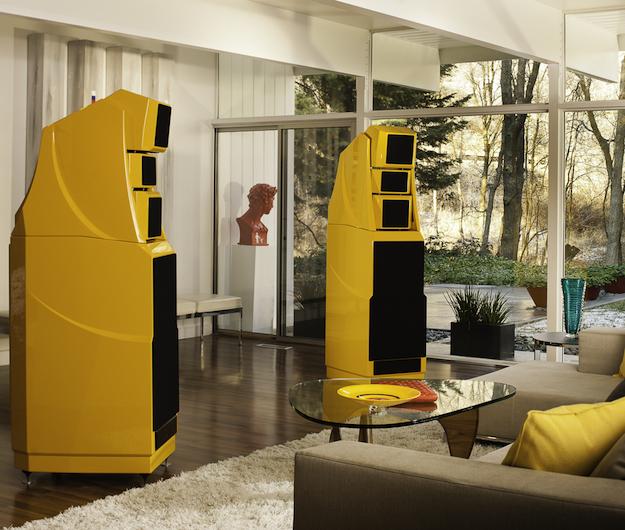
Alexandria XLFNot everyone is happy to have a massive pair of floor-standing speakers dominate their living room in the pursuit of audio nirvana, and convincing an uncooperative partner that it’s a sacrifice that needs to be made is a difficult one. Speaker manufacturers understand this could be a problem, and many make beautifully designed, subtle speaker systems that will please both parties.

Wilson Audio, however, has done no such thing with its newest speaker, the Alexandria XLF. Announced at the tail end of 2011, the XLFs are a continuation of the company’s Series 2 speakers, just larger and with 14-percent more bass.

Recommended Videos

The huge enclosures are best described as man-sized, as they stand 178 cm (70-inches) tall and weigh an astonishing 297 kilos (655 pounds) each. Pull off the covers are the reason for this massive weight becomes obvious. There are two woofers — one 13-inch and one 15-inch — two 7-inch midrange drivers, a 1-inch tweeter and finally, a 1-inch super tweeter.

Billed as the “world’s best speaker” by Wilson Audio, who could be biased, the Alexandria XLFs are the brainchild of Dave Wilson, founder of Utah-based company, which has made quite a name for itself amongst audiophiles over the years.

The workmanship and attention to detail that has gone into making the XLFs is incredible, from designing an entirely new tweeter when off-the-shelf products weren’t cutting it, to spending a week’s worth of 8-hour shifts just to mill the pieces needed to form a single channel. The name comes from the inclusion of a Cross Load Firing port, where either a forward or rear-firing bass port can be selected to tune the speakers to their environment.

It’s the design that will split opinion though, as no matter how perfectly tuned that segmented cabinet may be, it’s not the most attractive we’ve seen.

The Alexandria XLF speakers are made to order, so any color can be specified to match your room’s decor, and — brace yourselves — a pair costs $200,000. That’s before you’ve spent any money on an amp man enough to drive them, too. They’ve been available in the US since late March, and made their European debut this week.

Andy Boxall
Andy has written about mobile technology for almost a decade. From 2G to 5G and smartphone to smartwatch, Andy knows tech.
Stop joining group projects with a blurry laptop webcam and buy one of these instead
Your laptop webcam is sabotaging your first impression. These five can fix it
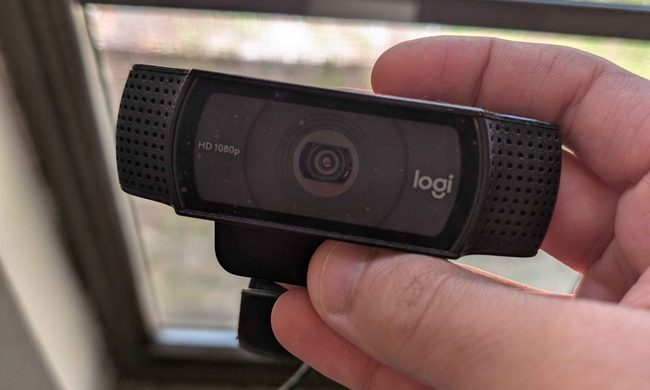
I'm holding my Logitech C920 1080p webcam in my hands.

The webcam built into your laptop might be good enough for a quick call with friends and family. But its shortcomings become much harder to ignore when you are presenting a semester project, interviewing for an internship, or maybe if you're planning to stream for fun.

Laptop cameras also tend to sit far too low, especially when the computer is placed directly on a desk. Meanwhile, a dedicated webcam lets you position the camera closer to eye level. This improves the framing and brings larger sensors, better microphones, and more effective low-light processing.

Read more
I desperately want a new classic Walkman, but Sony probably can’t give me one
Tech minimalism is begging for a new Walkman. Though rebuilding it may be close to impossible
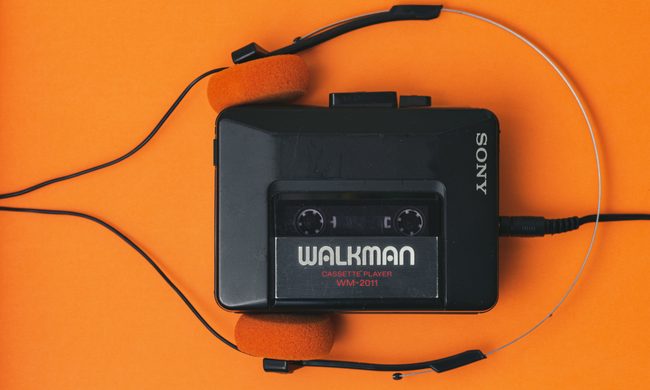
Sony Walkman WM2011

Every few months, another piece of tech that seems obsolete crawls out of a drawer and becomes cool again. The age of minimalism has revived the popularity of iPods among younger buyers. Dumbphones have become an escape hatch from endless notifications. Similarly, digital cameras are dangling from bags again. Physical media keeps attracting people who want something they can actually hold instead of another frustrating subscription.

All of this makes it the perfect time for Sony to bring back the classic Walkman, which was a phenomenon during the 80s and 90s. I would love one. Give me a compact cassette player, physical buttons, and wired headphones. Keep the apps, notifications, and algorithms that shape your taste of music. No more AI assistants or personalzied feeds, just you and your Walkman. There is only one problem though. Recreating the Walkman that people love and remember, would be far harder than putting an old design back into production.

Read more
Proton reveals how smart TVs track you and the escape situation is pretty grim 
Modern smart TVs fingerprint your screen content at the chipset level.
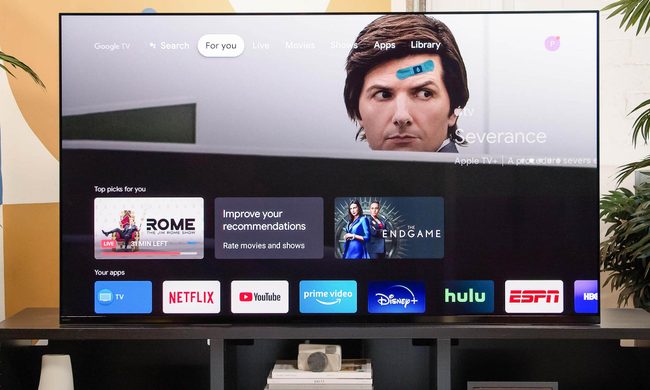
Google TV applications on the Sony A95K TV.

Your smart TV may know far more about your viewing habits than you realize, even if you rarely use its smart features. In a new privacy explainer, Proton warns that many modern TVs quietly collect data about everything displayed on the screen and share it with manufacturers, advertisers, and analytics companies.

The worrying part is that escaping this tracking is becoming increasingly difficult because many privacy controls are buried deep in settings or enabled by default. Proton argues that buying a smart TV today often means accepting a level of surveillance that most people never knowingly signed up for.

Read more