  1. Home
  2. Cars
  3. News

Here’s how Ford will give EV customers Tesla Supercharger access

Add as a preferred source on Google
Ford EVs at a Tesla Supercharger station.
Ford

Ford announced last year that it would adopt the Tesla North American Charging Standard (NACS) for EV fast charging, granting Ford drivers access to the Tesla Supercharger network. Now, the automaker is providing a little more detail on exactly how that will work.

In the original May 2023 announcement, Ford said owners of existing EVs — which use the Combined Charging Standard (CCS) instead of NACS — would be able to charge at Supercharger stations via an adapter. Today, the automaker announced that the adapter developed by Tesla is now available to order. EV owners can order one free adapter per vehicle through Ford’s website between now and June 30. The adapter will otherwise retail for $230. Ford plans to begin building new vehicles with NACS connectors in the near future.

Recommended Videos

As explained to Digital Trends and other media in a briefing before the announcement, the adapter slips over a Supercharger’s connector and plugs into the vehicle. Ford says its vehicles will be able to charge at their maximum speeds using the adapter, which has an interlock device to prevent it from being disconnected while plugged into a vehicle. A latch can also deactivate charging if the adapter becomes separated from the Supercharger. Built-in temperature sensors are designed to prevent overheating.

Ford customers won’t be able to use every Supercharger station. Compatibility only applies to V3-and-newer Superchargers, and even some of those stations won’t be available to Ford drivers initially. But the automaker still claims it will offer access to 15,000 Supercharger stations in the U.S. and Canada. That’s more than the previous estimate of 12,000, reflecting the expansion of the Supercharger network since the original announcement was made last year, according to the automaker.

The added Supercharger stations will more than double the approximately 13,000 stations available on Ford’s Blue Oval Charge Network, the collection of third-party, public charging stations that Ford customers have streamlined access to. As with other Blue Oval Charge Network stations, Superchargers will appear (with pricing) in searches on the Ford Pass app or in-vehicle charging locators, and customers will be able to simply plug in and charge using Ford Pass or the Plug and Charge protocol.

Since Ford announced plans to adopt the Tesla NACS connector and use the Supercharger network, most other major automakers have followed suit. But Ford is the only one so far to put its plan into action — even if it’s just via adapters for now.

Stephen Edelstein
Stephen is a freelance automotive journalist covering all things cars. He likes anything with four wheels, from classic cars…
This sleek Chinese EV pairs supercar styling with three AI brains
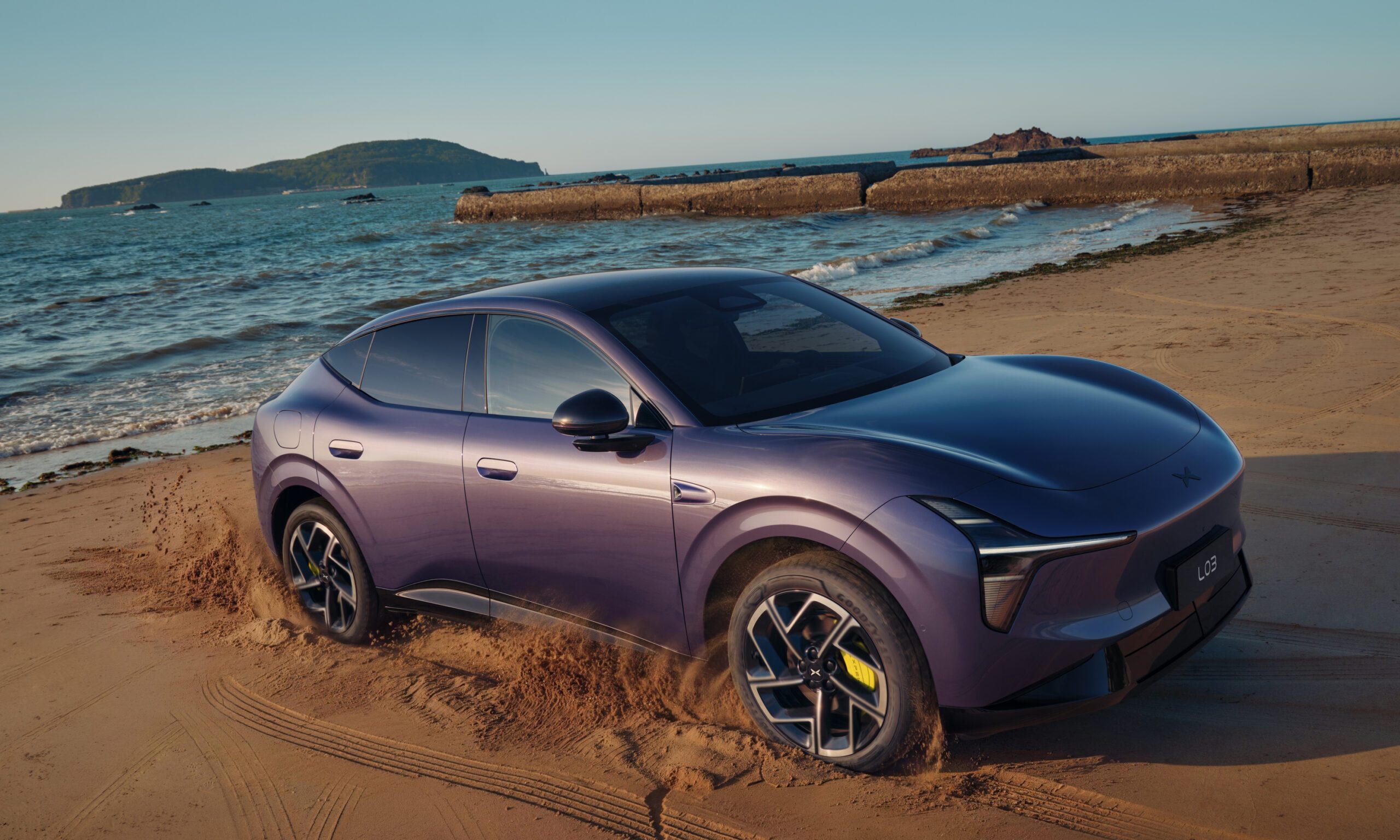
The Xpeng L03 is an AI supercomputer disguised as a stylish family SUV
Xpeng L03

Xpeng’s latest electric vehicle carries enough processing power to make the term "smart car" actually sound more realistic than it actually is. The new Xpeng L03 debuted simultaneously in Europe and China on July 16, with the company presenting it across 65 markets. Available as a fully electric vehicle and an L03 Power X range-extender, the coupe-SUV is Xpeng’s most internationally focused model so far. Market-specific prices and sales dates remain unannounced.

Three AI chips and Google Maps built right in

Read more
A new sodium battery posts wild four-minute charging numbers, but don’t expect it in an EV yet
The breakthrough could improve fast charging and battery life, but the study hasn’t demonstrated those results in a production-sized pack
EV Charger

A new sodium-metal battery has posted a charging number that makes today’s EVs look painfully slow. In laboratory testing, the cell operated at a 15C rate, equivalent to completing a charge or discharge in roughly four minutes.

That doesn’t mean researchers plugged in an electric car and watched it fill up before the driver finished buying coffee. The result came from a small experimental cell using a new quasi-solid electrolyte, while the larger pouch-cell prototype delivered far less dramatic performance.

Read more
The Apple Car may be dead, but it became the foundation of Apple Intelligence
A decade of work on a canceled car project reportedly laid the groundwork for Apple Intelligence.
Apple Intelligence in Apple Car

The Apple Car may have never left the garage, but it apparently gave birth to Apple's AI ambitions. According to Bloomberg's Mark Gurman, Apple's canceled autonomous vehicle project, one that consumed more than a decade of work and over $10 billion before being scrapped in 2024, ended up laying the technological foundation for Apple Intelligence. In a rather ironic twist, one of Apple's most expensive failures may also become one of its most important long-term investments.

The Apple Car forced Apple to think like an AI company

Read more