It’s no surprise that AI was perhaps the biggest topic of discussion at this year’s Game Developers Conference. The emerging technology was all over the convention’s show floor, with massive booths showcasing demos from companies like Inworld. Behind the scenes, Nvidia showed off some even more impressive tools. A Ubisoft-created experience using Nvidia’s Ace microservice turned heads, as it allowed players to speak to NPCs through a microphone and get cogent AI responses on the fly.
Naturally, it was a topic of debate throughout the week. During the event’s annual Game Developers Choice Awards, presenters pushed back on the fast-approaching wave of generative AI that poses an existential threat to human creators. However, not every use of tech is built to push humans out of the creative process. Some, like the AI tools powering Candy Crush Saga, make a stronger case for AI’s more helpful use cases for creators.
AI as a co-pilot
Developers from King, which was recently acquired by Xbox, would take the stage multiple times during the week to talk about the tech powering its games. One panel in particular focused on how the studio uses AI to create Candy Crush Saga levels. On a surface read, a critic of the tech might decry that use case as something that takes work away from designers. When I spoke to Sahar Assadi, Director of AI Labs at King, she painted a much more human view of how the company uses the tool.
“We are applying AI as an assistive tool as a process for creating levels,” Assadi tells Digital Trends. “We have an AI solution for playtesting, and on top of that, we’ve built an AI tweaking system. The playtesting model helps us get insight into the gameplay experience. For a level a designer is creating, we get data on what the gameplay looks like and a lot of metrics on the amount of challenge that helps the designers shorten the cycle of the mundane task of iterating.”
What we’re doing is thinking about it more like a co-pilot for design …
By Assadi’s explanation, Candy Crush’s AI tools are all about saving time — and that’s a necessity for a game like that. The megahit mobile game has consistently retained players over its 12-year run due to its astronomical number of levels. At the moment, it has over 16,000 levels. That creates a daunting amount of work, as each level needs to be properly balanced and playtested to make sure it’s fun and not too challenging. For King, that used to be an incredibly time-consuming process that left a lot of room for mistakes. AI has flipped that script.
“It used to be historically that developers would do one or two rounds of opening a level, playing it, and getting a feel for it. Then, they’re happy or not, and several iterations happen. That was the most time-consuming and mundane part,” Assadi says. “Now, they click and the playtesting plays over 1,000 times to get more accurate insights, but also additional metrics. Is this playable? How much of a challenge is it to the player? And then the designer gets all of that insight and decides which direction to refine it. That comes in a matter of minutes.”
That enormous amount of digital playtesting is paramount to an engagement-driven game like Candy Crush Saga. Free-to-play games like this can easily draw tons of players in, but they can lose them just as easily. One bum level can make or break a game like this. That’s something that Jan Wedekind, Head of Central Insights at King, knows all too well. 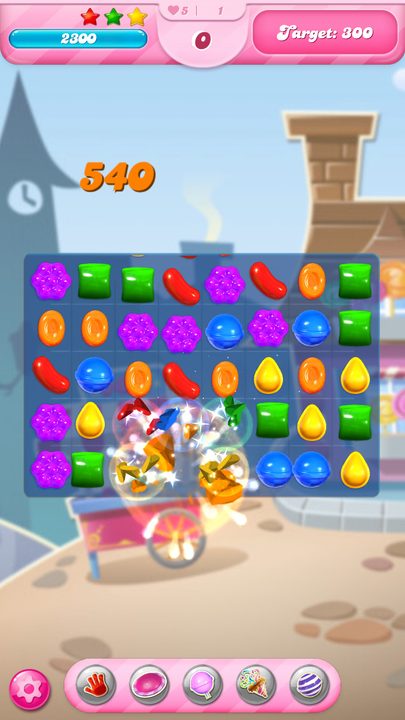
“This morning we talked about the infamous Level 65 when the game was launched,” Wedekind tells Digital Trends. “We lost an incredible amount of players on it because it was too hard. In retrospect, we didn’t know we would have 16,000 levels at the time so its hindsight. But when you have that much content, the last thing you want is to have players turn off three days into the game or even three months into the game.”
According to King, the AI solutions it now uses for its game can help fix those problems before a level ever hits a player’s phone. But Candy Crush developers aren’t just using AI to playtest. The tech can be used in the initial design process too.
“This could be an inspiration tool where a designer comes in and says ‘this is the kind of gameplay experience I want to make,’” Assadi says. “You explain it to the AI solution, and it gives you some inspiration. It could be the kind of process where the designer creates the initial level and wants to ensure that it has good quality, so they use the tool for getting the insight before releasing it.”
As we discuss the potential of the tech, I bring up the pushback against it. Though King isn’t making fully voiced NPCs built on unclear datasets, there’s still a contingent of people who might see AI as replacing the work of human playtesters. And there’s certainly a slippery slope when it comes to AI creating inspiration for levels. What’s the line between helpful and harmful? Assadi understands that tension, but she’s realistic about where the tech is limited next to human ingenuity.
“What’s the definition of fun, and can we mathematically formulate fun? I don’t think so!” Assadi says. “There’s a lot about the craft of design that’s important in order to deliver that fun element. That’s why I think what we’re doing is thinking about it more like a co-pilot for design that enables more creativity and innovation.”