While Meta’s Quest Pro is one of the best VR headsets available, it never reached its full potential as a laptop replacement for spatial computing. Meta hasn’t given up on making a work-centric solution, and rumors suggest a Meta Quest Pro 2 is still in development. Here’s what we know so far about Meta’s answer to Apple’s Vision Pro.
Meta Quest Pro 2 release date speculation
It’s difficult to make a solid prediction on when Meta will launch the Quest Pro 2. Meta CTO Andrew “Boz” Bosworth made it clear in an Instagram AMA that Meta is continually prototyping new VR headsets to find out what’s possible with current technology. That gives Meta more flexibility than manufacturers that research for years before doing hardware testing.
If Meta is satisfied with the performance of the Snapdragon XR2+ Gen 2 and LG can deliver enough micro-OLED displays, the Quest Pro 2 could arrive as early as this October at Meta Connect 2024.
Boz also said Meta is working on operating system refinements. Hardware is important but unless the Quest Pro 2 has significant OS improvements, a desktop web browser, and more of the apps required for productivity, it will still need to connect to a computer to get work done.
We’ve seen some nice advances in the last few Quest updates that signal surge in activity from Meta’s Quest and Reality Labs development teams. Hopefully, that will be reflected in a Quest Pro 2 that can truly replace a laptop.
If any of the hardware components or software progress are delayed, it seems more likely that the Quest Pro 2 will launch in 2025. In the meantime, we can still look forward to the possibility of a Quest 3 Lite or Quest 3s arriving this fall.
Partnership with LG
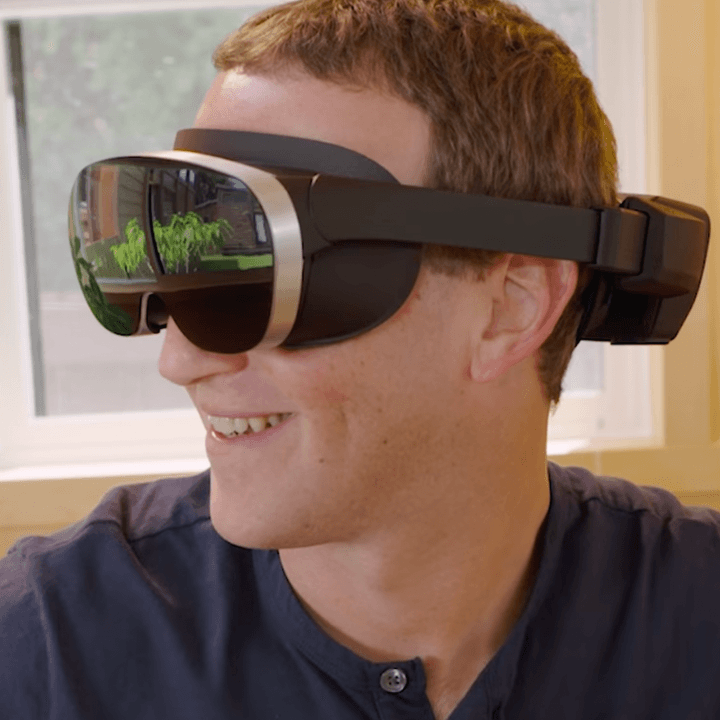
In January, news broke that Meta CEO Mark Zuckerberg visited LG headquarters to discuss a partnership with this leading display manufacturer. Since Meta gave up on gadgets like Portal, its tablet-like video chat device, this really only leaves two options for the collaboration: VR headsets or AR glasses.
The same report suggested the device in question is an XR headset that will use micro-OLED displays. The original Quest used OLED screens, but the displays were relatively low resolution and limited to a 72Hz refresh rate. Starting with the Quest 2, Meta moved to LCD displays, which lowered the cost of sharper, faster displays, improving VR gaming and unlocking the potential of using VR for work. It’s important to note that LG has already announced its plans to create its own mixed-reality headset later this year.
Recent advances make micro-OLED a compelling option again. Apple chose this display type for the ultra-premium Vision Pro and so did Sony for its PlayStation VR2.
In Zuckerberg’s scathing, but insightful review of Apple’s Vision Pro, he pointed out several shortcomings, including motion blur, while admitting the screen sharpness was really nice.
Meta could follow the example set by these leading tech companies, meeting Apple’s challenge by upgrading the Quest Pro 2 with high-resolution micro-OLED panels. If LG can create micro-OLED displays that are brighter than the Vision Pro’s to help reduce motion blur and display persistence.
High performance
Meta announced a multiyear partnership with Qualcomm to help advance its Snapdragon XR processors and improve the capabilities of the Quest platform and Meta smart glasses. The result gave us the awesome Quest 3 and the incredible Ray-Ban Meta Smart Glasses. This is just the beginning.
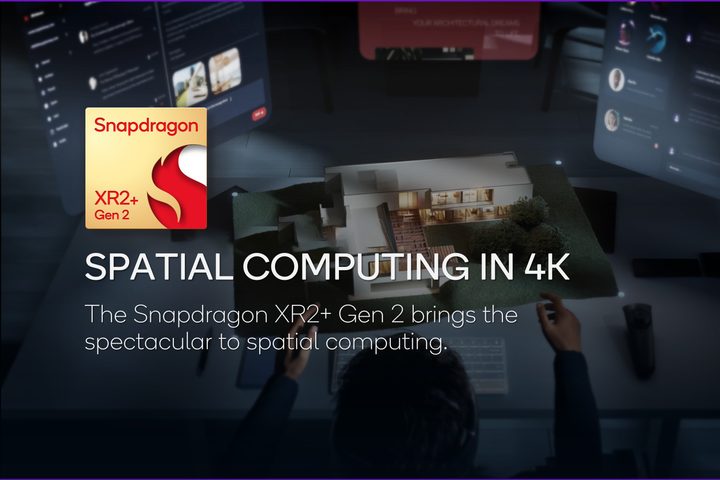
Qualcomm has already announced a faster variant of the chip used in the Quest 3. The Snapdragon XR2+ Gen 2 can support four times as many 4K screens with enough CPU and GPU performance to handle the extra load without lag. This enhanced chip can access up to 12 tracking cameras, enabling advanced eye- and hand-tracking.
We already know Samsung, HTC, and Immersed have chosen this powerful Qualcomm chip for their upcoming XR headsets. The only question is whether Meta will do the same or get early access to a yet-to-be-announced Snapdragon XR2 Gen 3 to give the Quest Pro 2 an advantage in speed and efficiency.
Each new generation of chip technology unlocks more design choices for manufacturers to shift the balance to lighter and thinner technology or to push for higher performance and longer battery life.
The Quest 3 already has impressive speed but can’t compete with the Vision Pro’s desktop-class M2 chip. If Meta can match the Quest 3’s weight with significantly performance and image quality while maintaining the design advantages of the Quest Pro, it will be an intriguing VR headset that could earn more respect than the first-generation device.
AI in VR
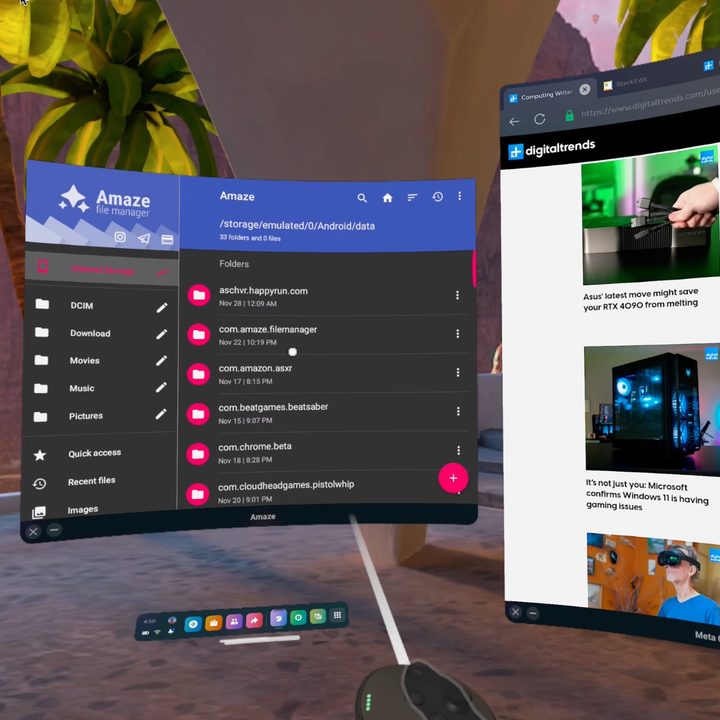
As I mentioned in my recent rundown of expectations for the Meta Quest 4, AI could play a major role in Meta’s future VR plans. This goes deeper than the text and image magic of ChatGPT. A VR headset removes all the limitations of reality.
Meta AI already supercharges the Ray-Ban Smart Glasses, providing image recognition for identification and translation, answering questions about current events, and offering the benefits of generative chat in a slim and light pair of sunglasses.
As impressive as that is, imagine what’s possible in an environment that’s entirely controlled by the computer. Everything you see and hear in VR passes through the machine. With AI-enhancement, anything is possible. Within reason, your wishes could become your reality.
A few examples will help illustrate what I mean. Meta has already demonstrated realistic VR avatars, as seen in Shunsuke Saito post on X, that are more convincing than the Vision Pro’s latest FaceTime Personas. What’s been holding Meta’s technology back is a lack of performance. That is changing rapidly as chips get faster and AI becomes sophisticated enough to make complex rendering easier.
📢 Check out 𝗥𝗲𝗹𝗶𝗴𝗵𝘁𝗮𝗯𝗹𝗲 𝗚𝗮𝘂𝘀𝘀𝗶𝗮𝗻 𝗖𝗼𝗱𝗲𝗰 𝗔𝘃𝗮𝘁𝗮𝗿𝘀!
Our latest codec avatars using 3D Gaussians generalize to novel lighting (OLAT, envmap) with *all-frequency* reflection (see video for hair and eye reflection) in real-time! https://t.co/hmO0she2t6 pic.twitter.com/xv0pQLIzjq— Shunsuke Saito (@psyth91) December 7, 2023
Something similar to Meta’s Codec Avatars should arrive with the launch of the Quest Pro 2, and that date might not be too far away.
What will stay the same
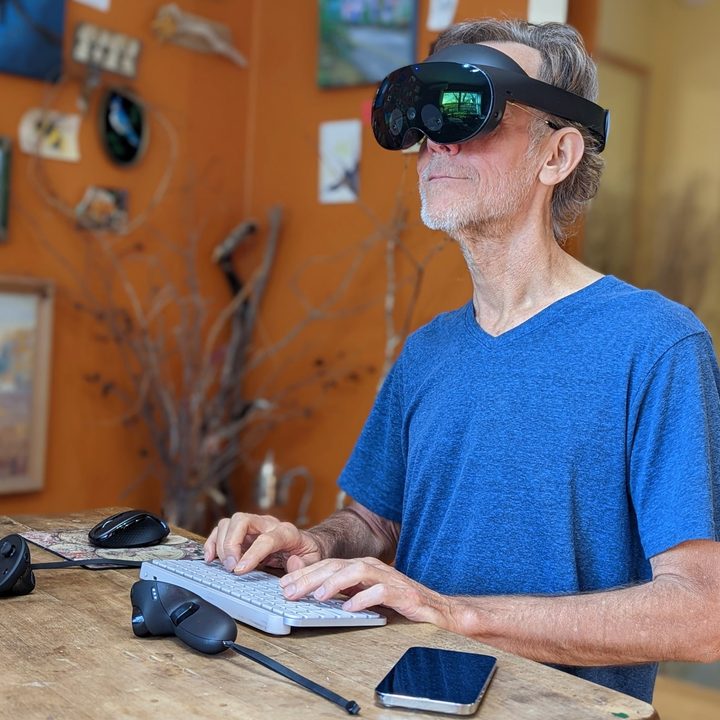
While Apple felt VR controllers were unnecessary, opting for pinch gestures to control the Vision Pro, Meta doesn’t see a conflict with supporting both hand-tracking and motion controllers. The Quest Pro’s controllers are already impressive.
The Quest Pro has one of the best designs of any VR headset. The only real issue is the weight and the fixed curve of the forehead pad. I’m hoping for a lighter Quest Pro 2 with a few options for the head pad.
The charging dock is another great example of what Meta got right with the original Quest Pro. Boz says he’s still a fan of the Quest Pro and shared some similar thoughts in an Instagram AMA about why he still uses his Quest Pro as well as the Quest 3.