  1. Home
  2. Cars
  3. News

Cruise robocars make a cautious return to Houston

Add as a preferred source on Google
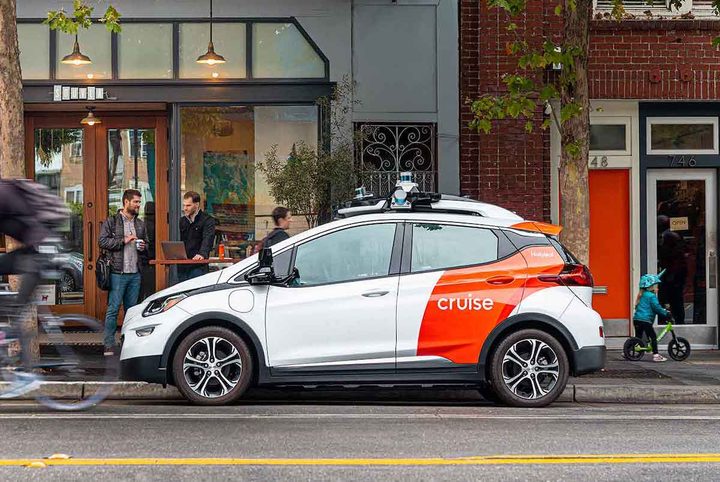
A Cruise autonomous car.
Cruise

Robotaxi specialist Cruise is restarting tests of its autonomous vehicles on the streets of Houston, TechCrunch reported on Tuesday.

Cruise’s main backer, General Motors, said on the same day that it’s investing a further $850 million in the robotaxi project.

Recommended Videos

The developments come as Cruise makes a cautious return to testing its autonomous cars on public roads following a string of troubling incidents last year. The worst of these involved a female pedestrian who was dragged along the street by a driverless Cruise car in San Francisco in October after she was thrown in its path following a collision with a human-driven vehicle.

The accident, which the woman survived, prompted California to suspend Cruise’s operating permit in the state, a decision that led Cruise to suspend testing across the country a short while later.

Since then, Cruise has returned very small fleets to Phoenix and Dallas. As a sign of Cruise’s highly cautious approach, the Houston fleet will comprise just three vehicles and although they’re fitted with autonomous systems, the equipment will not be operational for the time being, Axios reported. This suggests Cruise merely wants to gauge the response of human drivers on the same roads and help them get used to seeing Cruise cars back on Houston’s streets.

When ready, Cruise will begin “supervised autonomous driving” in which the autonomous systems will function, but with a human behind the wheel ready to step in if required.

The company started operating its self-driving cars in Houston last fall. But its decision to halt testing nationwide meant that testing stopped in the city after just a few weeks.

Cruise was founded in 2013 and since then has raised more than $15 billion in funding, with GM providing more than half of that figure since acquiring the company in 2016.

During its crisis toward the end of last year, there was talk about whether Cruise would continue with its work in the autonomous-vehicle sector. But with GM’s backing, it insisted it would carry on, though with a new approach described by a Cruise spokesperson as “slow and steady.”

Trevor Mogg
Contributing Editor
Not so many moons ago, Trevor moved from one tea-loving island nation that drives on the left (Britain) to another (Japan)…
Volvo is rolling out Apple Music to over 2 million cars with a simple OTA update
Your Volvo may soon get Apple Music without needing CarPlay
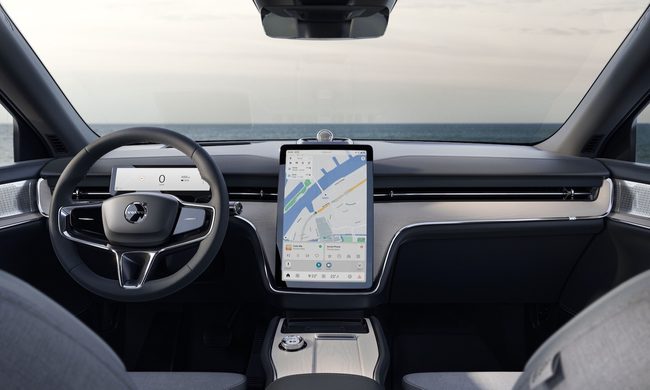
Interior view of the 2024 Volvo EX90.

The line between your smartphone and your car continues to blur. Volvo has announced that it is rolling out an over-the-air software update that brings Apple Music directly to the infotainment systems of more than 2 million vehicles worldwide. Instead of relying on Apple CarPlay or plugging in an iPhone, eligible drivers will be able to stream music natively from their car's built-in system, making Apple Music another integrated feature of Volvo's software experience.

The update is arriving for a wide range of Volvo models, including the EX90, ES90, XC90, S90, V90, XC60, S60, V60, XC40, EX40 and EC40, covering model year 2020 onwards. Availability, however, may vary depending on the vehicle.

Read more
Chery’s latest EV packs flagship tech for the price of a base Tesla, but you can’t buy it
Here's everything packed into Exeed's 2027 Exlantix ES, from its 27-sensor autonomous driving suite to its 860 km range, all starting under $31,000.
Car, Transportation, Vehicle

Chery's premium arm just dropped a sedan that makes you wonder why American EVs cost twice as much for half the tech.

Exeed's 2027 Exlantix ES ships with a driver-assist system called Falcon 700. It is built around an Nvidia Orin-Y chip and a genuinely stacked sensor suite.

Read more
A new AI model wants self-driving cars to think before they swerve
Forget guessing games, this self-driving AI actually shows its work.
Self driving car

Self-driving cars have gotten pretty good at driving. The harder problem is teaching them to drive safely in situations nobody planned for. We have heard horror stories of self-driving cars, behaving erratically in emergency situations, often times delaying first responders from reaching the scene.

A team at Seoul National University, led by professor Jun Won Choi from the Department of Electrical and Computer Engineering, thinks they have cracked part of that puzzle with a new AI model called SafeDrive. The research was recently selected as a highlight paper at CVPR 2026, a distinction that goes only to roughly 3% of all submissions.

Read more